






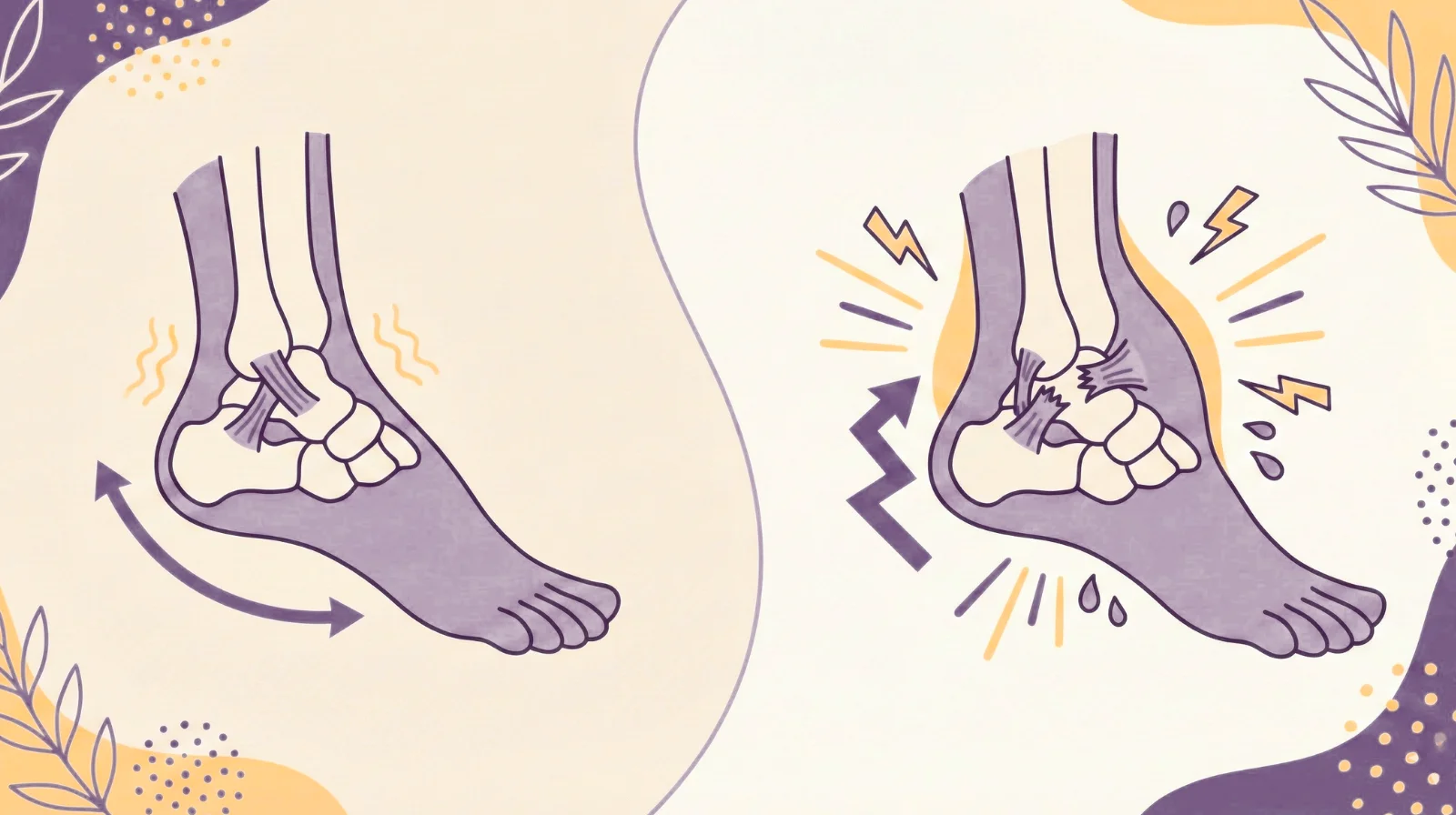
We’ve all been there. You’re walking down the street, checking your phone or admiring the scenery, and then snap. And then, no matter how it happens; one misstep down off a curb, a small miscalculation during a workout or simply walking too quickly when you are wearing unsupportive shoes, your ankle rolls out from under you.
The initial response typically goes something like: “Gasp, grab the ankle and take a deep breath and cross one’s fingers: ‘Please, let it just be a little twist.’ ”
Many people first try to “walk it off,” dismissing the injury as a mere inconvenience. We hobble for a few minutes, assuming the pain will be gone at dinner. But what if the throbbing doesn’t go away? What if, two days later, your ankle has swollen to the size of a tennis ball?
Knowing whether you have just twisted your ankle the old-fashioned way or if you actually hurt something sends a lot of people from being laid up in bed to being back on their feet (literally) sometimes immediately. The movement may begin awkwardly, but what happens within your joint is quite different.
In this guide, we’ll break down the science behind the “roll,” help you gauge your pain levels, and guide you toward the right treatment whether that’s resting on the couch with ice or seeking professional help.
What Is an Ankle Twist?
Think of an ankle twist as a warning shot from your body. It tends to be the milder of the two injuries, what doctors would more likely call a “minor soft tissue injury” than a traumatic event.
What Happens Inside the Ankle During a Twist?
A twist occurs when the ankle moves beyond its normal range of motion briefly. From a biomechanical perspective, your ankle joint is engineered to flex up and down (dorsiflexion and plantarflexion) but also tilt slightly side to side (inversion and eversion). A twist, when this is forced into acute angle (commonest outward roll) results in an instantaneous stretch to the muscles and ligaments around the joint.
So in other words here, what makes the biggest difference is whether your ligaments are stable. In the lower grade sprain, the ligaments are stretched, but not torn or only minimally torn. The soreness is often due to the muscles (e.g., the peroneals on the side of your leg) bracing themselves to prevent damage, a mechanism that is called “the stretch reflex” [1].
Common Situations That Cause an Ankle Twist
Ankle twists are very common, and they can happen to anyone, not just athletes. They often occur due to:
- Bumpy surfaces: Cobblestones, uneven sidewalks or a trail with hidden roots.
- A brief loss of balance: Forgetting the last step of a staircase.
- Abrupt changes in direction: Sidestepping to catch a bus, stepping into the street to chase a pet.
- Insecure footwear: A pair of high heels, worn-out sneakers or shoes that lack a secure heel can allow the ankle to roll.
What Is an Ankle Sprain and Why Is It More Serious?
If you’re on the brink of a twist, then a sprain is when things go horribly wrong. An ankle sprain is an actual structural injury to the ligaments; strong, fibrous bands of tissue that connect bone to bone and hold a joint stable.
Which Ligaments Are Affected in an Ankle Sprain?
The majority of ankle sprains (approximately 85%) are inversion in nature, involving rolling the foot inward and damaging ligaments on the lateral or outer side of the ankle [2]. By far the most frequently damaged ligament is the Anterior Talofibular Ligament (ATFL), followed by the Calcaneofibular Ligament (CFL).
Sprains are graded by severity:
- Gradev1 (Mild): Tear is microscopic with damage to the ligament fibers. Mild tenderness and swelling.
- Grade 2 (moderate): The ligament is partially torn. Mild pain, swelling and decrease in function.
- Grade 3: A complete tear of the ligament. Decremental instability, severe swelling and weight bearing not possible.
How Ligament Damage Changes Recovery?
That is because unlike muscles, which are rich in blood supply and tend to heal rapidly, ligaments have a limited blood supply. That makes them much heavier to repair once they are overstretched or torn. It’s this structural damage that makes a sprain something that typically needs directed rehabilitation, more time off and sometimes bracing to mechanically support the joint until nature can do its eventual healing.
Ankle Twist Vs Ankle Sprain – What’s the Difference?
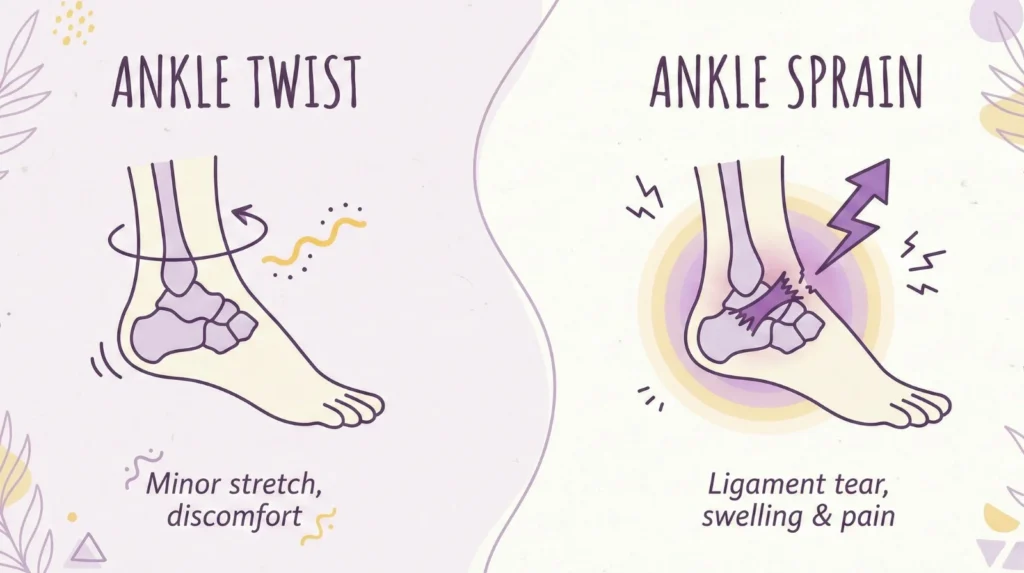
While they may seem similar at the precise instant of injury, there are subtle differences between each that become quickly apparent.
| Feature | Ankle Twist | Ankle Sprain |
| Pain Onset | Sharp initially, fades quickly (minutes/hours). | Sharp immediate pain that persists or worsens. |
| Swelling | Minimal to none. | Noticeable swelling, often immediate (“golf ball”). |
| Bruising | Rare. | Common, may appear blue/purple near the heel or toes |
| Walking | Possible, perhaps with a slight limp. | Difficult or impossible due to pain/instability. |
| Recovery | 24 to 48 hours. | 2 weeks to 3+ months depending on grade. |
How Do Pain Levels Differ Between a Twist and a Sprain?
Pain is subjective, but the quality and duration of the pain tell a story.
Mild vs Moderate vs Severe Pain
The Twist (Mild Discomfort): When it happens, you’ll put the pain at 4/10, but within a half-hour, it’s down to a 1 or 2/10. And it doesn’t feel so much like pain, but more like soreness or an ache, kind of how your legs can feel after a long run. You can get away from it.”
The Sprain (This is a deep, throb- bing pain): A sprain will usually cause a sharp searing flash of intense pain (7-9/10) at the instant of injury. After it, rather than subsiding, it becomes an intense throb that beats in time with your pulse. This is due to an inflammatory response that brings fluid to the injured tissue. Movement reactivates the sharp pain, and I feel like there’s just something “bad” or unsteady about putting weight on it.
What Symptoms Suggest You May Have a Sprain Instead of a Twist?
If you’re wondering whether to ditch your weekend plans or go to a clinic, keep an eye out for these particular red flags.
Red-Flag Symptoms to Watch For
- The “Pop”: After a severe sprain, many victims report hearing or experiencing a loud “pop” or “snap” at the time of injury. That, the researchers said, is the sound of a ligament tearing or popping against bone.
- Swelling Right Away: If you see swelling in your ankle within the first 30 minutes, you probably have a sprain. An acute swelling suggests bleeding into the joint capsule.
- Discoloration: Bruising that moves down towards the toes or up toward the calf within 24-48 hours indicates blood has leaked from torn capillaries and tissue.
- Instability: If you attempt to stand and your ankle seems as if it is going to “give way” or feels wobbly, the ligaments have been damaged.
- Point Tenderness: It hurts when you press directly on the bony hump sticking out of the outside of your ankle (lateral malleolus). If you touch the soft spot that lies just forward and below that bone and you jump in pain, then it’s likely that your ATFL has been injured [3].
How Is an Ankle Twist Treated at Home?
Lesser twists usually respond well to basic treatment and do not need immediate aggressive intervention.
Immediate Care for a Twisted Ankle
If you are reasonably sure that it’s just a twist, management should be of symptoms. Normal activity can be resumed immediately in most cases, but give your body a brief rest.
- Active Rest: No need to stay in bed but don’t engage any high-impact jumping or running for 24 hours.
- Ice (Optional): For some slight pain, you may want to use ice for 10-15 minutes to numb the area.
- Gentle Movement: While you want to immobilize a sprain, for a twist, it’s about getting the ankle slightly mobile again and moving it with some gentle circles can help flush away what is hopefully minor inflammation while preventing stiffness from setting in.
- Sturdy Shoes: This week, you will want to slip on your most stable sneakers in order to avoid another twist while your muscles regain their reaction time.
betterhood Tip: Small twists may benefit from a self-compressing twist of its own. Try using betterhood’s everyday stability support for a mild proprioceptive input option that doesn’t hinder mobility.
What Is the Proper Treatment for an Ankle Sprain?
Sprains require a more structured regimen to prevent chronic instability which is exactly what it sounds like (a loose ankle for all time).
Medical and Rehab-Based Treatment Options
The old R.I.C.E. method (Rest, Ice, Compression, Elevation) was once the gold standard. However, present day physiotherapy has been replaced with the PEACE & LOVE protocol for soft tissue injuries [4].
P.E.A.C.E (Immediate Relief – On days 1-3):
- Protect: Unload or restrict movement for 1-3 days to minimize bleeding. Use crutches or a brace if needed.
- Elevate: Keep the limb higher than the heart to reduce fluid accumulation.
- Avoid Anti-inflammatories: Surprisingly, inflammation helps repair damaged tissues. Avoid NSAIDs (like ibuprofen) in the very early stages as they may slow healing.
- Compress: Use a bandage or sleeve to limit swelling.
- Educate: Listen to your body and avoid passive treatments.
L.O.V.E. (Post-Ex Encounter- Day 4 and out):
- Load: Slowly progress the weight-bearing as tolerated. Mechanical stress stimulates stronger ligament repair.
- Optimism: Stay positive! The brain is central to pain recovery.
- Vascularization: Pain-free cardio (i.e. cycling) helps bring blood to the injured area.
- Exercise: Balances and strengthening rehab exercises are a must for sprains.
How Long Does Recovery Take for Each Injury?
It’s important to keep expectations in-check for mental health during recovery. Few things are more intensely frustrating than an injury that “should” be better but isn’t.
Expected Recovery Timeframes
- Ankle Twist: 1 to 3 days. You may also experience a “ping” when you move in a funny way, but otherwise functional motion is the norm.
- Grade 1 Sprain: 2 to 3 weeks. You can be walking within days, but wait for sports.
- Grade 2 Sprain: 4 to 6 weeks. Needs to be protected (braced) and specific rehab exercises given.
- Grade 3 Sprain: 3-6 months. This is a major injury. If can take a walking the boot at first and months of physical therapy to restore full stability.
When Should You See a Doctor for Ankle Pain?
Home treatment is effective for many, but playing doctor can be risky if there is a fracture.
Signs You Need Professional Evaluation
Physicians determine whether an X-ray is required using the Ottawa Ankle Rules. [5] Contact a doctor right away if:
- You cannot weight bear (4 steps) at time of injury and again at the time of assessment.
- There is tenderness of the bone at the rear rim or tip of lateral malleolus (outer bone) or medial malleolus (inner bone).
- The foot appears to be deformed or twisted.
- You are experiencing a lot of numbness or tingling, which could be signs of nerve damage.
Can Wearing Supportive Gear Prevent Future Ankle Injuries?
Statistically speaking, once you’ve sprained an ankle, that puppy is more likely to get sprained again. This is Chronic Ankle Instability (CAI) and up to 40% of people with sprains suffer from it.
How Support and Stability Reduce Re-Injury Risk
Prevention is a matter of two things: that which comes from the outside, and that which comes from within.
External Support: An ankle brace or compression sleeve during high-risk activities (such as hiking or basketball) is like a seatbelt. It acts as mechanical stops such that the ankle cannot be over rolled.
Proprioception: Compression also improves proprioception, your body’s awareness of where it is in space. But feeling the skin more, in turn, means your muscles can react faster when you do begin to stumble.
But incorporating supportive gear with balance exercises (such as brushing your teeth while standing on one leg) is the best method to bulletproof your ankles against future twists.
Conclusion
An ankle twist and a sprain may feel identical in that painful moment after impact, but they are very different injuries that need different care. Recognizing the signs early, like swelling, bruising, and whether you can put weight on your foot, can help you make smarter decisions and avoid long-term damage. A mild twist might just need rest, but a sprain deserves patience, proper recovery, and gradual rehabilitation.
Staying active for life starts with listening to your body and respecting its signals. Rushing back too soon can turn a small injury into a long-term problem. Take the time to heal, strengthen, and support your joints and you’ll return stronger, steadier, and more confident on your feet.
Your mobility is your freedom. Protect it today so you can move without limits tomorrow.
How betterhood Helps You Live Pain-Free
Mobility is the gateway to wellness here at betterhood. Whether you’re rehabbing a nagging sprain or protecting ankles from being twisted during your daily dog walk, we’re all about everyday joint support.
We create carefully designed products that fit into your lifestyle. From stability-boosting wellness aids that slip inside your work shoes to posture-friendly gear for home recovery, we aim to take the load off, support healing and make movement comfortable.
To not be held back by fear of falling. Browse through our joint support offerings and move through your days with ease.
Frequently Asked Questions
No. A sprain is a slight stretch or tear in soft tissues, such as muscles and ligaments. A sprain is when you damage or tear the ligaments that support the joint.
Search for the ‘Big Three’: Unable to walk (bear weight), immediate and severe swelling, evident bruising.” If you have those, it’s probably a bad sprain or fracture.
If it is a mild sprain walking is okay if tolerated. Do not walk on moderate to severe sprains until cleared by a healthcare provider, or you will risk further ligament damage.
With a slight sprain, swelling will normally fade within three to five days. Some swelling may remain for a few weeks to seven months with severe sprains.
Yes. A brace or compression sleeve can help with swelling in the joint and provide mechanical support to allow you to still move around while the ligaments heal.
Yes. Left untreated sprains, can result in Chronic Ankle Instability, chronic pain or arthritis.)
References
- Cleveland Clinic. (2021). Ankle Sprain vs. Broken Ankle: How to Tell the Difference.https://my.clevelandclinic.org/health/diseases/22048-sprained-ankle
- Mayo Clinic. (2022). Sprains – Symptoms and causes.https://www.mayoclinic.org/diseases-conditions/sprains/symptoms-causes/syc-20377938
- American Academy of Orthopaedic Surgeons (AAOS). (2020). Sprained Ankle.https://orthoinfo.aaos.org/en/diseases–conditions/sprained-ankle/
- Dubois, B., & Esculier, J. F. (2020). Soft-tissue injuries simply need PEACE and LOVE. British Journal of Sports Medicine, 54(2), 72-73https://bjsm.bmj.com/content/54/2/72
- Stiell, I. G., et al. (1992). Implementation of the Ottawa Ankle Rules. JAMA, 271(11), 827-832https://en.wikipedia.org/wiki/Ottawa_ankle_rules