







Physical activity, and sports in general, are at the foundation of our health, fitness level and mental well-being. Every day millions of people play football, cricket, basketball and running or do gymming from professional athletes to recreational players. Although sports deliver many benefits to our bodies, they put quite a bit of stress on muscles, joints, ligaments and bones. Hence, injuries are one of the most frequent challenges faced by athletes and active people.
This is where sports physiotherapy comes into the picture. Sports physiotherapy is a specialized area of physiotherapy that deals with the prevention, diagnosis and treatment of physical activity and sports performance related injuries. It assists athletes in recovering from injuries, enhancing movement efficiency, and returning to their sport safely.
Whereas general physiotherapy works for everyone, active individuals or athletes, it is tailored specifically for them. This includes physical examination, rehabilitation exercises, manual therapy and injury prevention techniques to support people in their recovery of strength, mobility and performance.
Recent studies have demonstrated that physiotherapy is critical not only for injury rehabilitation, but also to enhance athletic performance and reduce the incidence of recurring injuries by correcting biomechanical and muscular imbalances. [1]
- What sports physiotherapy is
- Common sports injuries treated by physiotherapists
- Key benefits of sports physiotherapy
- Rehabilitation exercises used in treatment
- Injury prevention strategies
- When an athlete should visit a sports physiotherapist
Sports physiotherapy allows athletes to preserve long-term physical health, avoid injury and perform optimally over time.
What is Sports Physiotherapy?
Sports physiotherapy is a branch of specialized physiotherapy that caters to the treatment, prevention, and rehabilitation for sports injuries. It aims to guide athletes and those who are physically active in their recovery from injuries and returning to sport as safely as possible.
Sports physiotherapists are health care practitioners who specialise in musculoskeletal wellbeing, biomechanics and exercise therapy. This includes assessing the body movements involved in sports, pinpointing discrepancies such as muscle imbalances and postural issues that could result in harm.
Sports physiotherapy programs typically include:
- Injury assessment and diagnosis
- Pain management techniques
- Manual therapy
- Rehabilitation exercises
- Strength and conditioning programs
- Movement correction training
Sports physiotherapy also emphasizes improving performance through increased flexibility, mobility, muscle strength and coordination.
Research in physiotherapy says with sports physiotherapy an athlete can heal quicker, retain strength and endurance while improving movement economy, delivering them the opportunity to perform and excel after recovery. [2]
Why Sports Injuries Are Common
Sports injuries occur when the physical stress exceeds what your bodily structures are able to recover and respond to. Athletes often drive their bodies to high levels of intensity, and that can lead to injuries.
Some common reasons for sports injuries are:
Overuse and Repetitive Movements
Most sports involve repetitive movements like running, jumping, or throwing. Doing these repeated motions over the long term can lead to an overuse injury in muscles, tendons and ligaments.
Poor Training Technique
The wrong body posture or ineffective movement patterns might cause an extra load onto joints and muscles, probably leading to injuries.
Lack of Warm-Up
A warm-up is also necessary before any physical activity, without which the muscles become stiff and prone to muscle strain.
Muscle Imbalance
This joint instability and risk for injury keeps the muscles fighting against each other for control of movement rather than complimenting one another during a conscious effort.
Inadequate Recovery
Fatigue and injury occurs when there is little time for recovery between workouts.
Sports physiotherapists break down these factors and develop individualised rehabilitation and prevention programs for athletes.
Most Common Sports Injuries Treated through Physiotherapy
From the tender muscle, joint to tendon and ligaments’ injuries, Sports physiotherapy is a common one used.
Muscle Strains
Muscle strains happen when muscle fibers stretch or tear from sudden movement or excessive force. Such injuries tend to be to the hamstrings, quadriceps, and calf muscles.
Ligament Sprains
Ligaments join bones and support joints. Sprains happen when sudden twisting movements stretch or tear ligaments.
Common ligament injuries include:
- ACL injuries in the knee
- Ankle sprains
- Wrist ligament injuries
Tendon Injuries
Tendons connect muscles to bones. Tendons can develop inflammation or degeneration from overuse or repetitive strain.
Examples include:
- Achilles tendonitis
- Tennis elbow
- Golfer’s elbow
Joint Pain and Instability
The most common reason athletes have joint pain is overuse or failure to train properly.
A sports physiotherapist helps to re-establish joint stability & also plays a role in reducing inflammation.
Stress Fractures
Repeated stress to the bones during high-impact sports can lead to tiny cracks called stress fractures.
Physiotherapy moves help with building surrounding muscles and taking load off of the injured bones.
Benefits of Sports Physiotherapy
Athletes and physically active individuals can benefit greatly from sports physiotherapy.
Faster Injury Recovery
Muscle injuries are one of the most common cases which sports physiotherapy is involved in, and recovery takes time. Physiotherapists employ specific treatment techniques including manual therapy, stretching and strengthening exercises that help promote tissue healing and alleviate pain.
Increased blood circulation and guided rehabilitation exercises helps speed recovery, letting the athletes return to training sooner. [3]
Injury Prevention
Sports physiotherapists assess movement patterns and strongness or sub biomechanical faults that could predispose you to injury. Physiotherapy helps avoid injuries before they happen by addressing these problems.
Studies found that athletes which are enrolled in targeted physiotherapy programs have shown drastic reductions in both muscle strains and ligament injuries. [ 4]
Improved Flexibility and Mobility
Joint mobility and flexibility are fundamental to being a good athlete. Warm-up, stretch and loosen up the stiff muscles with joints that restrict blood flow because these conditions increase the chances of injury and lessen movement efficiency.
Mobility exercise and stretching methods that increase both flexibility and range of motion are part of sports physiotherapy.
Strength and Stability
Cardio, Strengthening And Flexibility Exercises. These Are The Mainstay Of Sports Physiotherapy These workouts can increase muscle strength, joint stability and total body control.
Stronger muscles also leads to better support of joints along with the reduced chance of injuries.
Better Athletic Performance
Sports physiotherapy can be used for recovery from injuries as well as performance enhancement. Athletes undergoing physiotherapy training typically show improved coordination, balance and endurance.
Physiotherapy plays a significant role in ensuring that athletes are at peak performance levels by improving movement mechanics and fortifying vital muscle groups.
Sports Physiotherapy Techniques and Treatments
Sports physiotherapists apply a range of methods to hurt performance and enhance bodily efficiency.cells
Manual Therapy
There are hands on techniques which are pain relief based on manual therapy.
Examples include:
- Joint mobilization
- Soft tissue massage
- Trigger point therapy
So, manual therapy restores normal movement patterns and less stiffness.
Therapeutic Exercises
Sports physiotherapy is an art of exercise therapy. These exercises are aimed at regaining the strength, flexibility, and coordination of the muscles.
Therapeutic exercises may include:
- Strength training
- Stretching routines
- Balance exercises
Functional movement training
Sports Massage
Sports massage, a specialized type of massage therapy specifically for relieving muscle tension, enhancing circulation and minimizing soreness after strenuous workouts;
It assists players in having a quicker recovery and muscle flexibility.
Taping and Bracing
Kinesiology taping and other sports taping techniques stabilize the injured muscles and joints to keep them supported while allowing movement.
Taping is commonly used for:
- Ankle support
- Knee stabilization
- Shoulder injuries
Electrotherapy
These electrotherapy techniques deliver electrical stimulation to help relieve pain in injured tissues and promote healing.
Common electrotherapy treatments include:
- Ultrasound therapy
- TENS therapy
- Electrical muscle stimulation
Sports Physiotherapy Exercises for Recovery
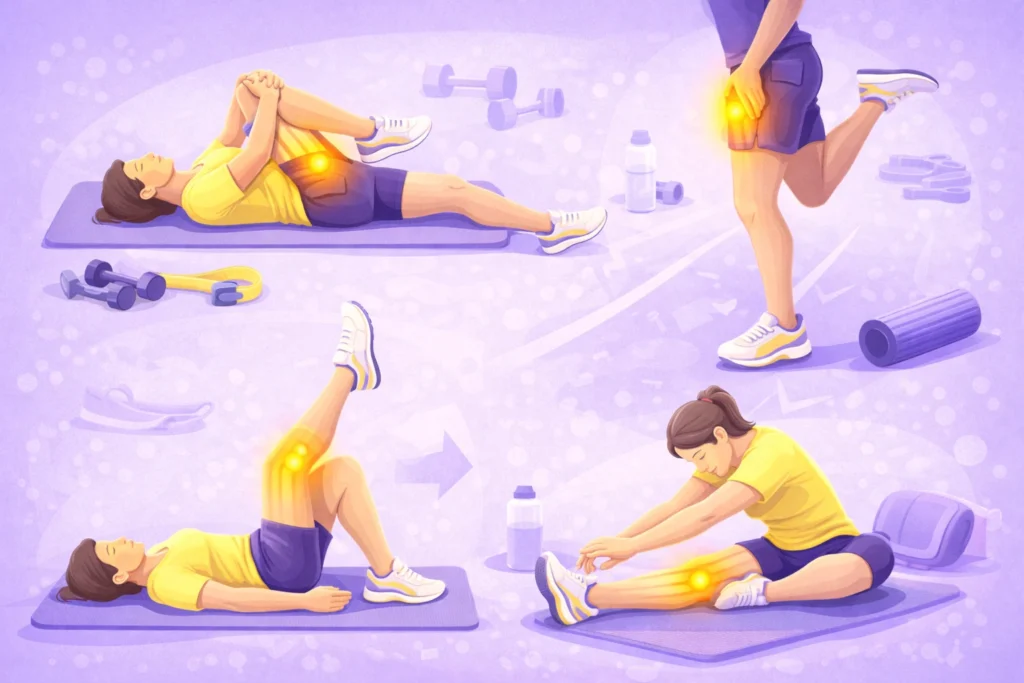
One essential aspect of sports physiotherapy involves rehabilitation exercises. These exercises aid in the return of strength, mobility and coordination after an injury.
Hamstring Stretch
The hamstring stretch increases the flexibility in the rear of your thigh as well as reduces muscle tightness.
Steps:
- Start sitting on the floor with one leg stretched out.
- Reach toward your toes slowly.
- Keep the stretch for 20 seconds.
- Repeat on the other leg.
Quadriceps Strengthening
The quadriceps are some of the strongest muscles in the body, and serving to stabilize the knee joint helps to prevent injury.
Exercise:
- Straight leg raises
- Wall squats
- Step-ups
Ankle Mobility Exercises
Football and basketball, for example, have high rates of ankle injuries.
Simple ankle mobility exercises include:
- Ankle circles
- Heel raises
- Resistance band ankle exercises
Glute Bridge Exercise
The glute bridges strengthen the muscles of the glutes and help with hip stability.
Steps:
- Lie on your back with knees bent.
- Lift your hips upward.
- Hold for a few seconds.
- Lower slowly and repeat.
Injury Prevention Tips for Athletes
One of the main objectives of sports physiotherapy is to avoid injuries.
Always Warm Up
A proper warmup increases blood flow to muscles and readies the body for exertion.
Warm up exercises may include:
- Light jogging
- Dynamic stretching
- Mobility drills
Improve Flexibility
Now, stretching on a regular basis increases flexibility of muscles and decreases chances of muscle strains.
Strength Training
Building muscles that support joints makes them stronger, more stable and injury-proof.
Use Proper Technique
Learning proper techniques for a sport helps avoid unnecessary strain in the joints and muscles.
Allow Adequate Recovery
Muscles need time to rest and recover in order to repair themselves and reduce the risk of injury.
In addition, athletes must prevent overtraining, sleep well and eat the right way.
When Should You Visit a Sports Physiotherapist?
The below conditions are signs for an athlete to visit sports physiotherapist:
- Persistent muscle pain
- Joint stiffness or swelling
- Reduced range of motion
- Difficulty performing sports movements
- Recurring injuries
Proper intervention during the initial visit from physiotherapy and rehabilitation can contribute to preventing minor injuries turning into comorbidities.
Physiotherapists also coach athletes through safe return-to-play protocols after an injury.
Sports Physiotherapy for Various types of Athlete
Sport physiotherapy is good for the athletes at every level.
Professional Athletes
Physiotherapy is a common treatment among professional athletes, ensuring they are in their best physical condition and recovering from injuries as quickly as possible.
Recreational Athletes
Physiotherapy helps to prevent injuries and improve fitness even in those who play sports as a hobby.
Young Athletes
Sports physiotherapy aids young athletes in learning proper movement patterns & helps in preventing growth related injuries.
Aging Athletes
Senior athletes experience joint stiffness and range of motion is reduced. Physiotherapy does assist mobility and strength of muscles.
Future of Sports Physiotherapy
Physiotherapy treatments are evolving with the advancements in sports science and technology.
Modern rehabilitation programs may include:
- Motion analysis technology
- Biomechanical assessments
- Digital physiotherapy platforms
- AI-based injury prediction systems
These innovations make it possible for physiotherapists to create more precisely tailored rehabilitation programs and prevent injuries with increased efficiency.
Conclusion
Corrective Sports Physiotherapy helps athletes keep in touch with fitness and gets them up and running again after injuries. Physiotherapists work to keep athletes strong, flexible, and resilient with specialized treatments, rehabilitation exercises and injury prevention strategies.
Sports physiotherapy will both help you in avoiding injuries and have lasting benefits no matter if you are an amateur, recreational player or a professional athlete.
With the right training approaches, regular physiotherapy exercises and sufficient recovery time, athletes can enjoy sports while keeping the risk of injury to a bare minimum.
Sports physiotherapy is not only for the treatment of injuries but also plays an important role in constructing a stronger, healthier, and more functional body at the same time which helps maintain performance over the long run.
Frequently Asked Questions
Sports physiotherapy focuses on preventing, diagnosing, and treating injuries related to sports and physical activities.
Athletes, fitness enthusiasts, and anyone experiencing sports-related injuries or muscle pain can benefit from sports physiotherapy.
It commonly treats muscle strains, ligament sprains, tendon injuries, joint pain, and overuse injuries.
It uses exercises, manual therapy, and rehabilitation techniques to reduce pain and restore strength and mobility.
Yes, it improves flexibility, strength, and movement efficiency, helping athletes perform better.
Recovery time varies depending on the injury but can range from a few weeks to several months.
Common exercises include stretching, strengthening, balance training, and mobility exercises.
You should visit a physiotherapist if pain, swelling, or movement problems persist after sports activities.
No, it benefits anyone involved in sports or regular physical activity.
Athletes can prevent injuries by warming up properly, stretching regularly, and following safe training techniques.
References
- Parihar, V. S., & Nayak, S. (2026). Role of Physiotherapy to Perform Better in Sports. International Journal of Scientific Research in Science and Technology.https://www.ijsrst.com/index.php/home/article/view/IJSRST2613110
- DPU School of Physiotherapy. (2024). What is Sports Physiotherapy? Scope and Awareness.https://physiotherapy.dpu.edu.in/blogs/sports-physiotherapy-benefits-scope
- Galway Physiotherapy & Injury Rehabilitation. (2024). The Benefits of Physiotherapy for Athletic Performance.https://galwayphysio.com/the-benefits-of-physiotherapy-for-athletic-performance/
- Physiotherapist India. (2024). The Role of Physiotherapy in Sports Injury Prevention.https://physiotherapistindia.com/sports-injury-prevention/