






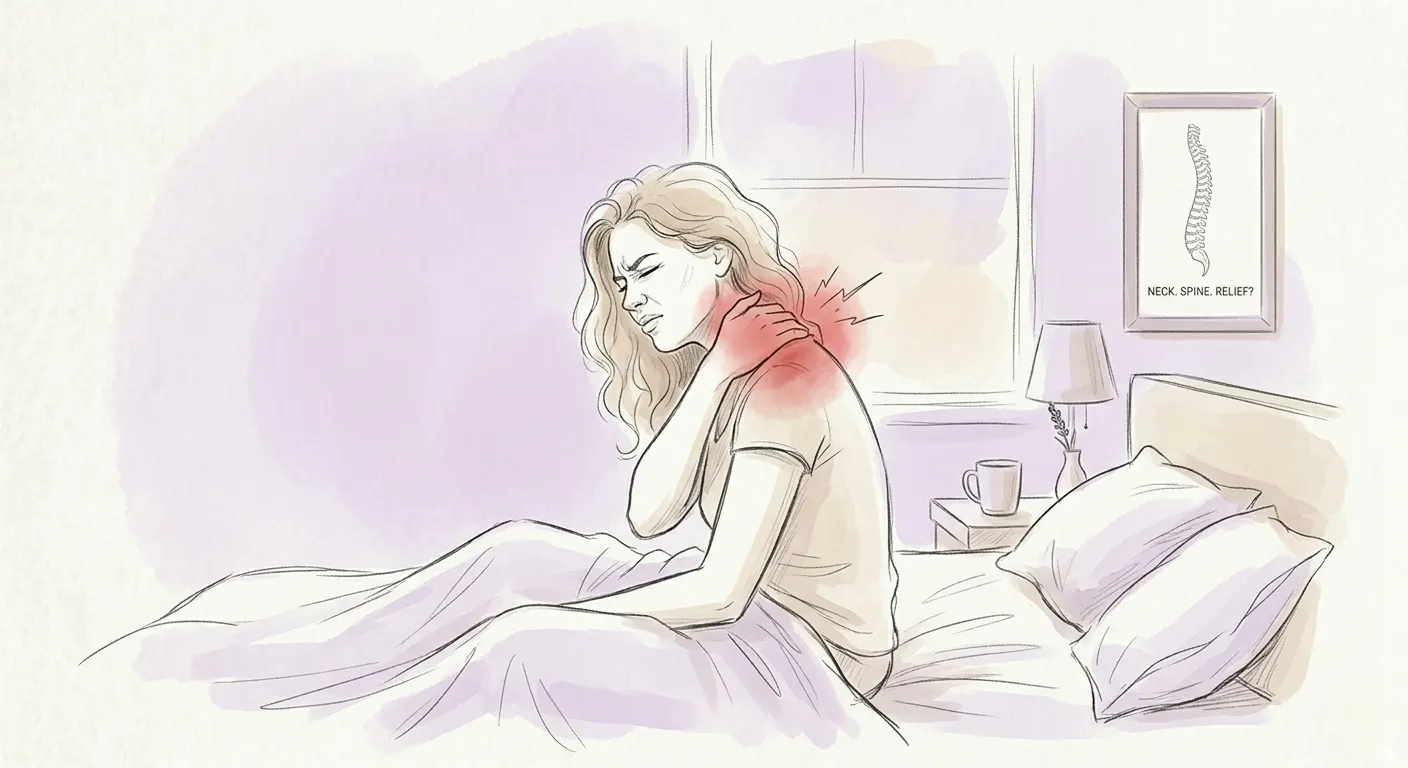
A stiff neck can spoil an entire day from the get-go. It can make head turns excruciating, throw off your posture and even render sleep less restorative. A possible cause for this is the pillow is not supporting our neck well throughout sleep. An orthopedic neck support pillow is used to keep the head and neck in a more natural position so it can sleep better, feel good, and exert less pressure on the body [1].
Why It Matters: Sleep isn’t just about resting. It is also when the body lies still for hours. When the neck is leaned forward, backward or to one side, the muscles may remain tense longer than they should. A properly-designed ortho neck support pillow would reduce that strain by supporting the curve of the neck and ensuring less deviation from alignment closer to neutral [1]
Why neck support is so important
The neck is a mobile section of the spine, but it isn’t designed for hours of twisting. But when the pillow is too tall, too flat or too soft, the head can tilt in a position that puts strain on our muscles and joints. The Cleveland Clinic suggests a good pillow should keep the neck in line with the mattress rather than bent up or down, while Mayo Clinic recommends that the head and neck remain aligned to the body during slumber [1].
So that is why a pillow isn’t simply something you’d be comfortable with. It is a component of your sleep position. NHS also recommends using a low, firm pillow for neck pain and MedlinePlus suggests sleeping on a firm mattress with a pillow that supports the neck. Those tips all point to the same idea: support is more important than softness alone. [3] [5]
How Is An Orthopedic Neck Support Pillow Different
An orthopedic neck support pillow is designed to do more than just feel good. It is contoured to follow the cervical spine’s natural curve. Some have contoured shapes, some use firmer foam and some are made to support both back and side sleeping. The aim is no different: prevent the neck from being kinked into an uncomfortable position during sleep [1] [5].
That support matters because the shape of a pillow can affect waking pain, stiffness and sleep quality. A systematic review published in 2021 concluded that pillow design may affect neck pain, waking symptoms, sleep quality and spinal alignment even if the optimal pillow is still based on sleeper and design . Previously, clinical studies have reported a correlation between some types of pillows and less pain in the morning [6].
The relationship between neck pain and sleep
And neck pain can worsen sleep, while poor sleep can make neck pain worse. According to Mayo Clinic, sleep position, posture, and daily strain are common contributors of neck pain. An uncomfortable pillow can set in motion a larger cycle: Poor alignment at night results in stiffness during the day, and stiffness during the day causes tension before sleep [4].
That’s one reason why people often notice neck pain more acutely after sleep than during the day. The body has been motionless for hours, therefore any awful angle is allowed to induce stress. This cycle is interrupted by an orthopedic neck support pillow, which helps keep the neck in a more stable rest position [1].
The science of support for side sleepers
Side sleepers typically require more pillow loft than back sleepers. The gap between the ear and shoulder needs to be filled by the pillow so that the head does not sag downward toward the mattress. Cleveland Clinic even states that the head should remain neutral, neither angled down nor up, while Mayo Clinic recommends supine position alignment to keep the neck intact [1]
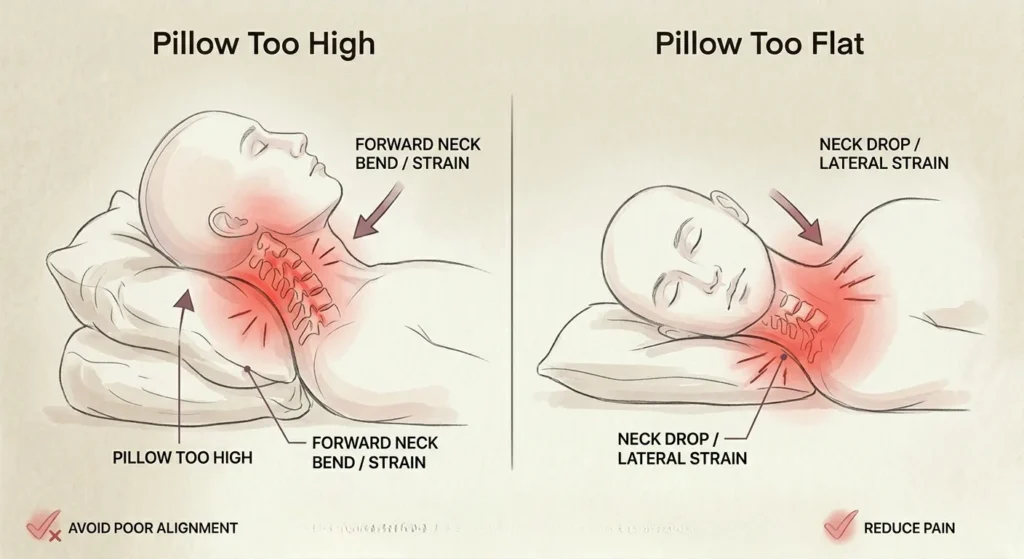
If the pillow is thin, then the neck bends downwards. If it is too high, then the neck bends up. In either case, the muscles may remain under tension for hours. This is why, in general, side sleepers do best with an orthopedic neck support pillow that has adequate loft and a stable shape [2]
Back sleepers: a foundational understanding
Back sleepers require a different combination. The pillow needs to prop the neck up without pushing the chin down toward the chest. According to Mayo Clinic the neck should remain in alignment with the chest and back, and Cleveland Clinic describes that same goal as keeping the neck parallel to the mattress [1].
A pillow that is too high can cause the head to tilt forward. If a pillow is insufficiently inflated, the neck may not be supported. An orthopedic neck support pillow can help here as it maintains the curve of the neck instead of pushing the head into an improper angle. [1]
Signs your pillow is not helping
But if you wake up with stiffness, neck pain, shoulder tension or a headache that feels related to sleep, your pillow might not be doing the job. For neck pain, the NHS advises a low and firm pillow, while MedlinePlus recommends a pillow that holds the neck up during sleep. [3]
Frequent tossing and turning during the night is another indication. If you keep folding, stacking or shifting your pillow around, it might not do its job for how you sleep. According to Cleveland Clinic, a common mistake would be picking a pillow that bends the neck forward or sideways [2].
What to consider when shopping for an orthopedic neck support pillow
So, the most expensive one is not always the best orthopedic neck support pillow. It is the one that cradles your sleep position and retains its shape long enough to support the neck over the course of a night. Support, heights, and firmness matter the most [1] [3].
Loft is important both in terms of head height. Side sleepers typically require more loft, while back sleepers typically need medium loft. The right firmness is important because a pillow that’s too soft will sink too far, and one that’s too stiff can feel uncomfortable. Shape matters; contoured pillows may better conform to the neck’s natural curve. [2]
How pillow shape can play a role
The shape of a pillow can affect the movement of neck muscle when sleeping. Some pillow designs have been associated with reduced neck pain, sleep quality and improvement in symptoms upon waking; however results were not uniform across individuals or types of pillows. That is why orthopedic pillows are usually contoured or cervical in shape rather than flat [6].
Some studies have observed a decrease in morning symptoms, as well as enhanced comfort of neck pain with the use of other specialist or ergonomically designed pillows [ref-6]. The key takeaway is not that one pillow suits all. That is the right structure may matter as much as content [6].
Common mistakes people make
One mistake many people make is to use too many pillows. That can force the head too high and flex the neck forward. The NHS’ neck pain advice suggests using a low, firm pillow instead of multiple stacked ones [3].
Another mistake is selecting a pillow just because it feels soft in the store. Softness can feel good initially, but it often lacks enough nightlong support. Cleveland Clinic cautions that a pillow can feel comfortable at first and cause problems after hours of sleep if the neck does not have enough support.
Adjusting your sleep set up how
An orthopedic neck support pillow is most helpful when the rest of our sleep arrangement aligns, too. According to the Mayo Clinic, if you sleep on your back, placing a pillow beneath the knees can help you relax your back muscles and support the lower spine [1].
Side sleepers may benefit from inserting a pillow between the knees to help maintain alignment of the hips and spine. As the Mayo Clinic and Cleveland Clinic alike note, it isn’t only the pillow under your head that matters when it comes to body positioning [1].
When neck pain requires more than a pillow adjustment
A better pillow is useful for everyday stiffness, but it won’t fix all neck-related problems. NHS advises to seek medical advice if neck pain persists for weeks, does not improve or is associated with numbness, pins and needles or a cold arm . MedlinePlus also recommends seeking treatment for bad or unusual symptoms [7].
That is important because not all neck issues stem from sleep posture. If pain is severe or persistent, a pillow may be only part of the solution . [3]
How this type of pillow can enhance the quality of sleep
The quality of sleep is often determined by small things that accumulate throughout the night. If a pillow does not support the neck, it may be subject to repeated movement, which makes sleep lighter in its feeling and less refreshing. Indeed, research on pillow design has shown that the appropriate pillow can have an impact on waking symptoms as well as neck pain and sleep quality [6].
That’s why an orthopedic neck support pillow can seem like an easy adjustment with a significant result. When the neck lies in a more neutral posture, the body may relax more comfortably and awake less fatigued [1].
Conclusion
An ergonomic neck support pillow for back and neck pain relief and comfort, is about alignment, support and consistency. The proper pillow prevents the neck from bending at an extreme angle, maintains a more neutral position for those who sleep on their sides and backs, and can help minimize stiffness in the morning [1] [3].
If your pillow of choice gets you sore or keeps you restless, the problem may not be sleep. It could be how your neck is supported. Tweaking that can help make evenings calmer and mornings smoother [1].
FAQs
An orthopedic neck support pillow supports the natural curve of the neck when sleeping. It helps maintain the head and neck position so as to put less stress on the muscles [1].
Yes. Side sleepers typically require a pillow with sufficient loft to align the head with the spine. The contour of the support pillow prevents flexion of the neck [1].
Yes. People who sleep on their back need a pillow that supports the neck without tilting the head up too much. It serves to maintain the alignment of the neck with the chest and back [1] .
If you wake up stiff, adjust your pillow every night or are worse-off in the morning than at night, then it might be because your pillow is not supporting sufficiently [3].
It can be beneficial by decreasing discomfort and facilitating alignment. Some pillow designs may be associated with improved waking symptoms, improvements in sleep quality, or both [6].
References
- Mayo Clinic. (2024-01-19). Sleeping positions that reduce back pain. https://www.mayoclinic.org/diseases-conditions/back-pain/in-depth/sleeping-positions/art-20546852
- Cleveland Clinic. (2020-12-10). Is Your Pillow Giving You a Stiff Neck While You Sleep? https://health.clevelandclinic.org/is-your-pillow-hurting-your-neck-7-tips-for-better-sleep
- NHS. (n.d.). Neck pain and stiff neck. https://www.nhs.uk/symptoms/neck-pain-and-stiff-neck/
- Mayo Clinic. (2022-08-25). Neck pain: Symptoms and causes. https://www.mayoclinic.org/diseases-conditions/neck-pain/symptoms-causes/syc-20375581
- MedlinePlus. (2024-02-08). Neck pain: Medical Encyclopedia. https://medlineplus.gov/ency/article/003025.htm
- Chun-Yiu, J. P., et al. (2021). The effects of pillow designs on neck pain, waking symptoms, neck disability, sleep quality and spinal alignment in adults: A systematic review and meta-analysis. https://pubmed.ncbi.nlm.nih.gov/33895703/
- MedlinePlus. (2025-07-03). Neck pain or spasms self care. https://medlineplus.gov/ency/patientinstructions/000802.htm


