Whether you spent the night scrolling on your phone in bed, working late over a laptop, or sleeping on a thin pillow, waking up with a stiff, achy neck can ruin your entire morning. If you find yourself flipping your pillow over, stacking two soft ones together, or using a rolled-up towel just to get through the night, switching to an ergonomic contour cervical pillow might be the exact support your neck needs.
Which Sleeper Sounds Like You?
- Side Sleeper: You wake up with your head tilted awkwardly and your shoulder buried painfully into the mattress.
- Back Sleeper: Your head sinks too far backwards into a soft pillow, flattening the natural curve of your neck.
A contour cervical pillow works by cradling your head and filling the empty gap under your neck to maintain healthy spinal alignment all night long. However, while it provides targeted relief for chronic stiffness, it isn’t automatically a one-size-fits-all fix for every sleep posture. Here is what you need to know about its pros, cons, and how to choose the right height for your sleep habits.
What Is a Contour Cervical Pillow?
Unlike flat, traditional pillows, a contour cervical pillow is ergonomically engineered with raised edges on either side and a gentle depression in the centre:
- Centre Hollow (Head Cradle): Holds your head in a stable position, preventing awkward tilting or sliding off overnight.
- Raised Ridges (Neck Arch Support): Fills the empty gap beneath your neck to keep your cervical spine in a healthy, neutral alignment.
By maintaining neutral alignment all night, a contour cervical pillow prevents muscle straining and takes continuous pressure off your neck joints.
Difference Between Contour and Traditional Pillows
Traditional cotton, down, or polyester pillows flatten out under weight, forcing your neck into awkward angles. A contour cervical pillow differs in two key ways:
- Targeted Ergonomic Shape: Instead of an evenly filled surface, it cradles the natural arch of your neck rather than letting your head sink too deep or pushing it too high.
- Supportive High-Density Materials: Crafted from responsive memory foam or latex, it holds its structural shape throughout the night without clumping or flattening like standard fibre pillows.
This firm, adaptive support makes a contour cervical pillow a far better option if you deal with morning neck stiffness, shoulder tension, or poor sleep posture.
What Are the Benefits of Using Contour Cervical Pillows?
Support for Natural Spine Alignment
It has been proven through studies that sleeping with a neutral neck is required to alleviate cervical strain and encourage good posture [1]. With the use of a contour pillow, such alignment can be assured through natural neck, head, and shoulder alignment. Such an alignment can eradicate objectionable sleeping positions which are not noticeable yet contribute to strain over time.
Relief from Chronic Neck and Shoulder Pain
Research in the Journal of Manipulative and Physiological Therapeutics discovered that cervical pillows lessened pain intensity and enhanced function in patients experiencing chronic pain [2]. The designed aim prevents nighttime nerve and soft tissue compression. For those experiencing daily pain in the neck, even minimal changes while sleeping can be noticed over the long term.
Enhanced Sleep Quality in Midlife and Beyond
Science has established that ergonomic pillows enhance the efficiency of sleep and diminish nighttime wake-up calls [3]. In individuals beyond age 40, it translates to improved sleep as well as improved cognitive rejuvenation. Quality sleep is particularly important at midlife when recovery, memory, and emotional coping are highly reliant upon undisturbed rest.
Potential Benefits for Ageing Populations
Since muscles and joints tighten with advancing age, support from contour pillows is all the more necessary. They alleviate pressure on the cervical spine and deter long-term consequences of bad sleeping posture, and are thus a significant part of healthy ageing. Older adults with stiffness or persistent pain can particularly value the advantages of these pillows for night-time relief.
Who Might Benefit Most?
Those with cervical spondylosis or adverse postural habits caused by desk work or too much screen time suffer from pain in the neck for extended periods. A contour pillow provides cervical support and potentially delays the development of degenerative spinal conditions [4]. The additional support can be especially beneficial in conjunction with posture training or physical therapy.
Office Workers and Sedentary Adults
Sedentary individuals spend long periods sitting at workstations, generating postural muscle imbalances and head-forward posture. During sleep, ergonomic sleeping equipment, such as contour pillows, is used to reverse unfavourable posture developed while awake. Sedentary workers can be given increased nighttime support to reverse daytime activity.
Seniors Experiencing Musculoskeletal Discomfort
Older patients are prone to experiencing age-related changes in the spine, stiffness of the joints, or arthritis. Contour pillows provide organised support that can also lower pain and improve restorative sleep quality. Better sleep also reduces inflammation and fatigue that are commonly felt with advancing age.
Are There Risks or Drawbacks?
Initial Discomfort or Adjustment Period
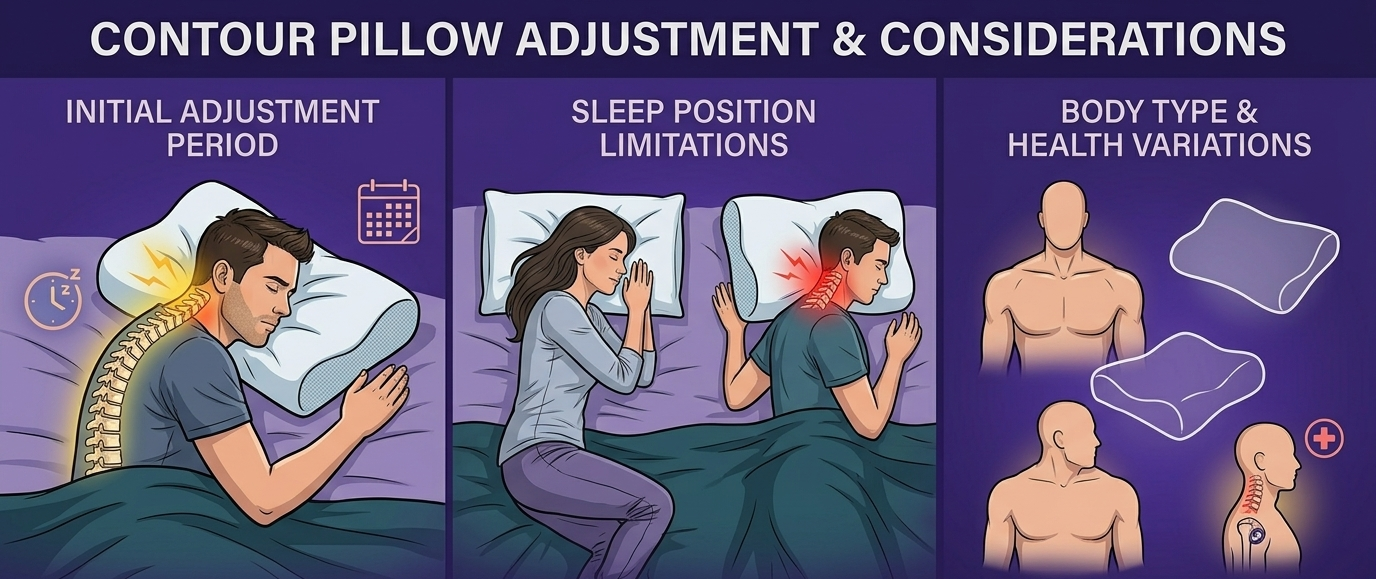
Some users may find contour pillows uncomfortable at first. The structured shape can feel unusual, especially if you’ve used flat or fluffy pillows for years. However, studies show that most users adjust within a few days to two weeks [5]. To ease the transition, some people begin using the pillow for short naps before transitioning to overnight use.
Unsuitability for Certain Sleep Positions
Contour pillows are generally ideal for back and side sleepers. Stomach sleepers may find the raised edges put their neck in an awkward position, potentially worsening discomfort. If you sleep in multiple positions or are transitioning from stomach to side sleeping, a hybrid design may offer a middle ground.
Not Ideal for All Body Types or Health Conditions
People with unusually broad shoulders, very short necks, or certain medical conditions may not find standard contour pillows comfortable. It is important to consider anatomical variations and consult a physiotherapist if unsure. Specialised or custom-made pillows may be more suitable in such cases.
How to Choose the Right Contour Cervical Pillow
Selecting the ideal contour cervical pillow comes down to matching its shape, height, and material to your personal body proportions and sleeping style.
If you are unsure whether your morning neck stiffness is caused by your sleeping posture or daytime desk strain, take the 2-Minute Betterhood Neck Pain Assessment to evaluate your symptom levels before choosing a pillow height.
Matching Pillow Shape to Your Sleep Position
- Stomach Sleepers: High contoured ridges can force your neck backwards into unnatural angles; flatter or hybrid pillow designs are usually a safer choice
- Side Sleepers: Look for a taller contour edge (loft) to bridge the gap between your shoulder and ear, keeping your neck straight without letting your head tilt downward.
- Back Sleepers: Choose a moderate contour that supports the natural arch under your neck while gently cradling the back of your head.
Material, Height, and Firmness
- Balanced Cushioning: Avoid overly soft pillows that collapse under weight, as well as overly rigid options that create tender pressure points around the base of your skull.
- Memory Foam vs. Latex: Responsive memory foam offers adaptive pressure relief for chronic tension, while natural latex provides a firmer, more breathable feel for hot sleepers.
- Adjustable Height Options: Dual-height contours or removable layer inserts allow you to adjust the pillow height to fit broad shoulders or longer necks.
When to Consult a Physiotherapist
If you manage underlying conditions like cervical spondylosis, arthritis, spinal stenosis, or persistent morning neck stiffness, consult a physiotherapist or orthopaedic specialist. A quick clinical assessment will help identify the exact pillow height and support structure needed to complement your daily recovery plan.
Are There Alternatives for Sensitive Sleepers?
Memory Foam vs. Latex Contour Pillows
Memory foam cradles the neck and head in a gentle hug, perfect for those with chronic tension or pain. It provides continuous pressure relief, eliminating morning stiffness. Latex, firmer in texture, naturally cooling and hypoallergenic, is perfect for hot sleepers or those who like a firmer, more supportive sensation.
Adjustable Orthopaedic Pillows
These pillows are designed with removable inserts or stackable pieces, so the user can customise firmness and height. They’re perfect for someone recovering from an injury, adjusting sleep patterns, or just not knowing what their ideal amount of support is. One pillow can meet multiple different needs over time, and they’re an excellent choice.
Pillow-Free Sleeping: Is It Ever Beneficial?
Certain stomach sleepers with adjustable spines can get away with sleeping without a pillow, as this will minimise neck extension. Yet this is not normally recommended for adults with back problems or over the age of 30. Make sure to visit a healthcare professional before changing this.
The Link Between Sleep Posture and Healthy Ageing
Good sleep posture does far more than prevent morning aches; it plays an active role in maintaining joint health, spinal alignment, and overall mobility as we age.
- Preventing Chronic Pain Early: Focusing on proper spinal support before minor stiffness turns into a long-term issue prevents the frustrating cycle of poor sleep and reduced daily activity.
- Age-Tailored Joint Care: As spinal discs naturally lose moisture and elasticity, ergonomic sleep tools, like a well-designed contour cervical pillow, provide the structural support needed to keep your neck in a relaxed, neutral position all night long.
For personalised care, tools like the Betterhood Contour Memory Foam Pillow offer physio-tested dual-height alignment to help you wake up rested and ready for your day
Final Verdict: Are Contour Cervical Pillows for You?
Are Contour Cervical Pillows Right for Everyone? Contour cervical pillows provide a wide range of advantages, ranging from the ability to alleviate long-term neck and shoulder discomfort to creating better posture and supporting overall long-term well-being, particularly as we get older. Their ergonomic structure can actually change how you sleep and how you feel when you wake up.
They are not, however, a one-size-fits-all product. The shape and support that will be suitable for one person will not be for another, particularly if you sleep in a particular sleep position, take specific measurements, or suffer from severe health issues. Stomach sleepers, those who have particular spinal curvatures, or those who are post-surgical may need different support structures.
Ultimately, your decision should be guided by your individual anatomy, daily comfort habits, and current pain levels. A contour cervical pillow can be a fantastic investment in your long-term mobility, provided it aligns with your unique needs. If you are ever unsure, consult a physiotherapist or sleep specialist to make an educated, personalised choice that supports your well-being for years to come.
Disclaimer
The information provided in this article is for educational and informational purposes only and should not be construed as professional medical advice, diagnosis, or treatment. A contour cervical pillow is an ergonomic sleep support tool designed to encourage healthy posture, not a replacement for specialised medical evaluation or physical therapy.
Always consult a qualified physiotherapist, orthopaedic specialist, or healthcare provider before introducing new orthopaedic sleep equipment, especially if you manage underlying spinal conditions, severe cervical spondylosis, nerve compression, or recent post-surgical recovery needs.
Frequently Asked Questions
1. Can everyone use a contour pillow comfortably?
Most people can adapt to contour pillows, but those with unique anatomical features or specific health concerns should seek professional advice.
2. How do contour pillows help with spine alignment during sleep?
They support the natural curvature of the neck, maintaining a neutral spinal position that reduces muscular tension and joint stress.
3. Can a cervical pillow worsen neck stiffness?
Only if it is the wrong height, firmness, or not suited to your sleep position. Choosing the right pillow can actually alleviate stiffness.
4. How long does it take to adjust to a contour pillow?
Most people adapt within a week. A short adjustment period is normal as your body acclimates to a more supportive design.
References:
[1] https://pubmed.ncbi.nlm.nih.gov/12184892/
[2] https://www.jmptonline.org/article/S0161-4754(07)00169-8/fulltext
[3] https://www.ncbi.nlm.nih.gov/pmc/articles/PMC6483921/
[4] https://pubmed.ncbi.nlm.nih.gov/32287153/
[5] https://www.ncbi.nlm.nih.gov/pmc/articles/PMC7700526/