




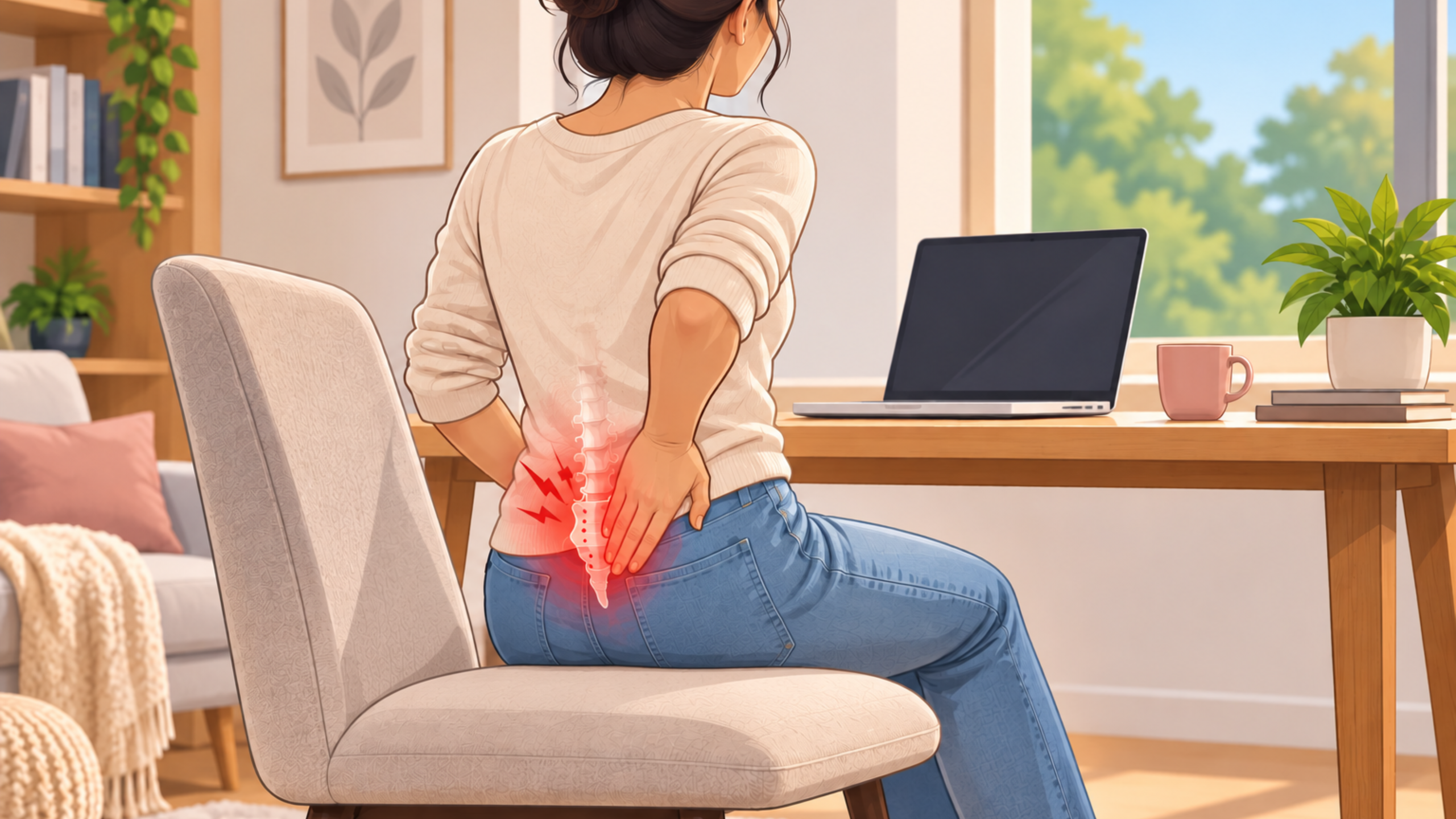
Sitting is difficult enough when your tailbone is merely bruised. But when a doctor confirms a fracture or dislocation, managing severe broken tailbone pain while sitting on a chair can make even the simple act of lowering yourself into a seat feel unbearable.
If the coccyx is such a small, tucked-away bone, why can an injury there make sitting feel almost impossible and what practical steps can you take to make necessary sitting tolerable while your body heals?
This guide covers what actually happens during a tailbone fracture or dislocation, how clinicians evaluate the damage, what conservative recovery looks like, and how off-loading pressure techniques including dedicated seat cushions can support you through the healing process.
What Happens When the Coccyx Is Fractured or Dislocated?
The coccyx (pronounced KOK-siks), commonly known as the tailbone, sits at the very base of your spine. Although it is small, it serves as an important anchor point for several pelvic floor muscles, tendons, and ligaments [1].
When direct trauma occurs most commonly from a fall backward onto a hard surface, a sports impact, or physical strain during childbirth the tailbone can suffer different types of structural damage:
- Coccyx Fracture: A break or crack in one of the small bony segments of the tailbone.
- Coccyx Dislocation / Subluxation: Abnormal movement or displacement at the joint between the lower spine and tailbone (the sacrococcygeal joint) or between individual tailbone segments [1].
- Fracture-Dislocation: A combined injury where the bone is broken and shifted out of its normal alignment [1].
Knowing that the coccyx can break or shift is one thing. But how can you tell what an injured tailbone actually feels like day to day?
What Does Broken Tailbone Pain Feel Like?
The symptoms of severe tailbone trauma are immediate and localized. Common experiences include:
- Sharp, Localized Pain: Deep, aching, or sharp pain directly at the base of the spine.
- Pain Triggered by Posture Changes: A distinct spike in pain when transitioning from standing to sitting, or when pushing yourself up from a chair.
- Discomfort During Bowel Movements: Because pelvic muscles attach directly to the tailbone, muscle tension during bowel movements can pull on the tender area [1].
- Tenderness to Touch: Direct pressure over the tailbone area causes acute discomfort.
Can You Walk with a Broken Tailbone?
Yes, most people can walk with a fractured or dislocated coccyx. Unlike a major fracture in the hip or leg, the tailbone does not bear your body weight while standing or walking. However, taking wider strides or walking quickly can occasionally stretch pelvic floor tissues, which may feel slightly uncomfortable.
How Do You Know If the Coccyx Is Bruised, Fractured, or Dislocated?
Pain alone cannot reliably distinguish between a deep tissue bruise, a clean fracture, or a displaced dislocation. This is because symptoms overlap significantly during the first few days after an impact.
Clinicians evaluate these conditions through physical examination and targeted medical imaging:
- Standard (Static) X-rays: Basic standing or lying X-rays help identify clear fracture lines or joint displacement [1].
- Motion (Dynamic) X-rays: Taken while sitting and standing to observe whether the tailbone shifts abnormally under your body weight [1].
- CT or MRI Scans: CT scans provide detailed 3D views of bone structure, while MRI scans help assess surrounding ligament strain and soft tissue swelling [1].
Once your clinician assesses the injury, the next concern is almost always practical: How long does this usually take to settle?
How Long Does a Broken Tailbone Take to Heal?
There is no shortcut that instantly repairs a fractured tailbone or puts a displaced coccyx back into place. Bone and ligament healing is a gradual process that requires time and mechanical rest.
While minor bruises often improve within a few weeks, properly managing broken tailbone pain during a fracture recovery generally requires several weeks to a few months of conservative care. [1].
Recovery timelines vary based on:
- The severity and alignment of the break or dislocation.
- How consistently you avoid aggravating direct pressure.
- Your individual healing rate and overall health.
Healing takes time, but life doesn’t pause, you still need to sit for work, meals, and travel. So what can you do when sitting itself is what hurts?
How Can You Sit More Comfortably While the Coccyx Heals?
When you sit on a firm, flat surface, your body weight rests on your sit bones (ischial tuberosities) and your tailbone. When the tailbone is fractured or dislocated, downward compression forces pressure directly into the injured bone and surrounding tissues [1].
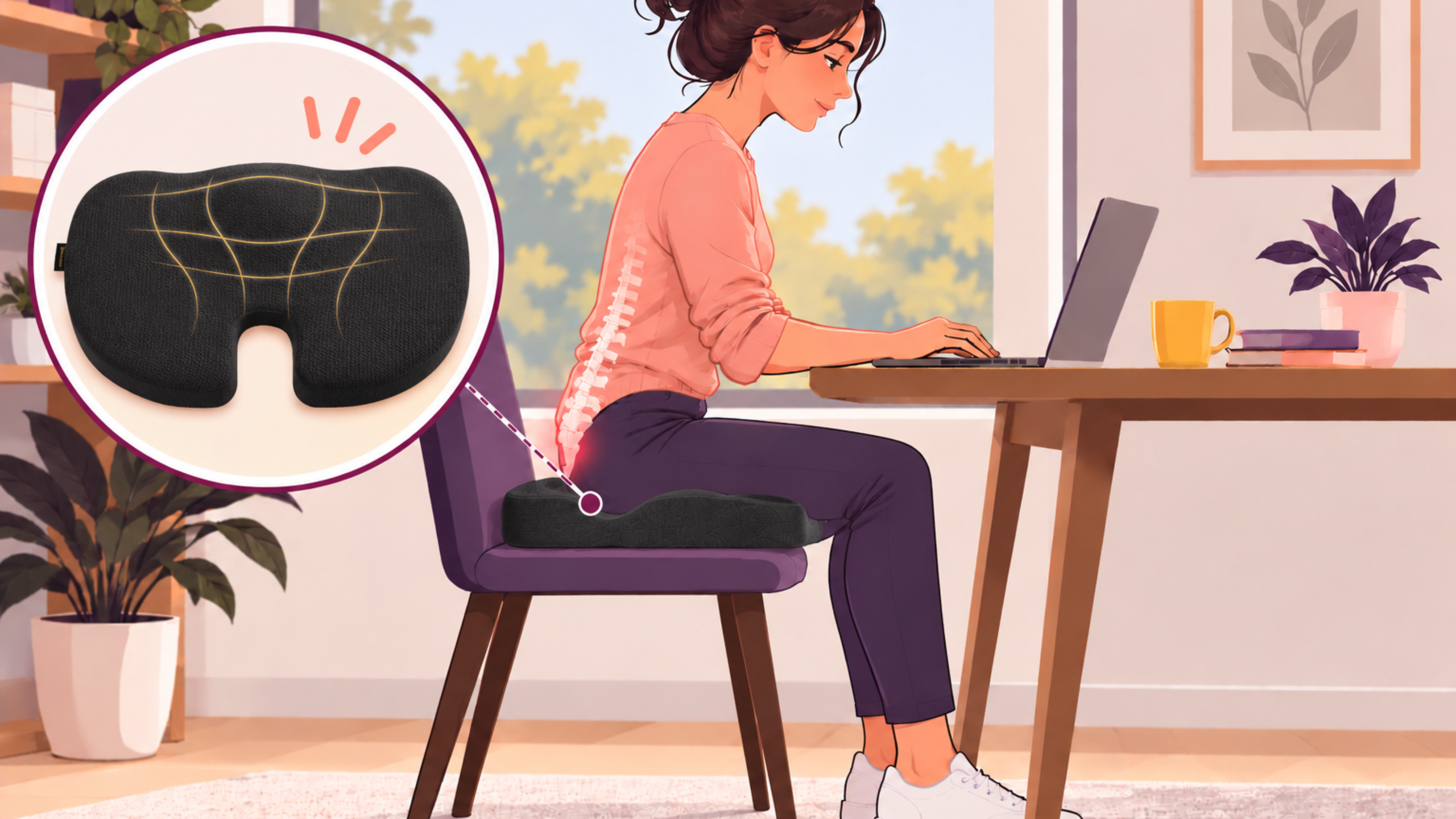
Reducing direct mechanical pressure on the coccyx is a cornerstone of conservative recovery [1].
- Flat Surface Sitting: Body weight travels through the sit bones and creates direct pressure on the injured coccyx, which can aggravate pain.
- Off-Weighted Sitting: A rear cut-out creates space beneath the coccyx, suspending it from direct contact and helping relieve pressure.
Practical Sitting Strategies:
- Lean Slightly Forward: Shifting your posture forward onto your thighs and sit bones reduces compression on the tailbone behind you.
- Avoid Deep, Soft Seating: Soft couches cause your pelvis to tilt backward, driving direct pressure straight into the tailbone. Choose firm, supportive chairs with upright back support instead.
- Take Regular Short Breaks: Avoid sitting continuously for long periods. Stand up gently or take short walks to relieve pressure.
- Rest on Your Side: When resting at home, lying on your side with a pillow between your knees removes mechanical load from the tailbone entirely [1].
If reducing pressure is key to managing day-to-day pain, could the seating surface itself make a measurable difference?
Can a Cushion Relieve Broken Tailbone Pain While Sitting?
Clinical rehabilitation literature highlights off-loading as a central principle for managing pressure over sensitive bony areas. Off-loading means redistributing contact pressure away from an injured area onto surrounding, broader tissues [2].
Research from the Rancho Los Amigos National Rehabilitation Center notes that foam cushions with posterior cut-outs help isolate and off-load pressure from the tailbone region during sitting [2].
What a Cut-Out Cushion Can Do:
- Provide a Void: Suspends the tailbone over an open space so it doesn’t press against a hard chair.
- Redistribute Weight: Directs seating pressure outward toward the thighs and gluteal muscles [2].
- Make Essential Sitting Tolerable: Helps you manage required work or meals with less acute discomfort.
What a Cushion Cannot Do:
- It does not realign a dislocated bone.
- It does not speed up the biological rate of bone fusion.
- It does not replace medical evaluation or treatment.
Where Betterhood Fits In
Betterhood’s Ergonomic Coccyx Cushion applies this off-loading principle to everyday sitting support [3]. Designed as a practical recovery accessory rather than a medical cure, it helps make necessary seating more manageable while your tissue heals:
- U-Shaped Rear Cut-Out: Creates a supportive void that suspends the coccyx, eliminating direct surface contact [3].
- Targeted Weight Redistribution: Shifts sitting loads away from the base of the spine toward the thighs and sit bones [3].
- Contoured High-Density Memory Foam: Provides firm, stable pelvic support without collapsing under body weight during daily use [3].
What About a Dislocated Coccyx After Childbirth?
Childbirth is a known cause of acute tailbone trauma. During vaginal delivery, pressure from the baby passing through the birth canal can push the tailbone backward. If the joint lacks flexibility, it can lead to joint strain, subluxation, or fracture [1].
Managing Postpartum Tailbone Recovery:
- Use Off-Loading Seating Support: Postpartum discomfort combined with tailbone trauma makes sitting especially challenging. An off-loading cushion helps relieve pressure during nursing or meals [1].
- Modify Feeding Positions: Side-lying nursing removes pressure from the pelvic area during long feeding sessions.
- Get Proper Evaluation: Postpartum pelvic pain can stem from joint strain, muscular spasms, or tissue recovery. Persistent pain should be evaluated by a healthcare professional [1].
Home Care & Conservative Recovery Steps
Beyond seating modifications, conservative care for a coccyx fracture or dislocation involves simple, daily management habits [1]:
- Short-Term Cold and Heat: Use a cold pack wrapped in a cloth initially to help soothe discomfort and swelling. Later, gentle heat may help relax surrounding muscles.
- Bowel Care: Straining can pull on pelvic floor muscles attached to the tailbone [1]. Staying hydrated, eating high-fibre foods, or discussing gentle stool softeners with your doctor can make bowel movements more comfortable.
- Cautious Physical Activity: Avoid heavy lifting, deep squatting, or high-impact exercise during early recovery. Light walking within comfortable limits promotes blood flow without straining the area.
When is surgery considered for a broken tailbone?
Most coccyx fractures and dislocations are initially managed without surgery, using conservative measures like pressure off-loading, activity modification, and symptom management [1].
Surgery is rarely considered in the early stages of recovery. However, if severe, disabling pain persists over many months despite consistent conservative care, a specialist may discuss options such as a coccygectomy (surgical removal of the hypermobile or unstable tailbone segment) [1].
When Should You See a Doctor?
While tailbone trauma is usually managed safely at home after an initial evaluation, you should consult a doctor promptly if you experience any of these concerning symptoms [4]:
- Numbness, tingling, or weakness in the pelvic area, groin, or legs [4].
- Sudden changes in bowel or bladder control [4].
- Inability to stand or bear weight due to severe pain [4].
- Signs of infection near the spine, such as fever, warmth, or increased redness [4].
- Severe pain that shows no sign of improvement over several weeks [4].
Frequently Asked Questions
1. How do I know if my tailbone is bruised or broken?
Symptoms of a severe bruise and a fracture are very similar. Both cause pain when sitting and tenderness to direct touch. Medical evaluation and imaging (such as X-rays) are necessary to confirm whether the bone is cracked or displaced [1].
2. Can a coccyx fracture heal without a cast?
Yes. Because of its location, the tailbone cannot be placed in a traditional cast or brace. Recovery relies on rest, protecting the bone from direct pressure, and allowing time for natural bone healing [1].
3. What is the fastest way to ease broken tailbone pain and heal?
There is no medical shortcut to accelerate bone healing. The most effective approach is avoiding mechanical aggravation—primarily by reducing sitting pressure, avoiding strain during bowel movements, and following your clinician’s guidance [1].
4. Can a broken tailbone cause long-term pain?
Most coccyx injuries improve significantly over time with conservative care. However, if joint instability or chronic inflammation persists, long-term discomfort (coccydynia) can occur [1]. Early pressure relief helps manage aggravation during recovery.
5. What sleeping position is best for a tailbone injury?
Side-lying with a small pillow between your knees is generally the most comfortable option because it takes body weight off the back of the pelvis.
Moving Forward During Recovery
You may not be able to avoid sitting completely while your coccyx heals, but understanding how to reduce direct pressure can turn a daily necessity into a manageable part of recovery. By combining temporary activity modifications, off-loading seating strategies, and proper medical guidance, you give the injured area time and protection to recover.
References
- Zhang Y, Gao G. Progress in the diagnosis and treatment of fracture-dislocation of the coccyx (Review). Experimental and Therapeutic Medicine. 2025;30(1):127. doi:10.3892/etm.2025.12877 https://doi.org/10.3892/etm.2025.12877
- Furumasu J, Buckner R, Mata C, Requejo P. Off-loading pressure relief with foam cut out cushions: Experiences from Rancho Los Amigos National Rehabilitation Center. Journal of Rehabilitation Medicine – Clinical Communications. 2023;6:18706. doi:10.2340/jrmcc.v6.18706 https://doi.org/10.2340/jrmcc.v6.18706
- Betterhood. Ergonomic Coccyx Seat Cushion Product Specifications. https://shop.betterhood.in/products/coccyx-memory-foam-chair-cushion-for-seat-ergonomic-design
- Cleveland Clinic. Coccydynia (Tailbone Pain): Symptoms, Causes & Treatment. https://my.clevelandclinic.org/health/diseases/21181-coccydynia-tailbone-pain
Disclaimer: This content is for informational purposes only and does not substitute professional medical advice, diagnosis, or treatment. Always consult a physician or physical therapist for persistent joint pain.


