




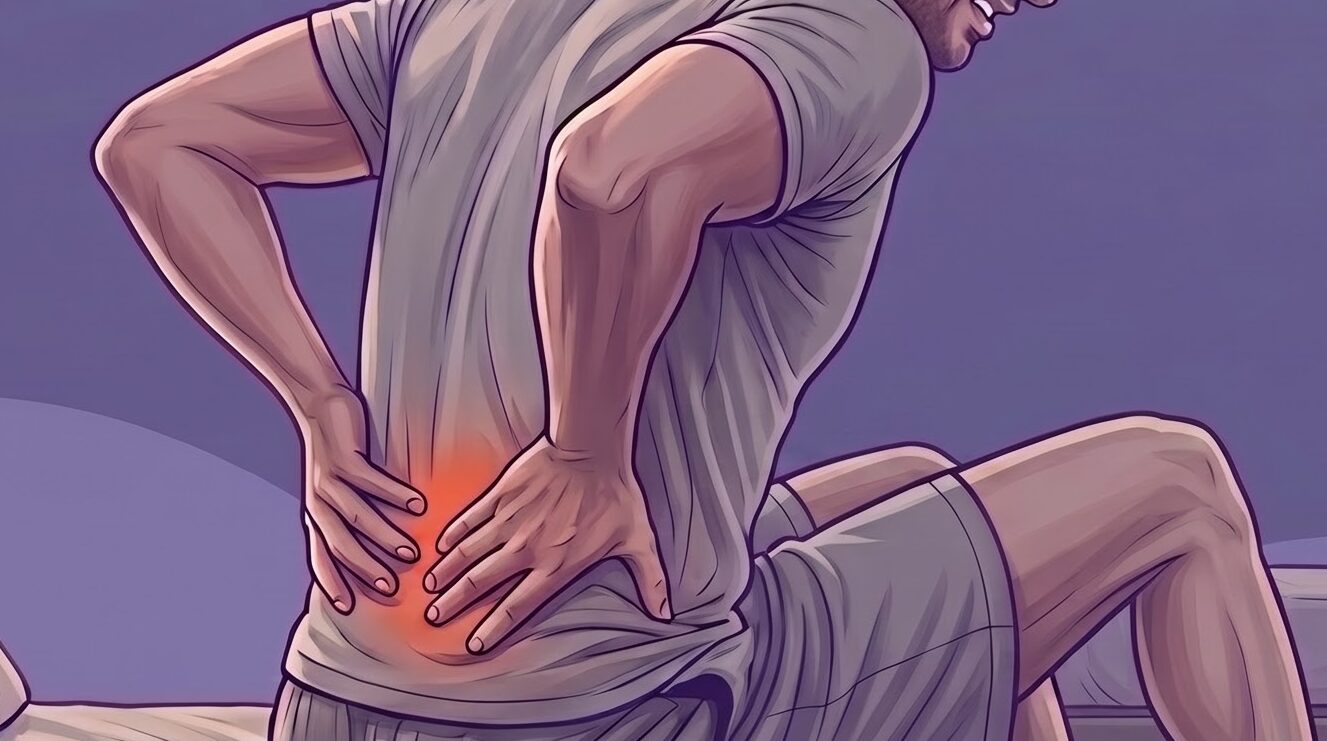
Imagine waking up every morning with your lower back feeling locked like solid concrete, aching with a deep, throbbing pain, all without any injury, heavy lifting, or physical trauma. For millions, this isn’t a mechanical strain or micro-tear; it is Inflammatory Back Pain (IBP). Driven by a systemic autoimmune response, IBP acts like an “invisible fire” burning inside your spinal joints and connective tissues.
What makes inflammatory back pain so tricky to catch early?
Unlike standard mechanical injuries, inflammatory back pain behaves in reverse: prolonged rest and bed time actually make the stiffness drastically worse, whereas physical exercise helps cool the flame and relieve the pain. Telling patients to “take it easy” often inadvertently worsens their symptoms, leaving the true underlying driver unaddressed for years.
How can you protect your mobility before permanent damage sets in?
Spotting the warning signs of systemic autoimmune stiffness early is crucial to prevent irreversible joint fusion and structural changes.
To understand back pain properly, it helps to look at where the issue originates, whether from mechanical physical strain or a systemic inflammatory response.
Inflammatory Back Pain vs Mechanical Back Pain: Key Differences
Mechanical Back Pain (Physical Strain & Trauma)
- Primary Cause: Physical wear, tear, or direct muscular overload.
- Target Area: Primarily affects muscle tissue, tendons, and surrounding soft tissue.
- Pattern of Onset: Typically sudden and event-based for example, heavy lifting, sudden twist, or an awkward fall).
Inflammatory Back Pain (IBP) (Systemic / Autoimmune)
- Primary Cause: Driven by an internal autoimmune cascade where the body attacks its own tissues.
- Target Area: Specifically targets the Sacroiliac (SI) joints and entheses, where tendons and ligaments attach to bone.
- Pattern of Onset: Has an insidious, gradual onset over weeks or months rather than starting suddenly.
Mechanical Back Pain: Local Wear, Tear, and Overload
Mechanical back pain is an isolated, localized event. When a muscle is stretched beyond its capacity or a disc bulges under excess pressure, the local tissue releases chemical messengers (like prostaglandins) that trigger acute localized inflammation. This swelling serves a purpose: it splints the injured area, encouraging rest so tissue can repair itself.
Primary Cause: Physical trauma, repetitive strain, poor mechanics, age-related disc degeneration.
Movement Dynamics: Physical activity causes additional strain on the damaged structural elements, aggravating the pain. Rest reduces biomechanical load and offers immediate relief.
Duration: Usually acute or subacute, resolving within a few days to six weeks as physical tissue heals.[2]
What Is Inflammatory Back Pain? The Autoimmune Fire
Inflammatory Back Pain is not caused by tissue breakdown; it is an immune system malfunction. In conditions under the umbrella of Axial Spondyloarthritis, including Ankylosing Spondylitis (AS), Psoriatic Arthritis, and Reactive Arthritis, the body’s adaptive immune system mistakenly identifies healthy connective tissue in the spine as a foreign threat.
The primary target of this attack is often the Sacroiliitis zone, the crucial sacroiliac (SI) joints that connect the base of the spine (sacrum) to the pelvic bones. Furthermore, inflammatory back pain specifically targets the enthuses, the exact sites where tendons and ligaments attach to bone. This condition, known as enthesitis, creates deep, widespread inflammation along the spinal column.
Primary Cause: Genetic predisposition combined with environmental triggers that cause immune dysregulation.
Movement Dynamics: Immobility causes inflammatory cytokines and fluid to build up inside the joint capsules, resulting in severe stiffness. Physical movement acts as a natural pump, flushing inflammatory fluid away from the joints and bringing fresh blood flow, which rapidly reduces pain.
Duration: Chronic, lasting longer than three months, with pain developing slowly and gradually over time without a clear physical injury.[3,4]
Physio-Approved & Physical Therapy Compatible.
All betterhood pain relief solutions are physio-approved. Designed in collaboration with musculoskeletal experts, these tools work alongside active physical therapy, targeted exercises, and professional clinical care to accelerate recovery and protect long-term mobility.
Managing Inflammatory Back Pain: Recovery Strategies
Managing inflammatory or mechanical back pain requires a structured, multi-tiered approach that addresses immediate discomfort while restoring proper movement mechanics.
Immediate Topical Relief & Targeted Recovery Solutions
To manage acute pain flare-ups and ease localized muscle tension or joint discomfort:
Targeted Topical Support: By applying fast-absorbing topicals such as the betterhood Pain Relief and Recovery Spray or betterhood Pain Relief and Recovery Roll-On provides localized soothing care for tense back muscles and stiff spinal joints.
Sustained Cooling & Muscle Relaxation: Using betterhood Cryogel Relief & Recovery Patches delivers continuous, long-lasting cooling relief directly to the lower back or sacroiliac region. The blend of menthol, magnesium, and boswellia eases deep muscle tightness and promotes joint comfort.
Muscle Mineral Support: Massage tired, tense back muscles with betterhood Magnesium Body Lotion For Recovery to replenish magnesium locally and relax persistent spasms.
Ergonomic Support & Posture Alignment
Maintaining improper posture during long hours of sitting increases pressure on the lumbar spine and exacerbates back stiffness.
Chair & Workstation Support: Integrating the PosturePro Plus Premium Ergonomic Lumbar Backrest Cushion or the Ergonomic Seat & Lumbar Cushion Combo ensures proper spinal curvature, distributes body weight evenly, and reduces static loading on the lower back.
Commute Relief: Using a Car Seat Cushion & Lumbar Backrest supports the spine during long drives and prevents lower back fatigue.
Anti-Inflammatory Lifestyle & Nutrition
Prioritize Omega-3 Fatty Acids: Incorporate cold-water fish, walnuts, and flaxseeds to support natural anti-inflammatory pathways.
Minimize Inflammatory Triggers: Reduce consumption of highly processed foods and refined sugars that can spike inflammatory markers.
Conclusion: Moving from Stiffness to Strength
Experiencing persistent lower back stiffness every morning can feel frustrating, especially when traditional approaches fail to deliver lasting relief.
However, identifying whether your discomfort stems from systemic inflammation or mechanical strain is a pivotal turning point. Combining professional rheumatological care and physical therapy with supportive tools, such as betterhood Pain Relief & Recovery Solutions and ergonomic posture supports, allows you to take active control of your spinal health. You don’t have to live trapped by joint rigidity; with the right recovery plan in place, you can protect your spine, restore mobility, and move with confidence every day.
FAQ
What are the key warning signs and symptoms of Inflammatory Back Pain?
- Severe early morning stiffness in the lower back and hips lasting 30 minutes or longer.
- Deep, throbbing pain in the buttocks, hips, or lower spine that wakes you up in the second half of the night.
- Gradual, insidious onset of symptoms over several weeks or months rather than following a sudden physical injury.
- Significant improvement in pain and stiffness after light exercise or physical activity.
- Potential systemic signs such as severe fatigue, eye inflammation (uveitis), skin rashes, or digestive issues.[6]
How is Inflammatory Back Pain diagnosed by medical specialists?
Because IBP cannot be confirmed through a single test, a rheumatologist performs a comprehensive evaluation including:
Blood & Genetic Testing: Checking for elevated inflammatory markers like C-Reactive Protein (CRP) and Erythrocyte Sedimentation Rate (ESR), alongside testing for the HLA-B27 gene marker.
Advanced Imaging: Magnetic Resonance Imaging (MRI) scans to identify early sacroiliitis and bone marrow edema before structural joint changes become visible on standard X-rays.
Clinical Assessment: Evaluating symptom history, mobility ranges, and family history of autoimmune diseases.[6]
How are physio-approved pain relief tools integrated into a recovery plan?
Topical pain relief solutions, cryogel patches, and ergonomic support cushions are designed to work alongside active physical therapy and medical management. While medical therapies address underlying systemic inflammation, physio-approved recovery products help soothe localized muscle tension, ease joint rigidity, and maintain proper postural alignment during daily tasks and rest.[5]
Reference
- https://www.trilife.in/blog/inflammatory-back-pain/
- Florida Medical Clinic – Inflammatory vs. Mechanical Back Pain
- Cleveland Clinic – Ankylosing Spondylitis: Symptoms & Treatment
- Johns Hopkins Arthritis Center – Symptoms of Ankylosing Spondylitis
- betterhood India – Pain Relief & Recovery Collections
- Cleveland Clinic – Ankylosing Spondylitis (AS): Symptoms & Treatment
Disclaimer: This content is for informational purposes only and does not substitute professional medical advice, diagnosis, or treatment. Always consult a physician or physical therapist for persistent joint pain.


