




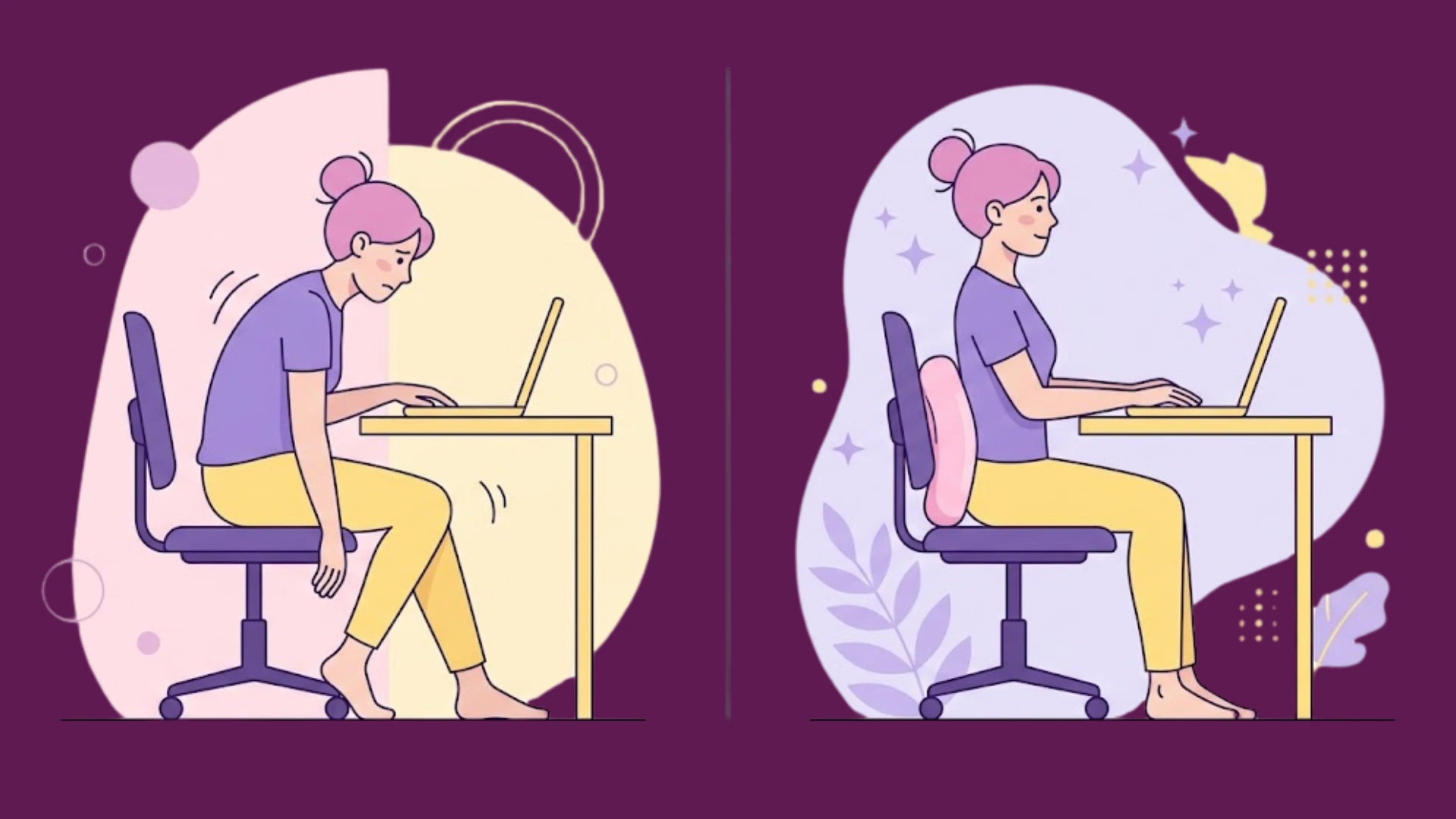
Posture in itself is not something you fix in one sitting. Your body learns and forms a habit over time. When you sit too long, whether working at a desk or using technology, your body gets used to sitting tight and in a position not ideal for your spine to thrive long term. These habits, which are often mindless, become your habitual position because you will be sitting. This can, of course, result in an unaligned spine and much pressure to the lower back.
These can lead to discomfort, stiffness, and fatigue that builds up throughout the day and overflows into your home life. So, no matter how much you get reprimanded for your posture or force yourself straight up and down for a while, it is useless. Holding onto that tactic is more difficult and raises the stakes. It is not about how you are trying harder and trying to find the ideal position or perfect alignment in your body but rather getting that your body needs compresses as well so that it can self align more with less effort.
An environment where there is space for movement and constructive posture readily will help to engender muscle relaxation while ensuring a degree of stability. The best way to do so is by investing in a suitable lumbar support that will keep your spine perfectly arched, relieve excess pressure and assist with maintaining a healthy sitting posture all day long.
Why Posture Breaks Down
In the lower back, a curve is a natural part of the structure of the spine. This curve plays a huge role in distributing weight and absorbing the tension when you are walking or sitting. This helps ensure that your body remains balanced and that no one region is overstressed. However, if you have been sitting stagnant for an extended period of time without support, the physiological curve will be rectified causing altered pressure on your spine.
Over time, this leads to:
- More stress on lower back
- Your muscles wear out trying to hold you.
- Reduced mobility and stiffness
Instead of your skeleton doing all the work, when you sit and lay down your muscles have to struggle more to support the body. This can lead to sore muscles, move habits that compound over time, and bad postural habits which take a long time to be reversed.
What Lumbar Support Actually Does
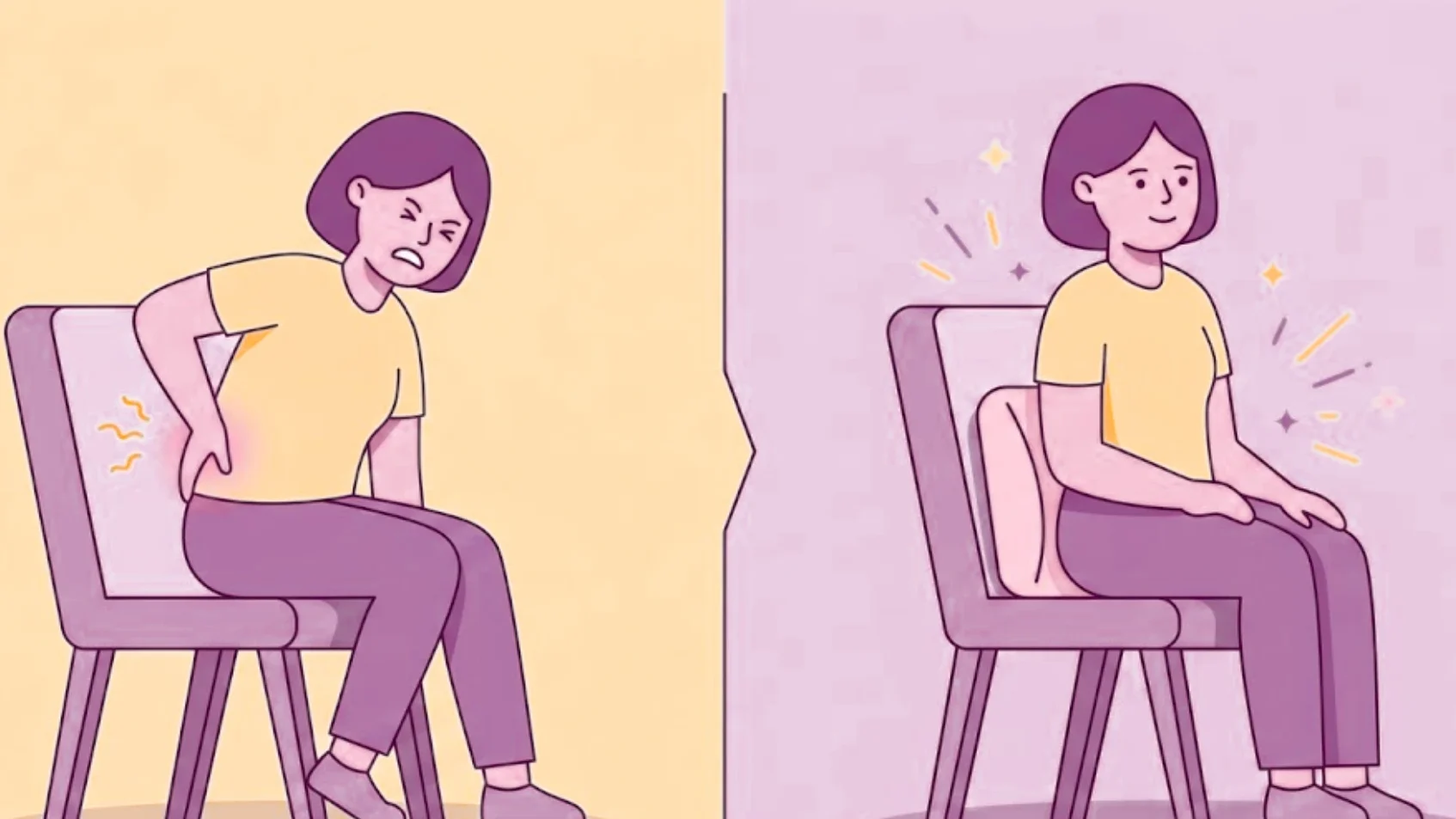
One of the ultimate purposes of lumbar support is to maintain the natural position of how your lower back should be. Rather than cramming you into a contorted, unnatural position (or worse–allowing your spine to collapse), it cradles your body into an orientation that is more natural and more like what physiologists define as perfect posture.
Maintains Natural Spinal Curve
A quality lumbar support fills the gap between the chair and your lower back. It keeps the right inward bend in the spine and prevents a flattening of the spine when sitting down for long durations. Maintaining an efficient body alignment helps to prevent excessive strain on the muscles and joints.
Reduces Muscle Fatigue
The right support for your spine means you don’t need muscles to hold you up all the time whether sitting or standing. This places them in a neutral/comfortable high position, which reduces fatigue and allows the body to become more relaxed for extended periods of time so that the person can remain seated for longer.
Distributes Pressure Evenly
Lumbar support helps disperse the pressure across your whole back rather than focus it into one spot. This even spread means that more of the body is supported in a restful position and carries less of the potential for soreness or tension to occur.
Signs You Need Lumbar Support
In fact, many people experience pain due to poor posture that can be widespread, but their sources may go unrevealed. Such issues can be slow to develop, and typically fly under the radar for a long time before starting to affect your day-to-day comfort.
Common signs include:
- Pain in back due to sitting at work for longer hours
- Slouching or leaning forward unconsciously
- Fatigue with any minor exercise
More often than not these more symptomatic signs are a signal that your body is deprived of what it needs. The earlier you spot them, the easier it is to adjust in your chair later on so that you sit straight going forward as well and avoid irritating pain.
Why Proper Lumbar Support Helps Rebuild Your Posture
Rebuilding posture is not about forcing it, it’s about practice and repetition with time. With enough practice of spending an entire day keeping it in the right position, this will lead to being that way automatically without effort. This creates a background mode which instils correct posture rather than pushing users into reminder and physical force correction.
How Does Lumbar Support Restore Posture?
Encourages Neutral Sitting Position
Support also helps keep the pelvis in a more neutral position. Most of us let our hips tilt either forward or back but supported sandsends encourage your pelvis to start to sit evenly across supporting muscles. So, that your spine stacks and lands appropriately for the curves enabling a better overall posture with no conscious cue corrections. Less stress will be put on the lower back and its surrounding muscles.
Reinforces Healthy Movement Patterns
Your body begins to adapt this position as the new normal when sitting up straight for long spells. They do not stop there, and we will see these patterns later generalized into stand & walk too. Like this, your posture remains more balanced and consistent throughout the day.
Reduces Compensation in Other Areas
Also, improper posture is one of the primary causes for compensating in areas such as neck, shoulders and hips. Providing the lower back is well supported, these regions do not have to work extra overtime to maintain an equilibrium. This relieves tension and increases relaxation through the entire body.
Choosing the Right Lumbar Support
A large number of lumbar backs are of high quality, Not all are good. The power one should contour to the condition of your cadaver and not force it into some uncomfortable or abnormal position.
Proper Fit
It is close to the natural curve of the low back but does not stiff or feel too soft. A lumbar support that is properly-fitted so that it has gentle contact with the area, helping you realign as you move.
Balanced Support
Their goal is not to make us better, instead it is to support us. So, an ideal lumbar support will restrict us from over movements as well gives us freedom of natural motion. Too firm can cause the body to crease, yet too soft support from below may prevent one sleeping.
Everyday Usability
You have to then, pleasant of all, use your workplace chair each day and most importantly even in the painting environment you operate. Standard use all day long promotes better transport posture as adequately.
Building Better Habits Alongside Support
The best lumbar support is simple habits intertwined in our everyday life that give way for our posture to flourish. Together, they give a more comprehensive and practical way of moving forward.
Take Movement Breaks
No matter how good you are at supporting it, hours of sitting will make your body feel tight. Standing for a couple or a few minutes after every hour of being in front of the computer can work wonders to help reset posture and get blood circulating.
Stay Aware of Your Position
Eliminate the habit of forming Monitor your posture every so often during the day to prevent small misalignments from becoming habitual buildups. Over time, you can vastly improve your game on basics like relaxing your shoulders, keeping your head in line with your spin.
Strengthen Supporting Muscles
Work your core and back a lot harder to keep yourself up straight (this will just happen over time). When these muscles strengthen just a little bit more, they can feed the intricate inner support system allowing for her to feel less dependent on any kind of external resource: she can still use it and call upon it but she does not require full resources to be invested in her.
How Betterhood Supports Posture
Your environment should actually enable your body so rebuilding posture is easier. Betterhood products are also intentionally designed to accommodate how your body naturally moves and the shape in which it begs for rest.
Consistent Lower Back Support
Betterhood lumbar support encourages a natural curve in your spine that can help you get into the optimal seated position to reduce any chance of injury or pain while you are sitting down for long periods.
Improved Sitting Experience
As you sit on these products they bring your posture in line allowing for less fatigue making sitting feel favourable and sturdy helping one to improve on their performance during a long day’s work.
Support for Daily Routines
If you are working, studying or just having a good time; You spend more during the day; Your posture helps to maintain and practice better postures in healthier ways.
A balanced approach works best:
- Utilize lumbar support to prevent being out of alignment
- Stay active to build strength
- Practice consistency for long-term improvement
- Rebuilding Posture Takes Time
Posture is not corrected in one night. Habits and patterns that have been in place for a long time. As with poor posture, it is arguably easier to build good posture one day at a time. Since every small mistake you make in the day results in a huge postural change over your entire life.
Proper lumbar support allows your body to align without putting in efforts. Instead, it is summoned into the position that sits right with itself. This reduces the ability to adapt and allows your muscles to take a step back (while still offering support). And as you will be doing this more and more, your body is learning to feel a good posture. The way of sitting should feel less like work and work a lot like how human beings should sit.
Conclusion
Forcing your body into place, but recreating the right environment that allows it to do its job properly. This alternative, aligned environment helps your body to be positioned far more neutrally with much less struggle. For that reason, a quality right lumbar support is ultra-important for the procedure of protecting your backrest in a normal round way which can rescue you from merchant aches and discomfort whenever sitting on, working or doing sports throughout existence.
With lumbar guidance, posture evolves from correction to natural alignment through the incorporation of mindful habits and integration of that lumbar support into your daily routine. Before long your body gets used to positioning, instead of forcing yourself into it all the time. Incremental change in injury discomfort will both reduce pain perception and also qualitatively improve your movement but also if you want to mend it to last the day. With continued encouragement and celebration, this leads to more movement, better physiological vitality, and a bolder supported experience of sitting and living.
FAQs
Lumbar support is used to maintain the natural curve of the lower spine and reduce strain during sitting.
It helps improve posture over time by supporting proper alignment, but it works best with healthy habits and movement.
You can use it throughout your sitting hours, especially during long work or study sessions.
Yes, it can help reduce lower back pain by lowering pressure and muscle fatigue.
Yes, it is generally suitable for most people who sit for long periods, especially office workers and students.
No, it should be combined with movement, exercise, and awareness for best results.
Some people feel relief quickly, but long-term posture improvement takes consistent use over time.
References
[1] American Academy of Orthopaedic Surgeons (2022) Low Back Pain and Posture Support. Available at: https://orthoinfo.aaos.org/en/diseases–conditions/low-back-pain-detailed-overview-and-care-guide
[2] National Health Service (NHS) (2021) Back Pain Overview. Available at: https://www.nhs.uk/conditions/back-pain/causes-treatment-and-prevention-guide
[3] Mayo Clinic (2023) Back Pain Causes and Treatment. Available at: https://www.mayoclinic.org/diseases-conditions/back-pain/symptoms-causes/syc-20369906
[4] McGill, S. (2015) Low Back Disorders: Evidence-Based Prevention and Rehabilitation. Available at: https://www.ncbi.nlm.nih.gov/books/back-disorders-mcgill-research
[5] Harvard Health Publishing (2020) How to Sit Properly and Reduce Back Strain. Available at: https://www.health.harvard.edu/pain/posture-and-back-health-guide
[6] World Health Organization (2021) Musculoskeletal Health Conditions. Available at: https://www.who.int/news-room/fact-sheets/detail/musculoskeletal-conditions
[7] National Library of Medicine (2019) Ergonomics and Lumbar Support in Sitting Posture. Available at: https://www.ncbi.nlm.nih.gov/pmc/articles/ergonomics-lumbar-support-study-overview


