




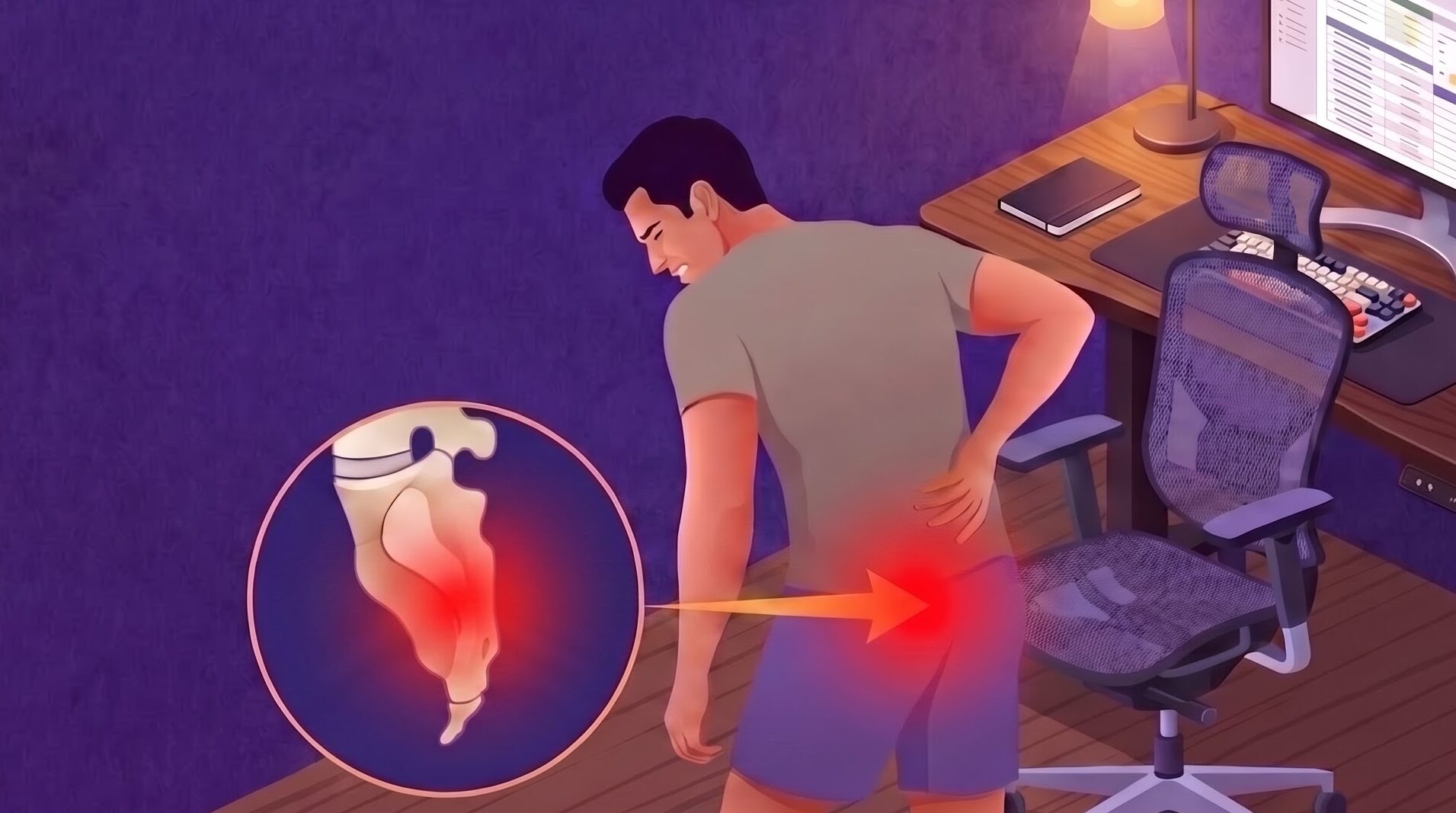
Need tailbone pain relief after a long drive or sitting on a hard office chair? If you are searching for tailbone pain relief, you are not alone, and that need for tailbone pain relief comes from a tiny bone that supports a lot of pressure. When this area is damaged, every chair and car seat can trigger the need for tailbone pain relief.
You stand up after a long work session or step out of the car after a road trip, and there it is, a dull, nagging ache right at the base of your spine.
Suddenly, Sitting down, shifting positions or going about your daily routine suddenly feels uncomfortable.
This is tailbone pain, known medically as coccydynia is disproportionately debilitating compared to its tiny size. Located at the very bottom of the vertebral column, the coccyx acts as an anchor point for numerous muscles, tendons, and ligaments. So when this small structure is bruised, misaligned, or inflamed, every chair, driver’s seat, and sofa becomes a source of dread.
Tailbone pain relief: uncovering the culprit behind your pain .
Fall or physical impact
The Trauma Factor: Falling backward onto a hard floor or experiencing a direct hit can easily bruise, dislocate, or injure the tailbone, because of its position at the very base of your spine, any shift out of place can cause persistent, long-term soreness.[1]
Pregnancy or birth
The Hormonal & Pressure Shift: During pregnancy, your body releases a hormone called relaxin. It relaxes tendons and ligaments to allow pelvic bones to shift. Combined with increased pressure from the baby and the physical strain of delivery, muscle and ligament imbalances can pull your tailbone out of position.
Cycling, rowing, or sitting on hard surfaces.
- Repetitive Motion & Pressure: Leaning forward for extended periods during sports like cycling or rowing puts continuous pressure on the base of the spine and can misalign surrounding muscles.
- Slouching or hard surfaces: Sitting on flat, hard chairs transfers direct pressure to your tailbone instead of your sitting bones.
- Carrying extra weight: Added pressure on the lower spine aggravates the joints around the coccyx.
- Being underweight: Low body fat means less natural cushion in the buttocks, causing your tailbone to rub directly against muscles, tendons, and surfaces.[2]
Dealing with localized pelvic/anal discomfort, or unexplained persistent pain.
The Culprit: Hemorrhoids or Rare Underlying Conditions
Hemorrhoids: Tissue inflammation near the anal opening can pull on surrounding pelvic muscles, radiating pain toward the tailbone.
Rare Cases: Unrelenting pain that worsens over time, especially when using the bathroom, bending, or during menstruation, can occasionally indicate spinal tumors, chordomas, or referred pain from other conditions.[2]
None of the above, just starts happening.
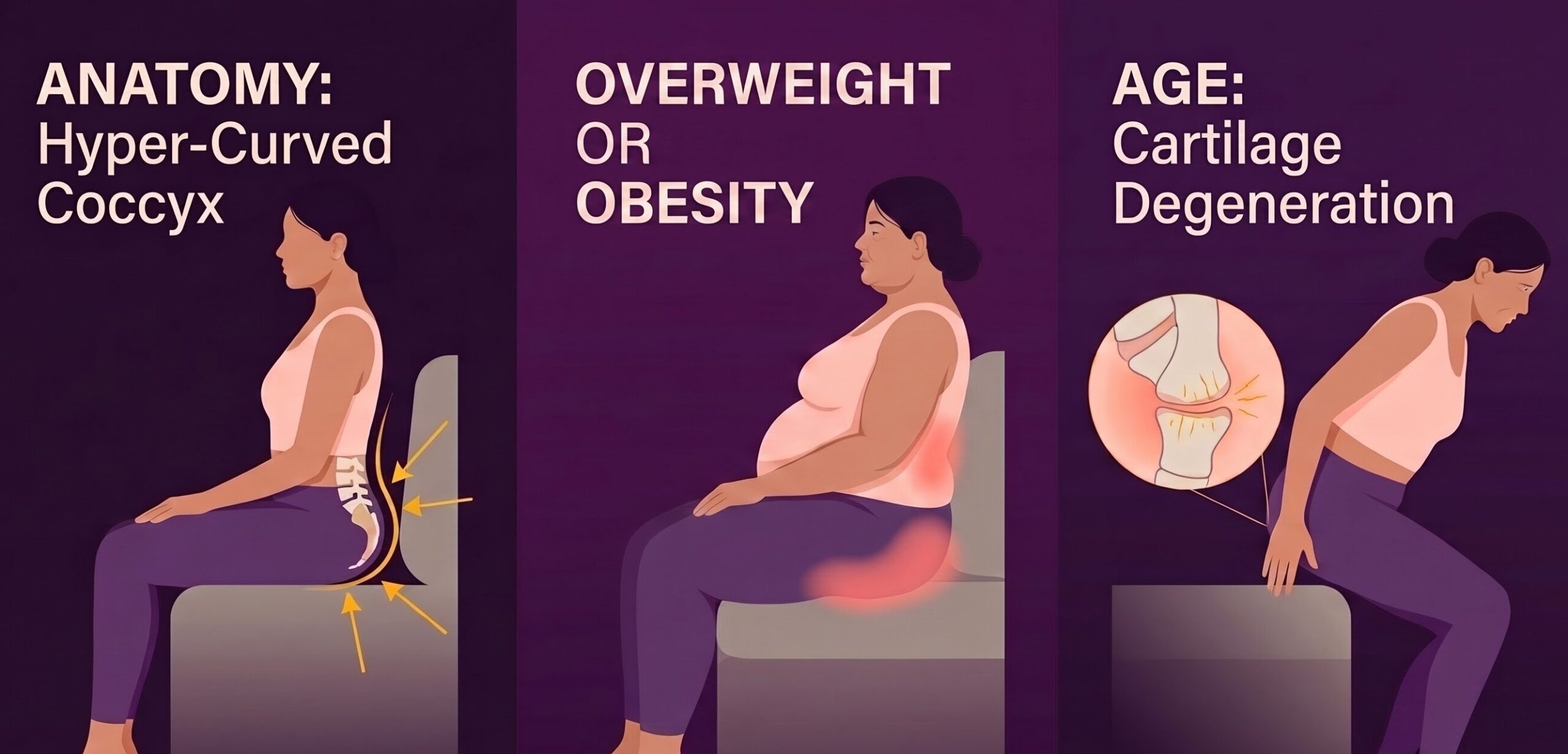
Anatomy, Weight, or Age can be a major factor for Coccydynia
Anatomy & Cushioning: Some people naturally have a more curved tailbone or less subcutaneous fat in the area to cushion against friction.
Aging: Over time, the protective cartilage in the area degrades and natural cushioning thins out.[1]
Most tailbone pain isn’t permanent, it typically improves on its own over several weeks or months. You don’t have to just tough it out in silence while waiting to heal.
Tailbone pain relief: immediate Comfort Strategies
When pain strikes, small changes to your day-to-day habits can offer instant relief:
Change How You Sit: Try leaning slightly forward when seated to relieve pressure from your tailbone.
Use Specialized Support: Invest in a pressure-reduction cushion (a wedge-shaped or cutout cushion often works best).
Thermal Therapy: Apply alternating ice or heat packs to the sore area for 15–20 minutes at a time.
Over-the-Counter Relief: Simple pain relievers like acetaminophen or ibuprofen can help keep inflammation and discomfort at bay.[3]
What if the Pain Won’t Go Away?
If your pain lingers beyond a few months. It transitions into chronic coccydynia. At this stage, consulting a doctor is essential. They may order an MRI or imaging to rule out fractures, joint issues, or other underlying causes.
For persistent pain, targeted medical treatments can make a massive difference:
Physical Therapy: A physical therapist can teach you pelvic floor relaxation techniques (such as deep breathing routines similar to what you’d do during urination).
Targeted Manipulation: Specialized massage of the muscles attached to the coccyx can relieve surrounding tension.
Injections: Local anesthetic injections into the tailbone region can provide weeks of targeted relief.
Surgery: In rare cases where all conservative treatments fail, a procedure called a coccygectomy can remove the coccyx.[3]
Take control of your comfort early, give your spine a break then adjust your posture, and seek expert help if the ache sticks around!
Home Remedies
Offloading Contact Pressure
Standard flat cushions still push upward against the tailbone. The Betterhood Ergonomic Seat Cushion features a contoured U-shaped anatomical cut-out at the rear.
Use a wedge or cutout cushion: Sit on a coccyx wedge cushion or a donut pillow to lift your weight off the tailbone. [4,5]
Modify your sitting posture: Lean forward slightly while sitting to shift your body weight onto your thighs instead of your tailbone.[6]
The Forward-Lean Seating Posture
When sitting without an ergonomic cushion, adjust your posture to avoid leaning back onto your sacrum.
Sit upright with your feet flat on the floor.
Hinge slightly forward at the hips, resting your forearms gently on your thighs or desk.
This posture shifts your weight onto the ischial tuberosities, protecting the tender coccygeal tip.
Apply ice or heat:
Use cold packs for 15 to 20 minutes during the first 48 hours of sudden pain, then switch to heating pads or warm baths to relax tight tissues. [7]
Take over-the-counter anti-inflammatories:
Use medications like ibuprofen or naproxen to reduce localized inflammation, if safe for your health history. [7]
Pain Relief Solutions: Recommended Betterhood Remedies
To accelerate tailbone recovery, prevent daily aggravation, and maintain comfortable mobility, integrate these three targeted Betterhood pain relief remedies:
Zero-Pressure Daily Seating Comfort
Product: Betterhood Ergonomic Cut-Out Memory Foam Seat Cushion
Perfect for office workers, drivers, and individuals recovering from fall injuries or childbirth strain. Place the cushion on any hard office chair, dining seat, or car seat with the U-shaped cut-out facing the back. The high-density memory foam suspends your coccyx in air, providing immediate pain-free seating while maintaining optimal spinal posture.
Fast-Acting Targeted Cryotherapy Relief
Product: Betterhood Cryogel Relief & Recovery Spray / Roll-On
Designed for acute falls, bruising, or sudden sitting discomfort. Apply the mess-free cooling formula (featuring Menthol, Magnesium, and Boswellia) directly around the upper gluteal fold and sacral region after sitting. The rapid cooling sensation numbs sharp nerve tenderness and calms localized inflammation without any greasy residue.
Full-Spectrum Lumbar & Pelvic Support
Product: Betterhood Dual-Support Lumbar & Coccyx Ergonomic Set
Ideal for long-distance commuters and desk-bound professionals suffering from combined tailbone and lower back aches. Combine the Cut-Out Seat Cushion with Betterhood’s Ergonomic Lumbar Back Cushion. Together, they prevent slumping, maintain natural lumbar curvature, and distribute lower body weight evenly across your thighs and hips.
FAQ
How long does a bruised or fractured tailbone take to heal?
A mild tailbone bruise or strain typically improves within 3 to 6 weeks with proper seating offloading and conservative home care. However, a severe bone bruise, dislocation, or hairline fracture can take 8 to 12 weeks or longer to resolve completely due to continuous tension from pelvic muscles.[4]
Consistently use a specialized cut-out cushion during the entire recovery window to prevent re-injuring the bone every time you sit.
Why does standing up from a chair cause a sharp, catching pain in my tailbone?
Major pelvic floor muscles attach directly to the front of the coccyx. When you transition from sitting to standing, these muscles contract forcefully to stabilize your pelvis, pulling dynamically on the tender, inflamed bone.[1]
Lean slightly forward at your hips, press through your feet and glutes, and exhale gently as you stand up to reduce sudden pelvic floor contraction.
What are the “red flag” symptoms associated with tailbone pain that require a doctor?
While most cases of coccydynia are mechanical and clear up with conservative care, consult a healthcare provider if you experience any of the following.[7]
Unexplained swelling, redness, or a visible lump/cyst (such as a pilonidal cyst) near the top of the gluteal cleft.
Progressive numbness, tingling, or weakness spreading into your buttocks, legs, or groin area.
Severe pain accompanied by high fever or chills.
Persistent, severe tailbone pain that does not improve after 4 to 6 weeks of using a cut-out cushion and conservative home care.
What medical treatments exist if my tailbone pain doesn’t go away?
Conservative Interventions: If 6–8 weeks of cushion use and physical therapy don’t resolve the pain, a doctor may recommend:
Pelvic Floor Physical Therapy: Internal or external manual therapy to release tight pelvic floor muscles pulling on the bone.
Cortisone / Local Anesthetic Injections: Administered directly into the sacrococcygeal joint to calm chronic inflammation.[3]
Coccygectomy (Surgical Removal): A rare, last-resort surgery reserved only for severe cases where the bone is dislocated or hyper-mobile and unresponsive to all non-surgical treatments.
References
1. https://www.hss.edu/health-library/move-better/tailbone-pain
2. https://mandayahospitalgroup.com/causes-of-tailbone-pain/
3. https://www.mayoclinic.org/diseases-conditions/back-pain/expert-answers/tailbone-pain/faq-20058211
4. https://my.clevelandclinic.org/health/diseases/10436-coccydynia-tailbone-pain
7. https://www.hingehealth.com/resources/articles/tailbone-pain-when-sitting/
Disclaimer: This content is for informational purposes only and does not substitute professional medical advice, diagnosis, or treatment. Always consult a physician or physical therapist for persistent joint pain.


