




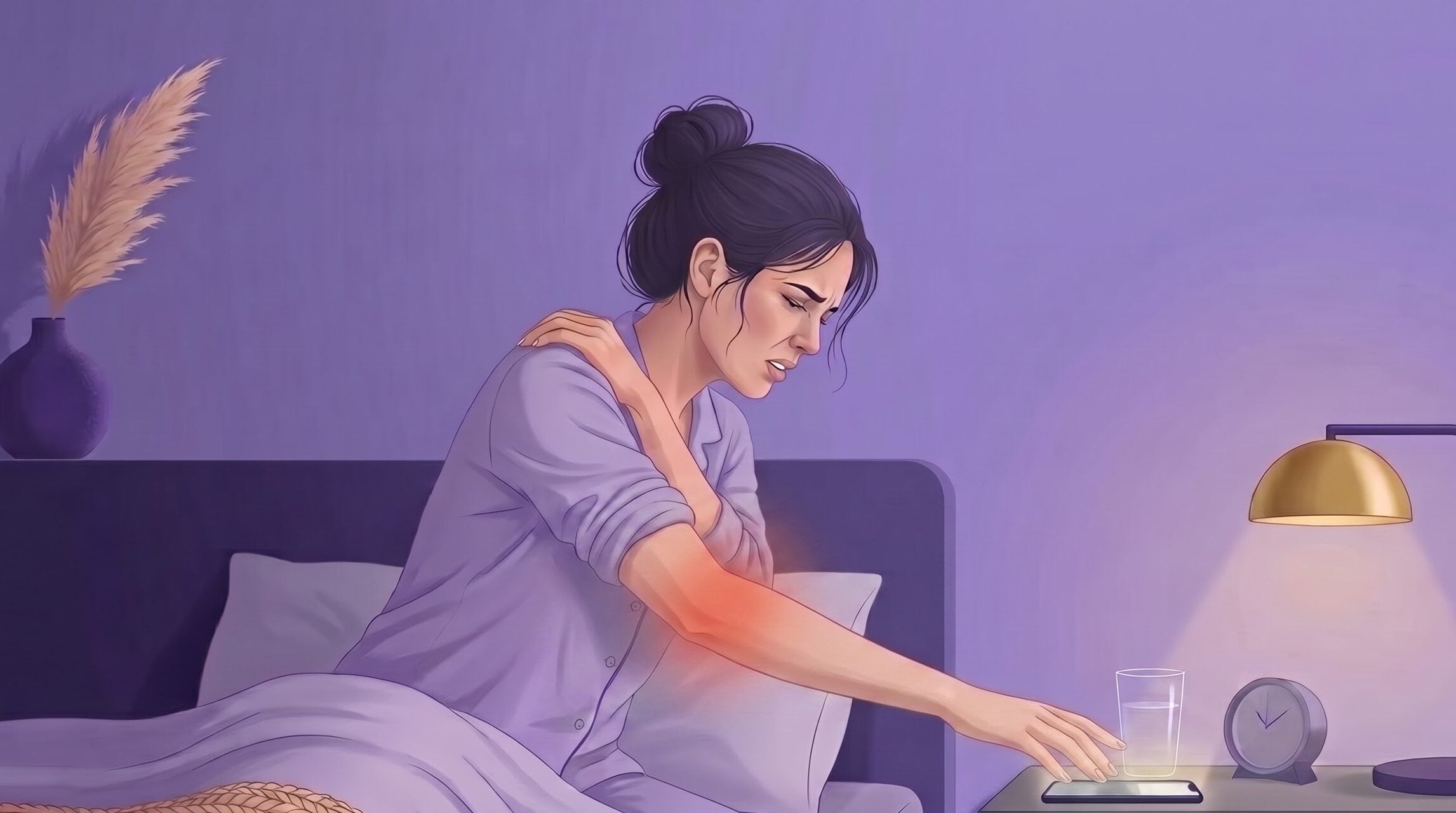
You wake up, reach across the nightstand to grab your phone, and a sharp, nagging ache radiates down your outer forearm. Whether it stems from a backhand tennis serve, a heavy sets day in the gym, or hours spent typing and clicking at your desk. If you are comparing elbow sleeve vs strap for tennis elbow recovery, choosing the right support is critical. Understanding elbow sleeve vs strap helps you build a faster recovery plan, and elbow sleeve vs strap options both have benefits.
When tendon strain strikes, your immediate impulse is to seek physical support. You head online or walk into a sports pharmacy, only to find yourself facing a classic dilemma.
When dealing with tendon strain or lateral epicondylitis, taking an active, informed approach to recovery makes all the difference. While supportive gear offers immediate physical comfort, pair it with professional medical guidance to build a complete recovery plan.
Should you buy a targeted counterforce strap or a full compression elbow sleeve?
Where is my pain actually coming from, and how does elbow sleeve or strap fix it?
To fix tendon pain, you must understand its biomechanics. Tennis elbow occurs when repetitive micro-tears inflame the tendons connecting your forearm muscles to the lateral bone on your elbow joint.
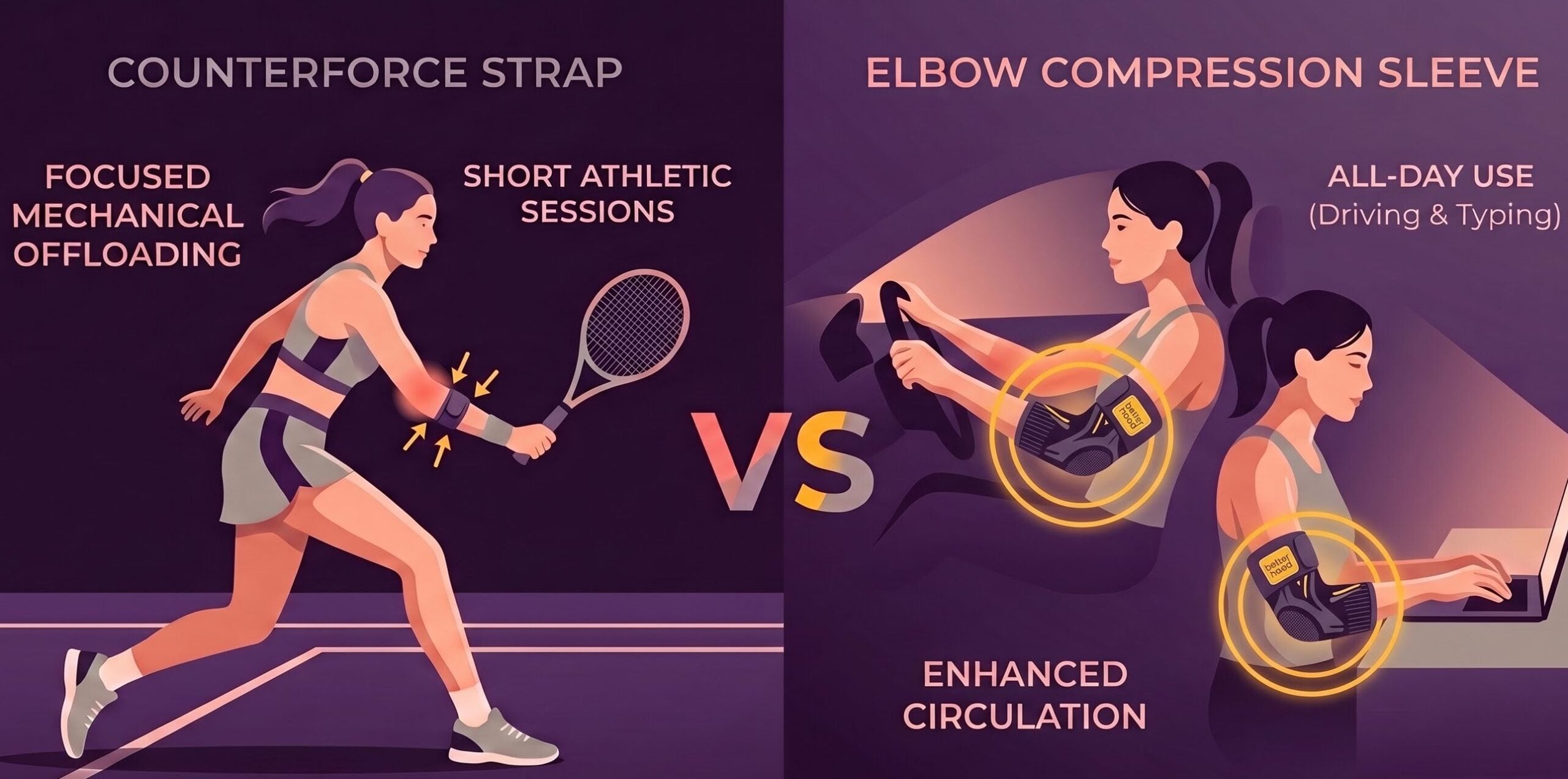
· The Counterforce Strap approach: Think of a guitar string. When you press a fret, the string vibrates only up to your finger. A counterforce strap works identically: it fastens roughly two inches below your elbow joint, creating a “fulcrum” that alters the angle of force pull. This dampens the mechanical shock traveling up to the tendon peak during sharp movements.
· The Compression Sleeve approach: A sleeve acts as an external circulatory pump and thermal insulator. By applying uniform gradient pressure surrounding the elbow, it stimulates microcirculation, enhances localized blood flow, decreases fluid buildup (edema), and heightens proprioception—your brain’s neurological awareness of joint positioning.
Can an elbow sleeve or strap handle heavy gym workouts and weightlifting?
Yes, and in many scenarios, it is superior to a strap.
During complex compounds like overhead presses, bench presses, or heavy pull-ups, the entire elbow structure, including the triceps tendon, biceps insertion, and collateral ligaments, is subjected to multiaxial load. A counterforce strap only protects a narrow strip on your forearm.
A compression sleeve encapsulates the full joint capsule, retaining therapeutic heat that reduces joint friction, enhances elasticity, and protects against sudden strain during heavy lifts.[2]
The Decision Framework: Which Should You Choose elbow sleeve vs strap?
Choose a Counterforce Strap if:
- You feel pain primarily at a single spot on the outer forearm tendon bone during active racquet play.
- You only require support during brief, 45-to-60-minute sport sessions.
- You do not need thermal warmth or overall elbow joint coverage.
Choose the Betterhood Elbow Sleeve if:
- You desire a support option suitable for typing, driving, exercising, and resting throughout the day.
- Your joint feels stiff, sore, or weak across the entire elbow area rather than at a single focal point.
- You prefer uniform compression that improves circulation, retains warmth, and reduces general joint swelling.
- You want an all-in-one solution that delivers physical stability without slipping down your arm.[1][2]
Why is the Betterhood Elbow Support Sleeve a standout choice for daily recovery?
When searching for gear, many athletes and professionals find themselves cycling through poorly constructed sleeves that lose elasticity, slip down the bicep, or cause itchiness. The Betterhood Elbow Support Sleeve addresses these common flaws through thoughtful design:
Premium Elastomer Blend & 4-Way Stretch: Built with an anatomical elastomer matrix, it applies consistent, long-lasting gradient compression that conforms naturally to the arm without restricting movement.
·Comprehensive Health Toolkit Included: Betterhood provides holistic recovery protocols and posture toolkits alongside their gear, addressing root-cause physical mechanics.
How to Integrate the Sleeve into Your Recovery Routine
Morning Prep: Slide on your Betterhood Sleeve before starting morning work. The gradient compression enhances circulation, preparing tendons for the day’s tasks.
Active Workouts: Keep the sleeve on during training sessions. Retaining heat in the joint capsule improves tendon elasticity, lowering the risk of re-injury during repetitive extensions.
Active Recovery & Mobility: Combine sleeve usage with light eccentric forearm stretches (such as wrist flexor and extensor stretches) to build long-term muscular resilience.
Making an informed decision between a counterforce strap and a compression sleeve depends on how you move throughout the day. For targeted, isolated sports impacts, a strap offers a quick mechanical adjustment. However, for continuous all-day comfort, thermal protection, and multi-activity flexibility, a high-performance option like the Betterhood Elbow Support Sleeve provides a complete path toward joint longevity.
How does the Betterhood sleeve complement your medical treatment?
Once cleared for light activity or rehab, integrated support gear enhances joint function:
Sustained Heat & Circulation: Gradient compression keeps surrounding tissue warm and promotes blood flow.
All-Day Comfort: Anatomical 4-way stretch fabric stabilizes movement during exercises and daily tasks without slipping.
Integrated Dual-Action Design vs. Single-Point Pressure
The Betterhood Elbow Support Sleeve provides targeted strain relief and full-joint support with an integrated adjustable strap for all-day active recovery.
A traditional counterforce strap acts as a single mechanical dampener wrapped around the upper forearm. It cinches down on the extensor muscle belly to reduce tension at the tendon insertion site. However, it leaves the rest of the elbow joint completely unassisted.
The integrated dual-action design combines the localized pressure control of an adjustable strap with the broad support of a compression sleeve. You get targeted tension over the affected tendon without sacrificing total joint stability. This dual action supports surrounding structures, including the biceps insertion, triceps tendon, and collateral ligaments, making it ideal for multi-planar movements like gym lifting or racket sports.
Breathable All-Day Gradient Compression vs. Point-Restricted Blood Flow
Counterforce straps rely on tight, localized constriction to function. Wearing a narrow, tightly cinched strap for extended periods can cut off superficial circulation, leave deep skin indents, and cause localized muscle fatigue, making it impractical for desk work, driving, or long days.
In contrast, breathable gradient compression provides a continuous upward circulatory pump across the entire lower arm and joint area:
- Swelling Control: Reduces fluid buildup (edema) around inflamed tendon tissues.
- Thermal Retention: Maintains muscular warmth, keeping tendons elastic and less prone to sudden micro-tears.
- Proprioceptive Feedback: Enhances brain-to-joint spatial awareness for better movement accuracy.
- Moisture Management: Breathable, moisture-wicking fabric ensures skin stays dry and cool, allowing comfortable 8+ hour wear without overheating or skin irritation.
Anatomical Stretch Zones vs. Rigid Manual Placement
A major downside of standalone counterforce straps is their susceptibility to poor positioning. Placing a strap even an inch too high or too low reduces its effectiveness, and frequent movement often causes single bands to slip down the forearm during play or daily work.
Betterhood’s anatomical stretch zones are woven directly into the fabric matrix to flex naturally with your arm’s biomechanics. The sleeve self-aligns over the joint capsule, ensuring that supportive compression remains centered over the elbow whether your arm is fully extended or flexed. This self-aligning contour eliminates constant readjustments and prevents pinching or harsh friction at the inner elbow crease.
FAQ
How tight should my elbow compression sleeve feel?
- An elbow sleeve should feel snug and supportive, applying firm, even pressure across the joint without causing numbness, tingling, or skin discoloration. If your hand or fingers feel cold or tingly, the size is too small and is restricting blood circulation[5]
Can I wear an elbow sleeve for golf or racket sports other than tennis?
- Yes. Whether you suffer from lateral epicondylitis (tennis elbow) or medial epicondylitis (golfer’s elbow), a compression sleeve stabilizes the entire joint during repetitive forehand and backhand swings.[3]
How do I wash and maintain my elbow compression sleeve?
- Hand-wash your sleeve in cold or lukewarm water using a mild detergent, then lay it flat to air-dry. Avoid machine drying, twisting, or wringing out the fabric, as intense heat and harsh mechanical stress break down the internal elastic fibers and weaken the compression over time.
Is an elbow sleeve effective for arthritis or bursitis pain?
- Yes. While counterforce straps only isolate specific tendons, a compression sleeve retains natural body heat inside the joint capsule. This warm environment helps lubricate stiff cartilage, reduce synovial fluid buildup (bursitis), and ease chronic arthritic stiffness during daily movement.[4]
How many hours a day can I wear a Betterhood Elbow Sleeve?
- Thanks to its breathable, moisture-wicking weave and 4-way anatomical stretch, the Betterhood Elbow Support Sleeve is designed for all-day wear (8+ hours) during work, gym training, or sports. Simply remove it at night unless explicitly advised by a physician to wear nighttime support
Will Wearing an Elbow Sleeve Cause Muscle Weakness?
- No. Compression sleeves provide flexible external support without immobilizing the joint. They do not act as rigid splints; rather, they stimulate proprioception (your brain’s awareness of joint positioning) and keep muscles warm, encouraging proper muscle activation during exercise.
Which one is better for arthritis or bursitis pain?
- Counterforce Strap: Limited benefit. Straps only target single-tendon insertion points and do not assist with broader joint capsule swelling or cartilage friction.
- Elbow Sleeve: Superior choice. By retaining natural body warmth, an elbow sleeve helps lubricate stiff cartilage and reduces synovial joint inflammation in arthritis and bursitis.[3]
References:
- https://shop.betterhood.in/products/elbow-support-sleeve#:~:text=The%20betterhood%E2%84%A2%20Elbow%20Support%20Sleeve%20delivers%20firm,dry%2C%20and%20comfortable%20even%20during%20intense%20sessions.
- https://www.leefordortho.in/blogs/elbow/differences-between-elbow-sleeves-and-braces#:~:text=elbow%20braces%2C%20in%20contrast%2C%20are%20better%20when,reason%20why%20you%20want%20to%20use%20them.
- Leeford Ortho Joint Care | Betterhood Support Benefits
- BetterSpine Elbow Gear Breakdown
- Betterhood Elbow Support Sizing & Usage
Disclaimer: This content is for informational purposes only and does not substitute professional medical advice, diagnosis, or treatment. Always consult a physician or physical therapist for persistent joint pain


