



Elbow support after injury can become useful as you transition from protecting the joint to gradually using your arm again. At first, the goal is simple: protect the joint, rest it, and give your body time to start healing. But once that initial protection period ends, a new question comes up.
Your elbow is getting better, but how do you actually start using it again?
Moving from rest back to daily activities takes time. As you begin using your arm for light tasks, the joint may feel stiff, weak, or unfamiliar. This is often when people start looking for elbow support after injury to feel more comfortable as they build confidence in their everyday movements. [1]
Understanding how to transition safely from protecting your elbow to active recovery and where a lightweight compression sleeve fits into that process can help you return to your routine with confidence.
What Happens After an Elbow Injury?
Recovery often progresses through general stages, though timing and specific steps depend on your individual injury and treatment plan. Elbow support after injury may become relevant as you move from protecting the joint toward gradual movement and everyday activities.[1]
The first phase is protection, which often involves resting the arm or keeping it still with a prescribed brace or sling. Once your healthcare provider approves movement, you enter the transition phase, where you gently start using your elbow again.
Finally, as your joint becomes more comfortable and capable, you begin the return to everyday life by slowly reintroducing routine activities. [1]
During Stage 1 (Protection), the main goal is resting the joint so damaged tissues can start to heal. Depending on the injury, a doctor may recommend keeping the elbow still with a rigid brace, splint, cast, or sling.
Recovery timelines are different for everyone. A mild strain may only need a few days of limited use, while a severe sprain, torn ligament, fracture, or dislocation will need a longer period of restricted movement under medical guidance. [1]
When Can I Start Moving My Elbow After an Injury?
The right time to move your elbow depends on your specific injury and treatment plan. There is no single timeline for everyone.
You do not need to wait until your elbow feels completely normal to start moving it. In fact, controlled movement often begins early in recovery under a clinician’s care. Once the protection phase is over and your doctor clears you to move, the next goal is to rebuild comfortable movement and strength. [1]
Returning to movement is a gradual process. Clearing the protection phase does not mean returning to heavy lifting right away. Instead, it starts Stage 2 (The Transition), where elbow support after injury may provide additional comfort as you gradually reintroduce movement. [1]
Why Can an Elbow Feel Stiff or Unfamiliar After Reduced Movement?
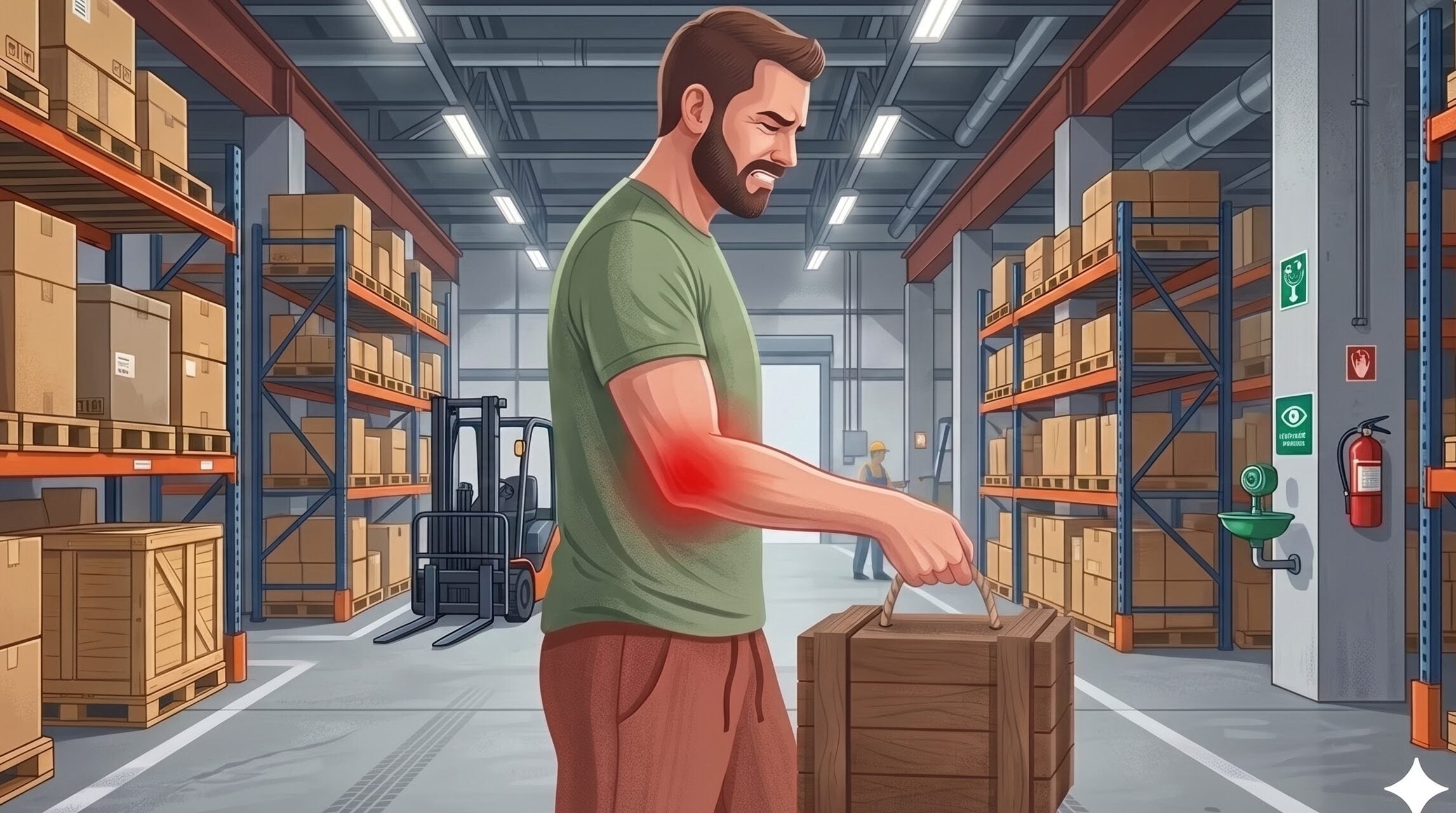
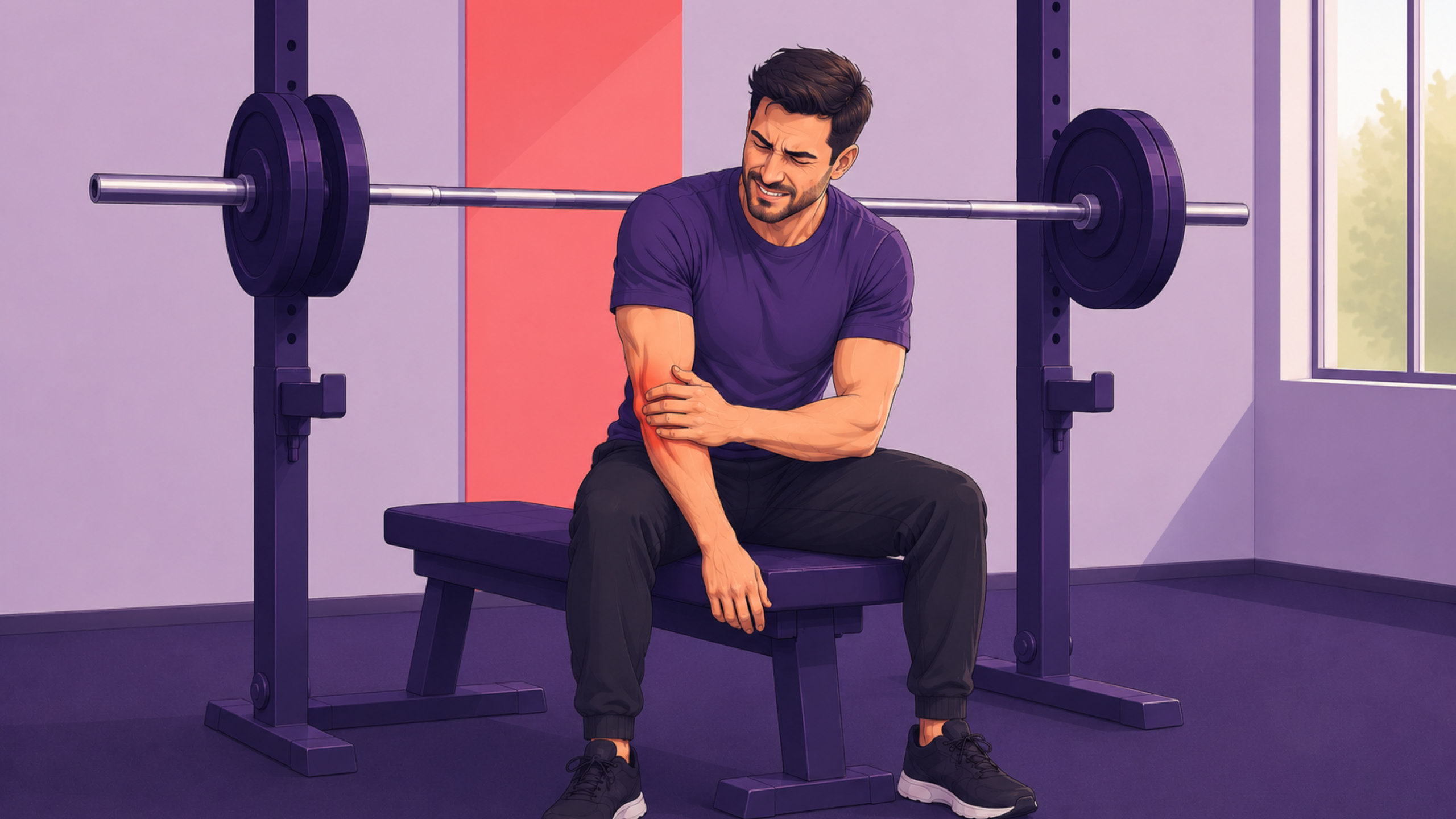
If your elbow has been held still in a sling or brace, it may not move smoothly right away. It is common for the joint to feel tight, weak, or hesitant when you try to bend or straighten it. [2]
When an elbow stays still for an extended period, the tissues surrounding the joint temporarily lose flexibility, and the nearby muscles can weaken.
Because of this reduced movement, bending or straightening your arm may feel unexpectedly stiff, clumsy, or unfamiliar during the early stages of recovery. [2]
When you do not use your elbow for a while:
- Tissues tighten: The tendons, ligaments, and capsule around the joint temporarily tighten, reducing flexibility. [2]
- Muscles weaken: The surrounding muscles naturally lose some strength from lack of use. [2]
- Joint awareness changes: After a period of limited movement, your sense of where the elbow is positioned can temporarily feel different. [2,3]
These changes can happen when an elbow is not used for a while. [2] Knowing this helps you approach early movement with patience.
How Should You Return to Everyday Activities After an Elbow Injury?
Entering Stage 3 (Returning to Life) means slowly bringing your arm back to routine, light tasks. The goal is to build tolerance without putting sudden stress on your healing joint. [1]
Here are practical guidelines to keep in mind:
- Start with light tasks: Begin with low-effort movements such as eating, holding a light cup, or other simple daily tasks.
- Pace yourself: Space chores out through the day instead of doing them all at once.
- Avoid heavy lifting: Do not carry heavy groceries or push heavy doors until your arm adapts to lighter demands.
- Listen to your body: Tiredness can be normal during early use. Sharp or increasing pain is a sign to stop and rest.
- Follow medical advice: Stick to any specific movement or weight limits given by your doctor or physical therapist. [1]
Using a compression sleeve after injury can provide light support and sensory feedback as you work through these permitted daily tasks. [3]
Can an Elbow Sleeve Help After an Injury?
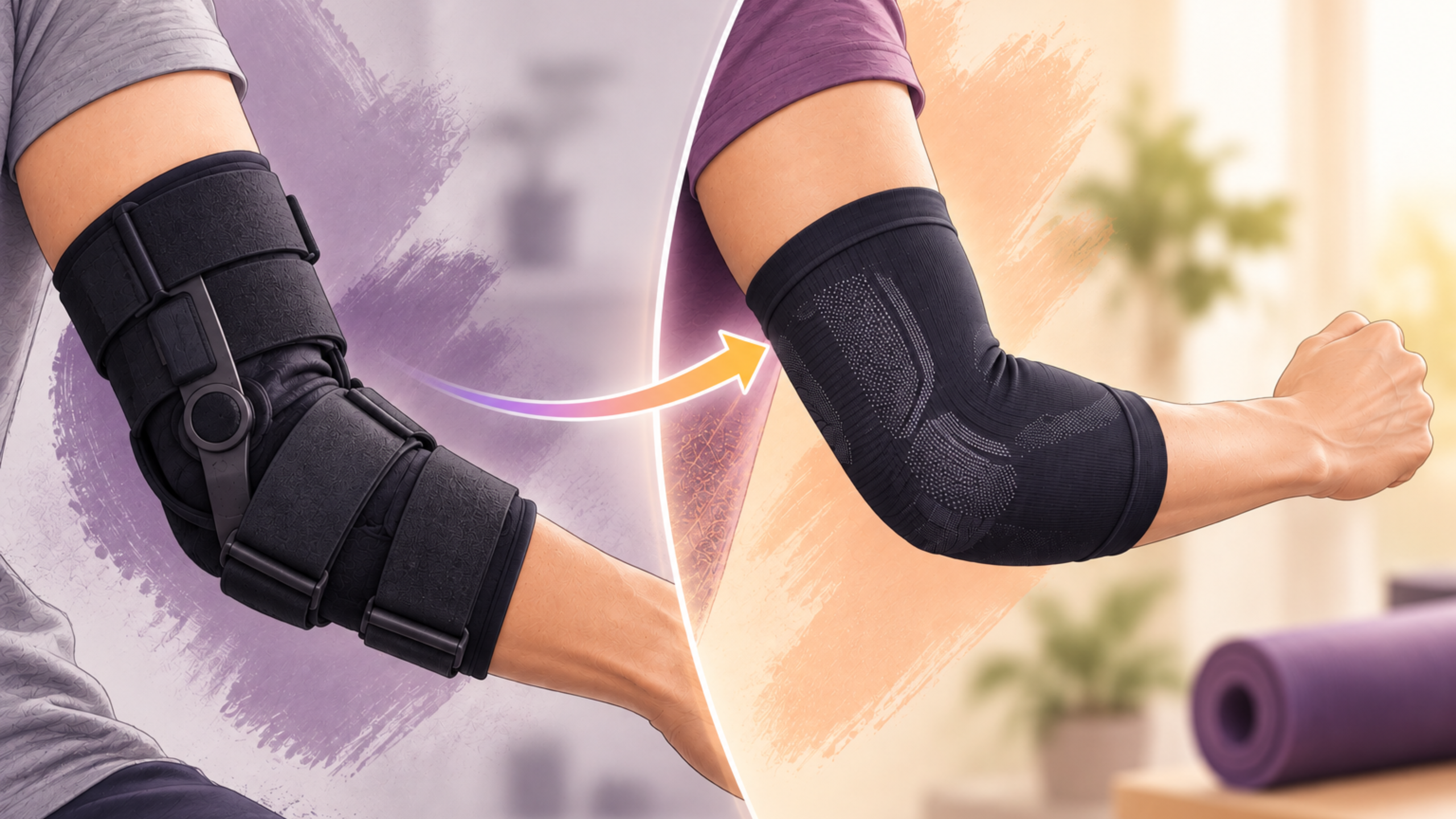
To see how a support garment fits into recovery, it helps to know the difference between a rigid brace and a flexible elbow sleeve for injury recovery.
| Feature | Rigid Medical Brace / Splint | Flexible Compression Sleeve |
| Primary Purpose | Holds the joint still or limits movement. | Offers flexible support and mild compression. |
| Stage of Recovery | Stage 1: Protection phase. [1] | Stages 2 & 3: Permitted movement phase. [1] |
| Movement | Restricts bending and rotating. | Moves freely with your natural arm movement. |
| Role | Protects acute or healing tissue. [1] | Provides light compression and sensory feedback. [3] |
An elbow support for recovery in sleeve form does not lock your joint in place. It does not replace physical therapy or cure an injury. Instead, it provides gentle compression around the joint.
Key Takeaway: Mild external compression gives subtle sensory feedback to your skin. Compression garments may provide sensory input that can influence some measures of joint-position sense as you bend and extend your arm during approved light activities. [3]
When Can You Wear an Elbow Sleeve After an Injury?
An elbow support during recovery becomes useful once you are past the strict protection phase and have medical clearance to use your arm. [1]

You might consider wearing an elbow sleeve for:
- Light household chores: Folding laundry, wiping tables, or light dusting.
- Everyday errands: Going for walks, running light errands, or moving about your day.
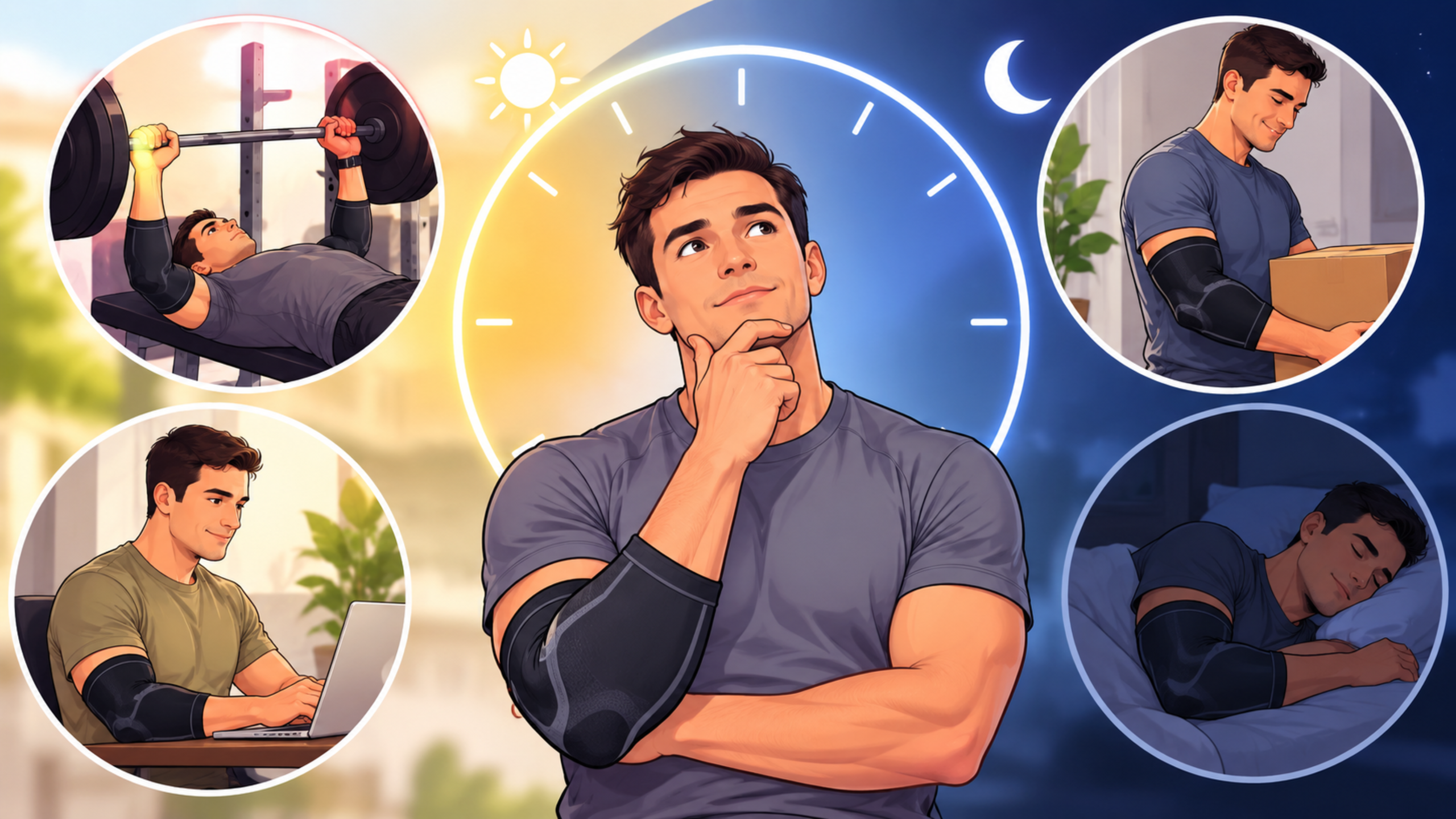
- Building movement confidence: Navigating the early days of active recovery when your joint still feels slightly hesitant.
A flexible sleeve should never replace a prescribed medical brace or bypass professional advice. It is an optional support tool designed only for moments when movement is permitted. [1]
How Can Betterhood Elbow Support Fit Into Recovery?
Once your healthcare provider clears you for light movement, comfortable accessories can make your daily transition easier.
The Betterhood Elbow Support Sleeve is made for this active movement phase. [4] Unlike a rigid splint or immobilizing cast, this lightweight, flexible option supports you as you gradually return to everyday activities. [4]
Key features include:
- Active compression: Provides light compression around the elbow during permitted movement, offering supportive pressure as you return to everyday activities. [4]
- Flexible design: Stretches with your natural arm movements, allowing the sleeve to move comfortably with you. [4]
- Breathable material: Helps manage moisture and temperature, keeping your skin cool during daily wear. [4]
- Adjustable positioning: The compression sits properly around the joint, while the adjustable straps allow you to fine-tune the fit and keep the support securely in place during activity. [4]
Note: The Betterhood Elbow Support Sleeve is an everyday comfort accessory. It does not repair damaged tissues, speed up bone healing, rebuild strength, or replace physical therapy.
When Should You Stop Using an Elbow Sleeve and Seek Medical Advice?
Mild stiffness can happen after keeping your elbow still, but certain symptoms require immediate medical attention. [1]
Stop using a support sleeve and contact your doctor if you experience:
- Severe, sharp, or worsening pain [1]
- New or increasing swelling in your elbow or forearm [1]
- Numbness, tingling, or a “pins and needles” feeling in your hand or fingers
- Sudden or severe loss of arm strength
- Changes in skin color or temperature in your arm or hand
- Symptoms that do not improve over time [1]
Frequently Asked Questions
Is an elbow sleeve the same as an elbow brace?
No, an elbow brace is usually rigid to stop or restrict movement, while a compression sleeve is flexible and allows full movement.
Can a compression sleeve replace an elbow brace?
No, a compression sleeve cannot replace a prescribed brace, cast, or splint, as it does not hold the joint still when immobilisation is required.
Getting Back to Everyday Movement
An elbow injury may require protection at first, but recovery also means gradually getting your movement back. [1] Once your healthcare provider allows you to resume everyday activities, the Betterhood Elbow Support Sleeve can provide active compression and flexible support as you ease back into everyday tasks. [4] Use it as a supportive accessory alongside your recovery plan.
References
- Giangarra CE, Manske RC, eds. Clinical Orthopaedic Rehabilitation: A Team Approach. 4th ed. Elsevier; 2018.Clinical Orthopaedic Rehabilitation, 4th Edition
- Siemensma MF, van der Windt AE, van Es EM, Colaris JW, Eygendaal V. Management of the stiff elbow: a literature review. EFORT Open Rev. 2023;8(5):351-360. doi:10.1530/EOR-23-0039.DOI: 10.1530/EOR-23-0039
- Ghai S, Nilson F, Gustavsson J, Ghai I. Influence of compression garments on proprioception: a systematic review and meta-analysis. Ann N Y Acad Sci. 2024;1536(1):60-81. doi:10.1111/nyas.15144.DOI: 10.1111/nyas.15144
- Betterhood. Elbow Support Sleeve. Official Product Page.Betterhood Elbow Support Sleeve