



Discover why bending forward can worsen sciatica pain, how a herniated disc affects the sciatic nerve, and how proper movement techniques and lumbar support may help reduce flare-ups.
The Sudden Shock of a Simple Bend
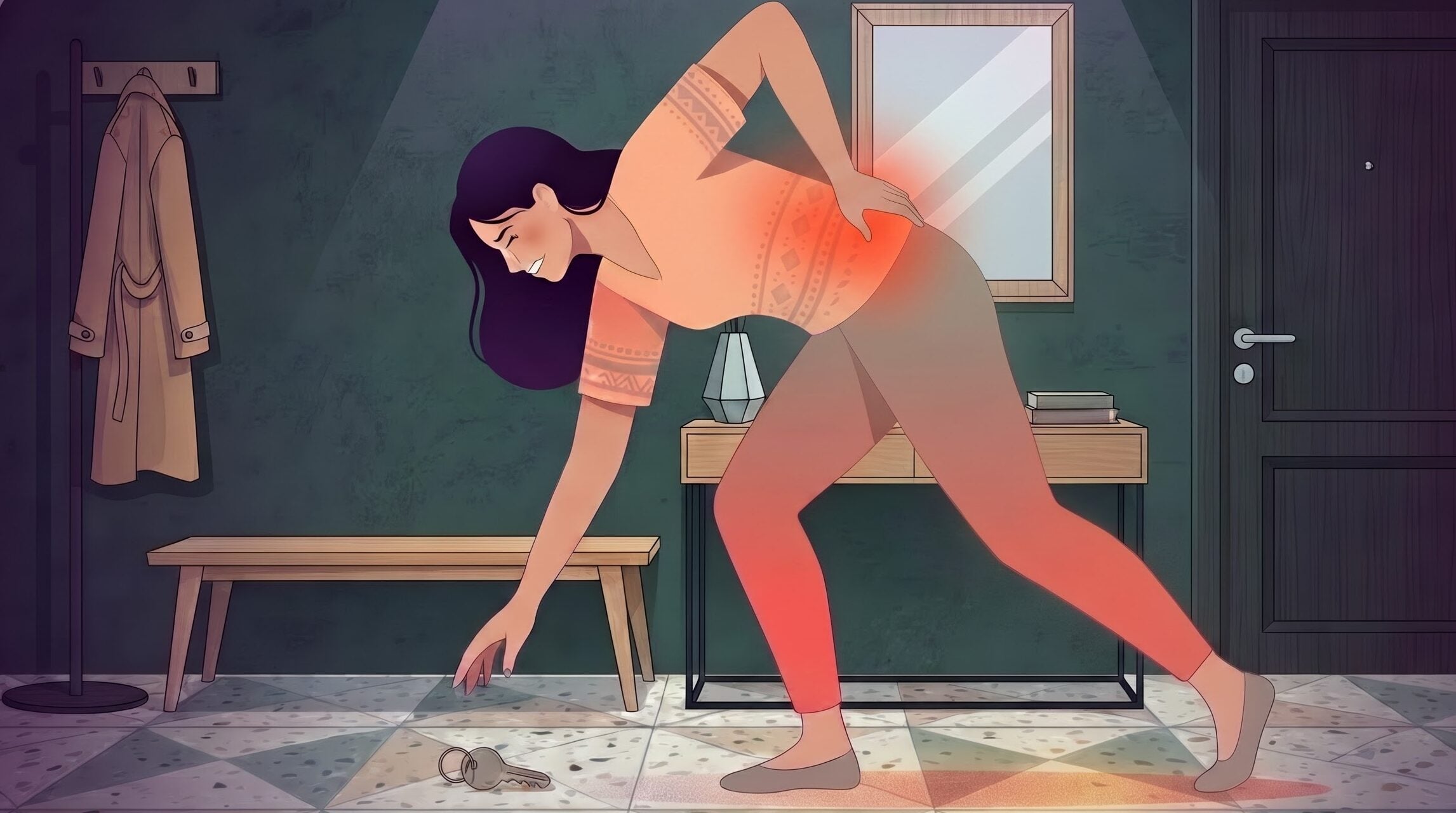
You lean forward to pick up a dropped phone from the floor. As you start to straighten up, a sharp, electric shock shoots from your lower back, travels through your hip, and fires down your leg.
Just like that, a simple movement you have done thousands of times without thinking suddenly feels dangerous.
If you have experienced this sharp reaction, you are not alone. For millions of people dealing with bending forward sciatica, this specific motion is one of the most common triggers for a sudden flare-up.
Why does such an everyday action cause such a strong reaction in your lower back?
To understand why this happens, we need to take a look at what is going on inside your body when you lean forward.
What Is Really Happening During a Bending Forward Sciatica Flare-Up?
To understand your body’s reaction, it helps to start with the sciatic nerve.
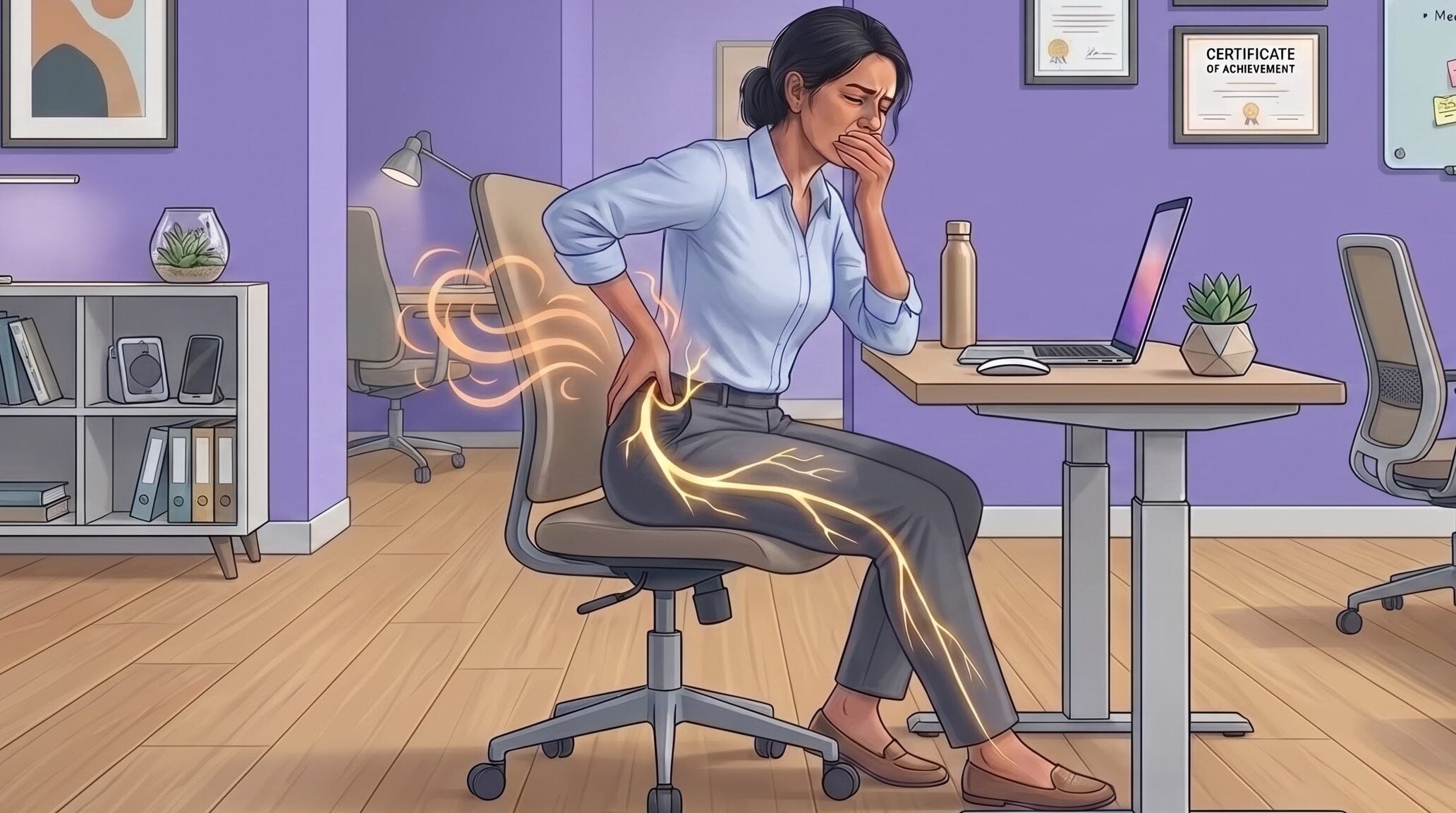
The sciatic nerve is the largest and longest nerve in your body. It starts in your lower back (the lumbar spine), passes deep through your buttocks, and runs all the way down the back of each leg to your feet [1].
When people talk about sciatica, they are not talking about a disease. Sciatica is simply the name for the symptoms you feel when this nerve gets pinched, squeezed, or irritated at its starting point in the lower back [1].
Depending on which part of the nerve is under pressure, you might feel [1]:
- Sharp, burning pain: A sudden pain that starts in your lower back or buttock and travels down your leg [1].
- Tingling: A “pins and needles” feeling that may spread through your leg or foot [1].
- Numbness: A patch of skin may feel numb or less sensitive because the sciatic nerve isn’t sending signals normally [1].
- Muscle weakness: Your leg or foot may feel weaker, making walking or climbing stairs more difficult [1].
The nerve is the path the pain travels down. But to see why bending triggers that pain in the first place, we have to look at the soft cushions sitting right next to the nerve.
Spinal Discs and Bending Forward Sciatica Mechanics
Your spine is made up of stackable bones called vertebrae. Between each bone sits a small, flexible disc that acts like a shock absorber [2].
These spinal discs allow you to bend, stretch, and turn smoothly. You can think of each disc as having two main parts:
- The outer wall (Annulus fibrosus): A tough, rubbery ring that holds everything together [2].
- The center gel (Nucleus pulposus): A soft, jelly-like middle that absorbs shock when you move [2].
A herniated disc (sometimes called a slipped disc) happens when that tough outer wall weakens or gets tiny tears. This allows some of the soft center gel to push outward [2][3].
If that bulging gel pushes against the sciatic nerve sitting right behind it, it sets off painful warning signals [2][3].
So why does forward bending make that bulge press even harder against the nerve?
The Toothpaste Effect: Why Bending Forward Sciatica Pain Triggers Occur
To picture why leaning forward causes a spike in pain, imagine holding a tube of toothpaste.
If you squeeze the front end of the tube, where does the toothpaste inside go? It moves straight to the back.
When understanding bending forward sciatica mechanism, leaning at the waist (a motion called lumbar flexion) squeezes the front edge of your spinal disc [2][3].
In a healthy disc, the strong outer wall easily handles that shift. But if your disc is already damaged or herniated, bending pushes that inner gel further backwards, right into the sensitive sciatic nerve roots [1][3].
Understanding this pressure shift is good news. Once you see why bending causes strain, you can start changing how you move during the day.
Moving Differently: How to Avoid Bending Forward Sciatica Triggers
When bending forward, sciatica pain strikes; your first instinct might be to stop moving completely. However, resting for too long can actually make your back stiffer and weaker [1][4]. Gentle, safe movement keeps your spine healthy.
The goal is not to stop bending but to change how you bend so you can protect your discs.
- Hinge at the Hips: Keep your lower back flat and push your hips backward when reaching down. Let your strong hip joints take the load.
- Tighten Your Core: Gently draw in your stomach muscles before reaching for something. This creates a natural support belt inside your body.
- Bend Your Knees: Use your powerful leg muscles to lift, taking the pressure off your spine.
- Do Not Twist and Bend at the Same Time: Turning your waist while leaning forward puts uneven, harsh pressure on your discs. Pivot with your feet instead.
These movement habits work well, but keeping perfect posture during a busy day is not always easy.
When Perfect Posture Is Hard to Maintain
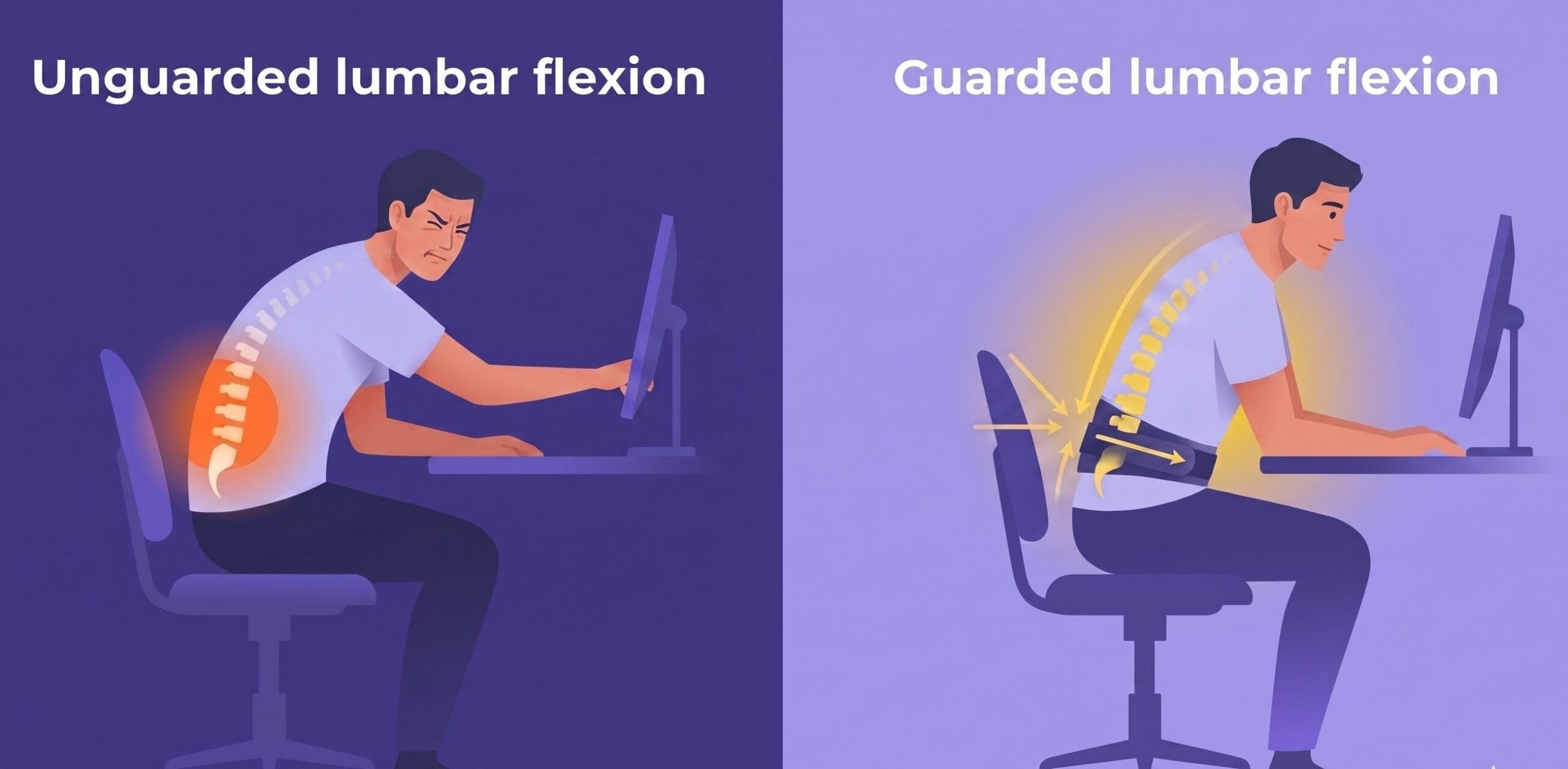
It is easy to practise safe bending in a quiet room. But real life gets busy.
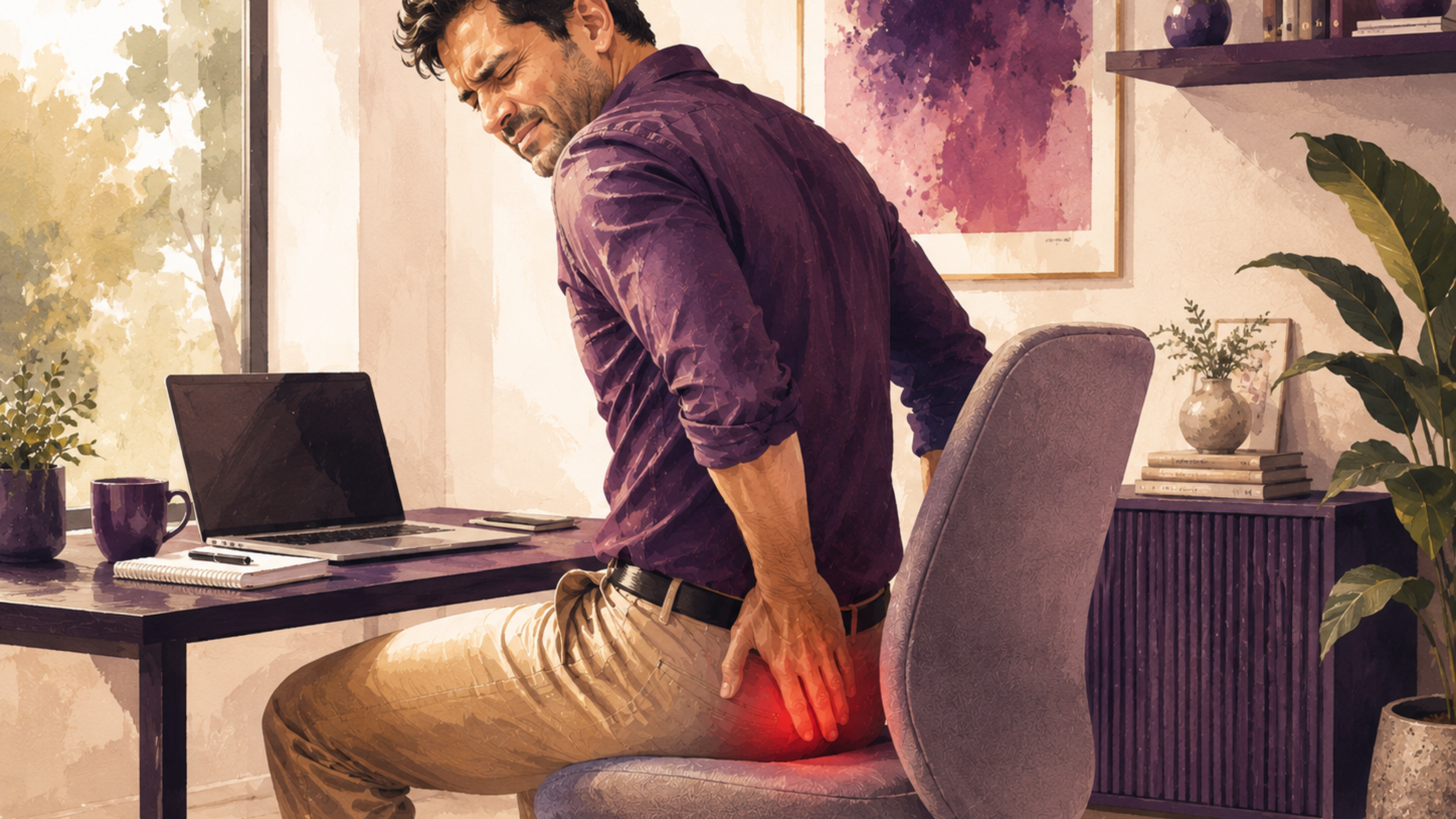
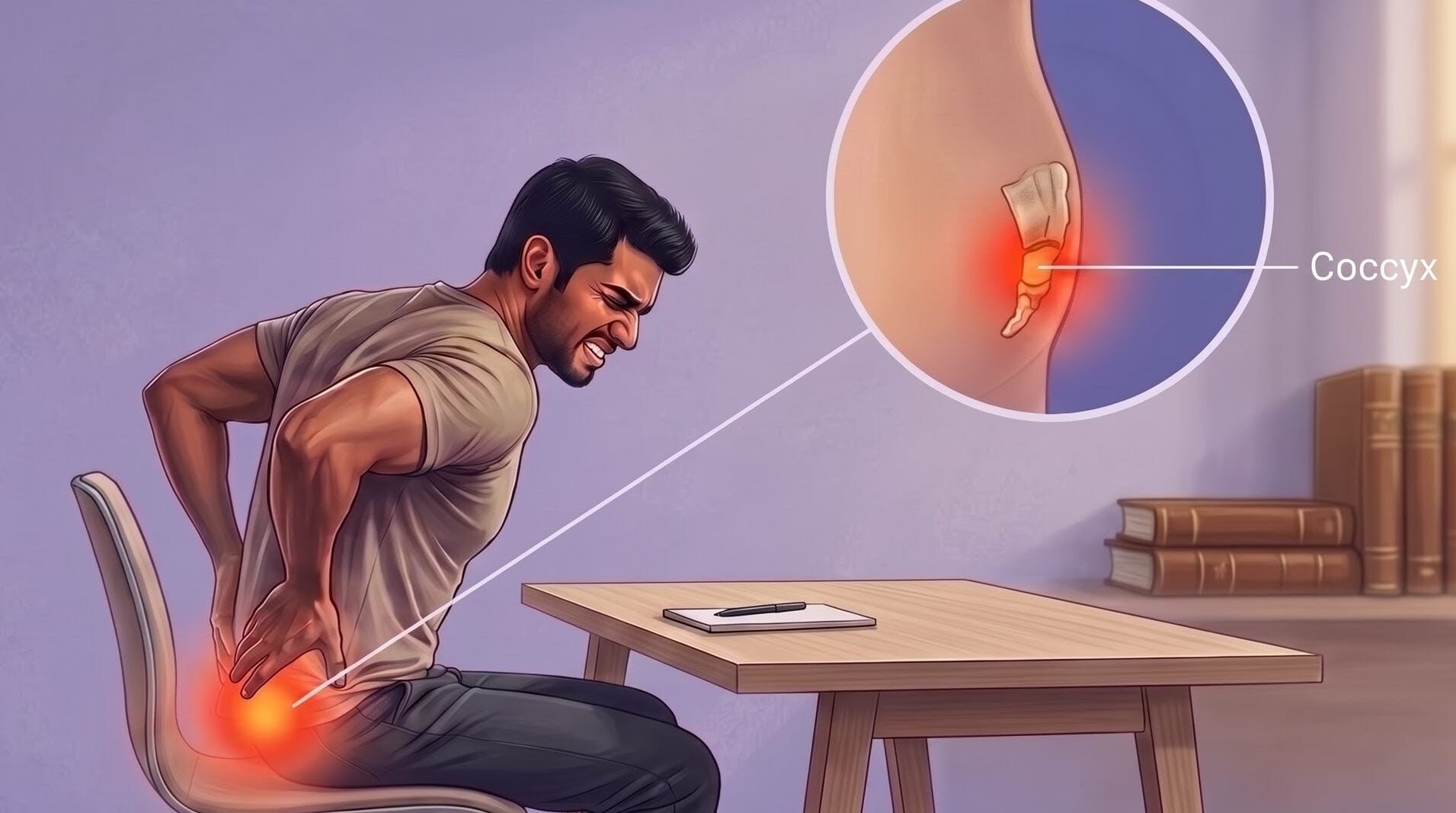
Long hours sitting at a desk, commuting, travelling, doing household chores, or reaching for heavy bags can make you forget your movement habits. As your muscles tire, your lower back naturally starts to round forward again [4].
This is where guided-movement support can step in to help.
A supportive back belt is not meant to hold your spine frozen or do all the work for you. Instead, it provides gentle physical support that reminds your body to stay aligned [4]. It helps limit excessive forward rounding while still allowing you to move naturally through your day.
How the Betterhood LS Belt Helps in Daily Life
The Betterhood LS Belt was created to offer this exact balance: providing steady support to your lower back while letting you move freely.
Rather than relying on tight compression alone, the belt combines a firm central lumbar support with eight flexible stabilisers. These stabilisers help spread support more evenly across your lower back so one spot does not carry all the strain.
Because your day changes, the belt features double adjustable straps. You can tighten the compression when lifting or doing housework and loosen it for lighter support while sitting at your desk or walking. Made from lightweight, breathable fabric, it fits easily under everyday clothes for work, travel, or errands.
Used alongside good movement habits, regular exercise, and advice from your doctor, structured support acts as a reliable partner to help manage daily back strain.
To see how structured support can fit into your day, visit the Betterhood LS Belt Product Details.
Simple Daily Habits to Avoid Flare-Ups
Along with using posture support during active tasks, small changes to your everyday routine can make a big difference for your lower back:
- Break Up Your Bending: If you are gardening or cleaning, pause often to stand up straight.
- Keep Objects Close: When carrying packages or groceries, hold them close to your chest instead of at arm’s length.
- Set Up Your Workspace: Keep items you use often at waist height so you do not have to crouch down constantly.
- Take Walking Breaks: Regular, easy walking keeps blood flowing and takes pressure off your discs [1][5].
- Avoid Long Sitting Spells: Stand up and stretch gently every 30 to 45 minutes to unlock stiff hips.
While these habits help manage everyday discomfort, it is also important to know when a back issue needs quick medical care.
When to See a Doctor Right Away
Most sciatica flare-ups get better over time with gentle care. However, some warning signs mean you should see a healthcare professional immediately.
Get medical help right away if you notice:
- Sudden or worsening weakness in your leg or foot (such as your foot dragging when you walk)
- Loss of control over your bowel or bladder
- Numbness in your groin or inner thigh area
- Severe pain after a fall or accident [1][5]
Let’s clear up a few common questions people have about managing sciatica pain day to day.
Common Questions About Bending Forward Sciatica Symptoms
Why does bending make my sciatica pain worse?
Bending forward squeezes the front of your spinal disc. This pushes the soft centre gel backward against the sciatic nerve, triggering pain [2][3].
Is walking good for sciatica?
Yes. For most people, gentle walking keeps the spine in a straight, neutral position and improves blood flow without putting heavy pressure on the discs [1][5].
Can a support belt cure my sciatica?
No belt can cure sciatica. A lumbar support belt is a helpful tool that provides extra support and posture awareness while you move, working best alongside exercise and medical advice [4].
How can I protect my back during household chores?
Bend at your knees and hips rather than rounding your lower back, keep heavy items close to your body, and consider wearing a supportive belt for extra stability during longer tasks [1][4][5].
Moving Forward with Confidence
Living with sciatica does not mean you have to stop living an active life. It simply means learning how to protect your back during everyday movements.
By bending from your hips, using your leg muscles, and getting extra support from tools like the Betterhood LS Belt when needed, you can take pressure off your nerve and move with confidence again.
References
- Cleveland Clinic. Sciatica: What It Is, Causes, Symptoms, Treatment & Pain Relief. Cleveland Clinic. Accessed July 28, 2026. https://my.clevelandclinic.org/health/diseases/12792-sciatica
- Cleveland Clinic. Herniated Disk: What It Is, Diagnosis, Treatment & Outlook. Cleveland Clinic. Accessed July 28, 2026. https://my.clevelandclinic.org/health/diseases/12768-herniated-disk
- Mayo Clinic. Herniated disk. Mayo Clinic. Accessed July 28, 2026. https://www.mayoclinic.org/diseases-conditions/herniated-disk/symptoms-causes/syc-20354095
- American Academy of Orthopaedic Surgeons. Low Back Pain. OrthoInfo. Accessed July 28, 2026. https://orthoinfo.aaos.org/en/diseases–conditions/low-back-pain
- National Institute of Neurological Disorders and Stroke. Low Back Pain. National Institutes of Health. Accessed July 28, 2026. https://www.ninds.nih.gov/health-information/disorders/low-back-pain