



Do you have a nagging inner elbow strain after heavy pulling and lifting? If curling or gripping causes pain near that inner bony bump, you likely have an inner elbow strain. This article will be focusing on why inner elbow strain happens and how to fix inner elbow strain with rest and compression?
Did you finish a heavy session of rows? Or move boxes all weekend? Sometimes you feel a stubborn ache right inside your elbow.
Does pulling or curling cause soreness near that inner bony bump? You likely have inner elbow flexor strain. This is also called Golfer’s Elbow.[2]
Can I get Golfer’s Elbow if I don’t play golf?
Have you ever felt a sharp, persistent ache on the inside of your elbow and wondered how on earth you got “golfer’s elbow” when you’ve never even touched a golf club?
You are definitely not alone! Despite the confusing name, golfer’s elbow or medial epicondylitis isn’t reserved for the green. It simply means the tendons on the inside of your elbow are overworked and inflamed.[1]
The good news?
With simple activity adjustments, targeted rest, and supportive compression, you can keep your arms moving while allowing irritated tendons to heal.
Why Does Inner Elbow Strain Happen?
4 Real-Life Scenarios: How Inner Elbow Strain Sneaks Up
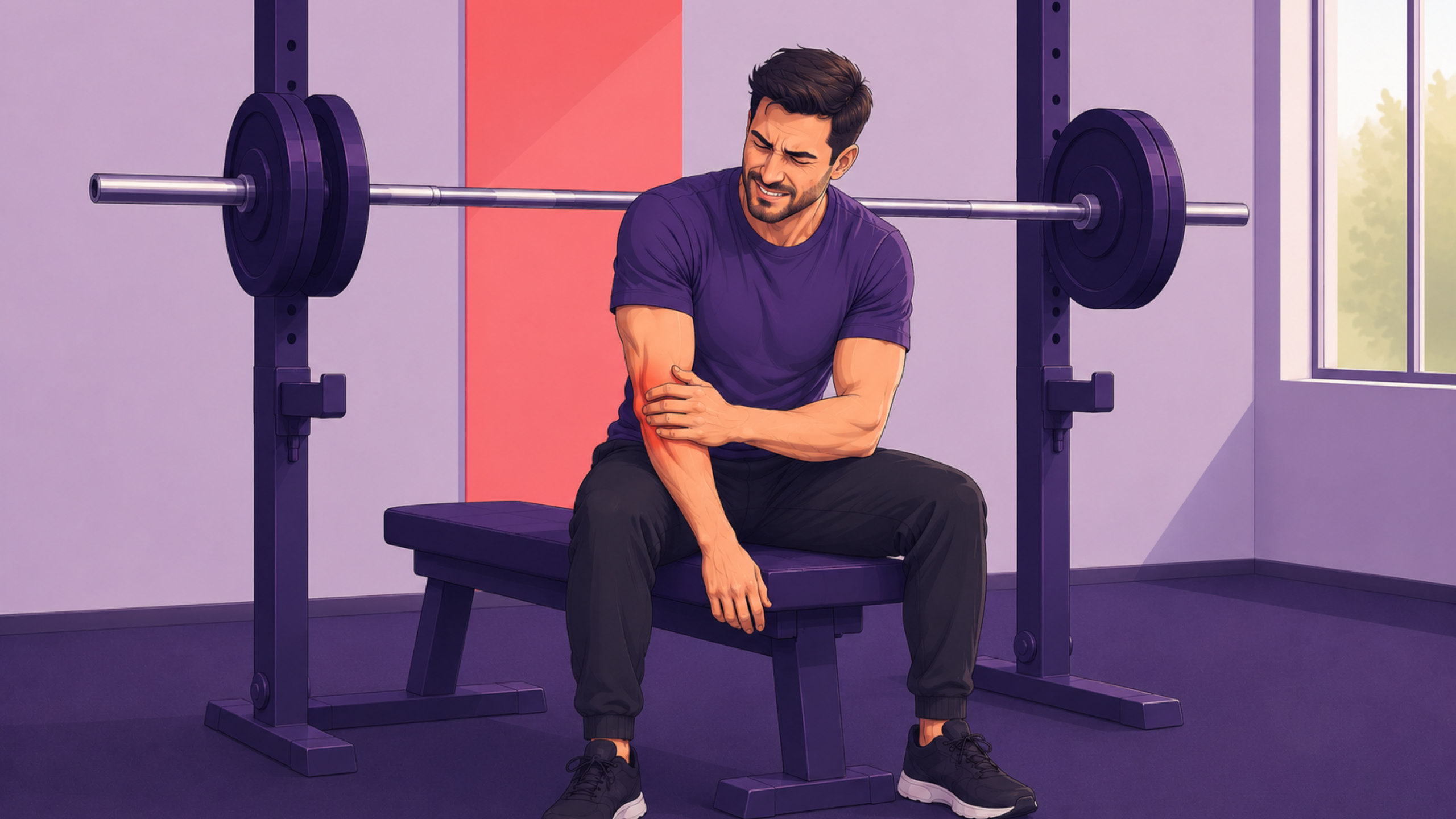
Weightlifting
Why do my inner elbows ache after doing heavy rows or pull-ups?
You pulled a heavy set of bent-over rows. Instead of keeping your wrists straight, you forcefully curl them inward at the top of every rep to force the weight up.
Over-flexing your wrists under heavy loads places extreme tension on your inner elbow tendons, causing microscopic tearing under maximum strain.[3]
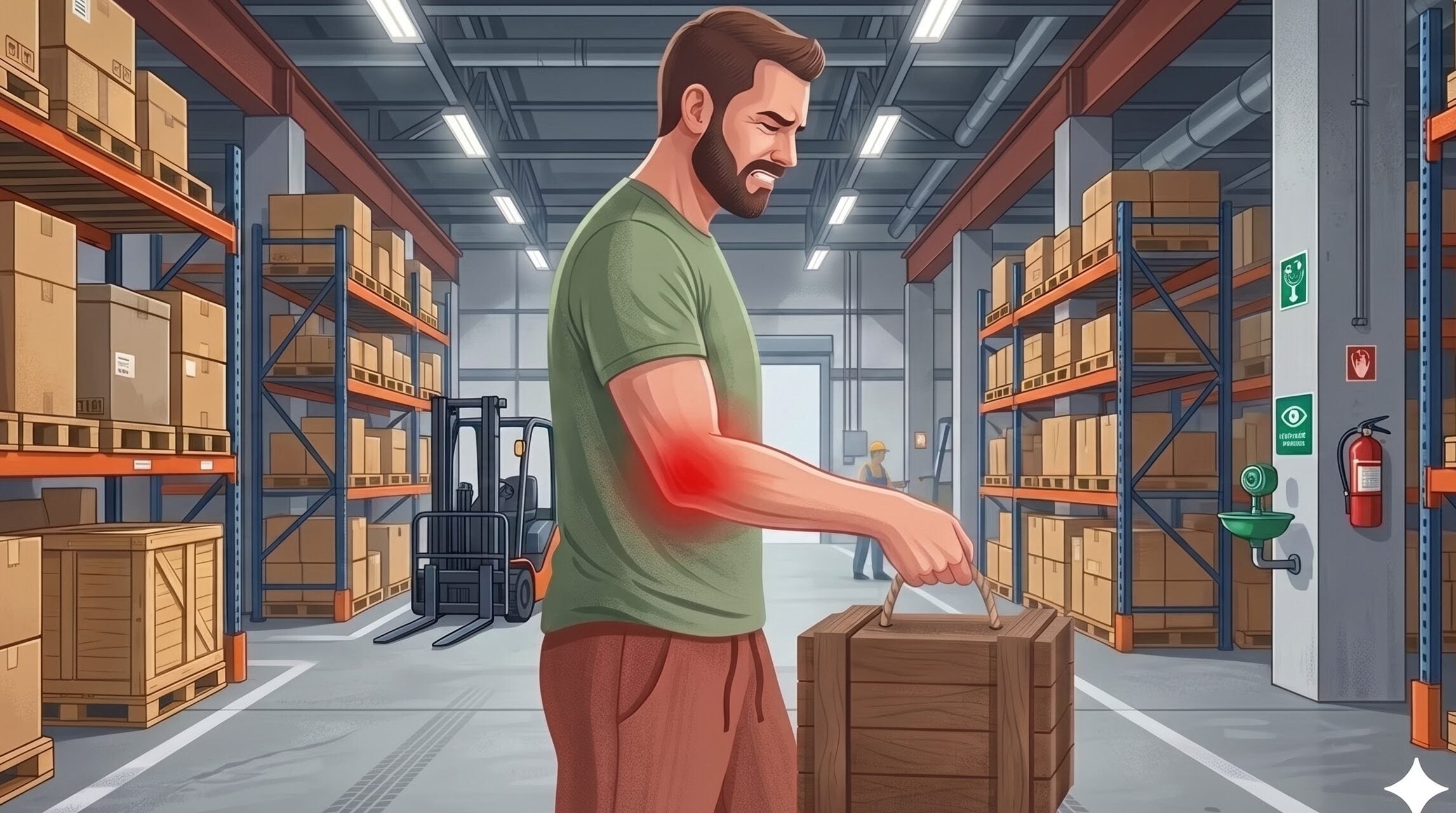
Manual Labour
Can gripping tools too tightly cause golfer’s elbow?
You spend your shift tightening pipe fittings with a heavy wrench, squeezing the handle as hard as you can while forcefully twisting your forearm.
Combining an unnecessarily hard grip with constant forearm twisting acts like a wrenching force directly on your inner elbow tendon, wearing down the tissue shift after shift.[4]
The Rock Climbing
Why is the “crimp” grip so dangerous for your inner elbows?
You are tackling an overhang and latch onto a small ledge using a tight “crimped” grip, hanging your full body weight off bent fingers and flexed wrists.
Putting your full weight on severely flexed finger tendons multiplies the mechanical stress on your inner elbow anchor beyond what the tissue can safely absorb.[5]
Gardening
How do short pruning and digging sessions trigger tendonitis?
You spend hours pruning thick bushes, repeatedly snapping handheld shears through stubborn branches without taking breaks.
Rapid, high-repetition squeezing strains unprepared forearm flexors hundreds of times in a single afternoon, overwhelming your body’s ability to repair the tendon on the fly.[6]
How to Treat Inner Elbow Strain at Home?
Can a Compressor sleeve ease this pain?
Symptom management
Well, Physicians agree that while compression sleeves effectively manage soreness, swelling, and daily discomfort, they must be combined with active physical therapy and rest to fully heal the tendon.[7]
Joint awareness
Orthopedic specialists emphasize that the constant tactile contact of a sleeve improves joint position sense (proprioception), helping individuals subconsciously avoid harmful wrist flexing movements during daily tasks.[8]
Whether you are pulling heavy barbells, wielding hand tools, climbing overhangs, pruning bushes, or typing at a desk, inner elbow strain (medial epicondylitis) stems from a single root cause: overloading the forearm flexor tendons attached to the inner elbow joint. Heavy pulling, “white-knuckle” gripping, over-crimping, and repetitive wrist flexing create microscopic tears at this tendon anchor, resulting in sharp pain, swelling, and joint stiffness.
The Betterhood Elbow Compression Sleeve targets these issues through dual-action support: physical strain management and enhanced joint awareness.
How the Betterhood Elbow Compression Sleeve Helps
The Betterhood Elbow Compression Sleeve targets recovery across all five scenarios through three core biomechanical mechanisms:
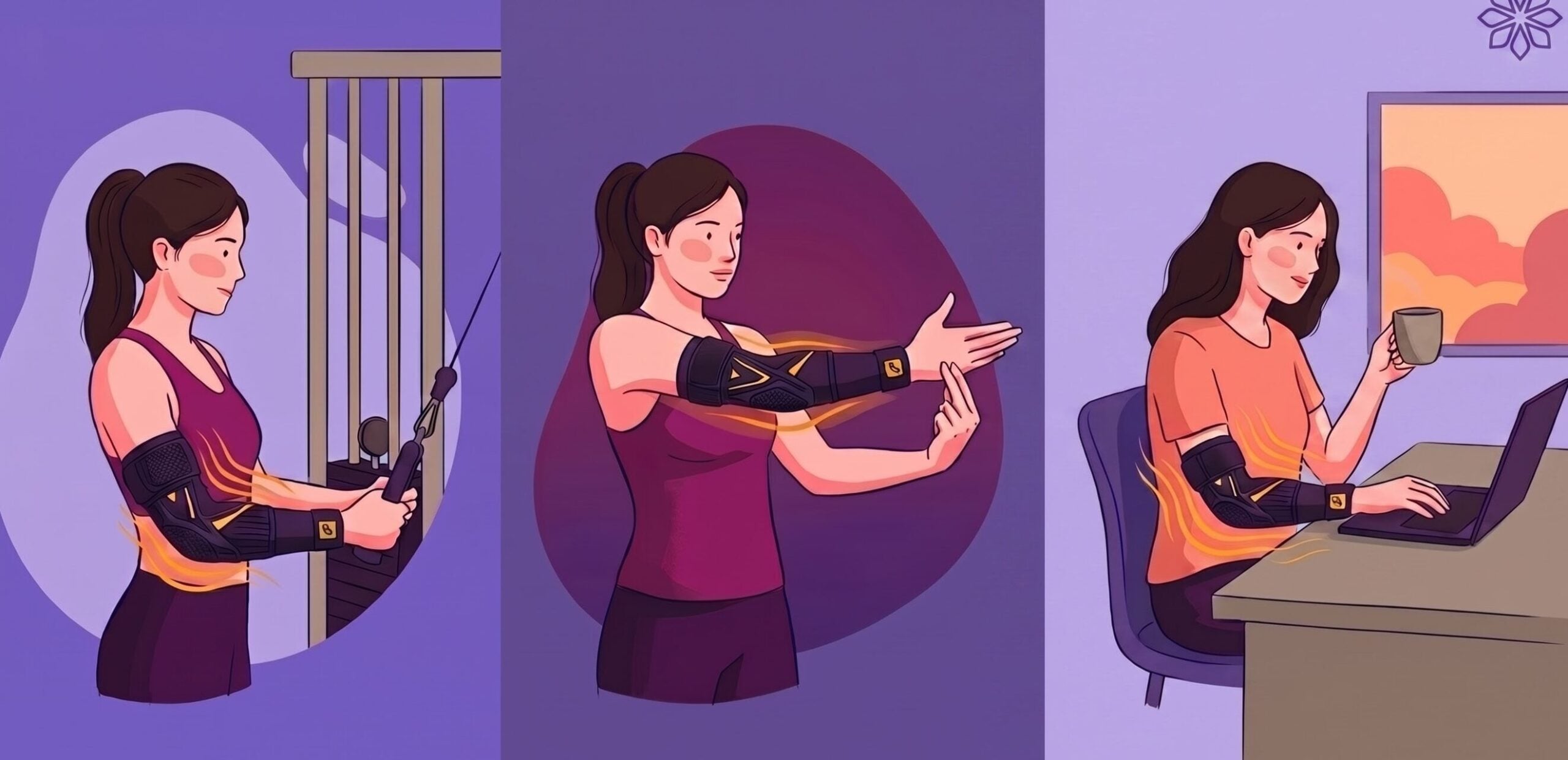
Tendon Offloading & Vibration Control: The specialized 4-way stretch fabric applies uniform pressure across the forearm flexors. This dampens muscle vibrations and distributes mechanical stress away from the inflamed tendon attachment point during heavy pulling or rapid pruning.
Enhanced Joint Awareness (Proprioception): Snug, constant skin contact heightens sensory feedback. This improved joint awareness subconsciously cues you to maintain neutral wrist alignment preventing forced wrist curling during rows, over-crimping on climbs, or awkward wrist angles at a keyboard.
Circulation & Stiffness Relief: By retaining therapeutic muscular heat and applying gradient compression, the sleeve boosts localized micro-circulation. This accelerates the removal of inflammatory metabolic waste, eases joint stiffness, and controls swelling during long shifts or workouts.
3 Simple Recovery Tips for Inner Elbow Soreness
Recovering from inner elbow strain does not mean sitting completely idle for months. Instead, focus on smart management:
Modify Your Pulling Movements
During the initial recovery phase, reduce the weight load or adjust your grip. Switch from an underhand (supinated) grip to a neutral grip (palms facing each other) during gym rows or chin-ups to take direct stress off the inner flexor tendons.[9]
Practice Gentle Flexor Stretches
Extend your sore arm straight in front of you with your palm facing up. Use your opposite hand to gently pull your fingers downward toward the floor until you feel a light stretch along your inner forearm. Hold for 15–20 seconds.[2]
Apply Targeted Compression Support
Using a high-quality compression sleeve for golfer’s elbow helps stabilize the forearm flexors during movement. Compression dampens muscle vibrations, improves blood flow to the affected area, and keeps the joint warm, reducing overall strain while you navigate daily tasks.[7]
Combining these three key recovery strategies with the Betterhood Elbow Compression Sleeve creates an ideal environment for managing inner elbow strain (Golfer’s Elbow) while keeping you comfortably active.
First, when you modify your pulling movements in the gym or at work such as swapping to a neutral grip during rows. the Betterhood sleeve’s specialized 4-way stretch fabric applies uniform radial pressure across your forearm flexors. This dampens muscle vibrations and heightens your joint awareness (proprioception), naturally guiding your wrist into a safer alignment and offloading stress from the inner tendon anchor.
Second, when you perform gentle flexor stretches, the sleeve retains therapeutic muscular heat, keeping your tendons and surrounding tissue warm, pliable, and supple. This increased flexibility makes static stretches more effective and less prone to re-irritation. Finally, for targeted compression support, wearing the Betterhood sleeve during daily tasks provides gradient compression that controls localized swelling and boosts micro-circulation. This continuous warmth and stability allow you to navigate everyday lifting, typing, and chores with significantly less aching and fatigue.
How Betterhood Keeps You Moving Comfortably
When you need reliable, all-day support during recovery, the Betterhood Elbow Compression Support fits seamlessly into your active lifestyle.
Engineered with specialized 4-way stretch fabric and anatomical stretch zones, Betterhood provides targeted, medical-grade compression directly over the inner flexor tendons without restricting your arm’s natural bend. Its moisture-wicking material keeps your skin dry during workouts or long work hours, while an adjustable reinforcement strap allows you to customize pressure right where you need it most.
Whether you are returning to the gym, tending to your garden, or tackling a full day of hands-on work, Betterhood gives your elbow the steady support it needs to recover naturally.
FAQ
Will an elbow compression sleeve cure Golfer’s Elbow on its own?
No. Compression sleeves are symptom-management and support tools they do not repair structural tissue damage by themselves. They reduce pain, control swelling, and protect the joint during movement, but full long-term recovery requires combining compression with rest, activity modification, and progressive flexor strengthening exercises.
Is it safe to sleep in an elbow compression sleeve?
Generally, no. Unless specifically instructed by a physician, avoid wearing compression sleeves overnight. Blood flow naturally slows during sleep, and static pressure can cause nerve irritation or restrict circulation.
What exactly causes Golfer’s Elbow?
Golfer’s Elbow occurs when the forearm flexor tendons which attach your forearm muscles to the inner bony bump of your elbow (medial epicondyle) are repeatedly overloaded. Continuous gripping, wrist flexing, or pulling creates microscopic tears in the tendon tissue, resulting in localized inflammation, stiffness, and aching pain.[10]
How does Golfer’s Elbow differ from Tennis Elbow?
While both are forms of overuse tendonitis, they affect opposite sides of the joint:
Golfer’s Elbow (Medial Epicondylitis): Affects the inside of the elbow joint (wrist flexor tendons).
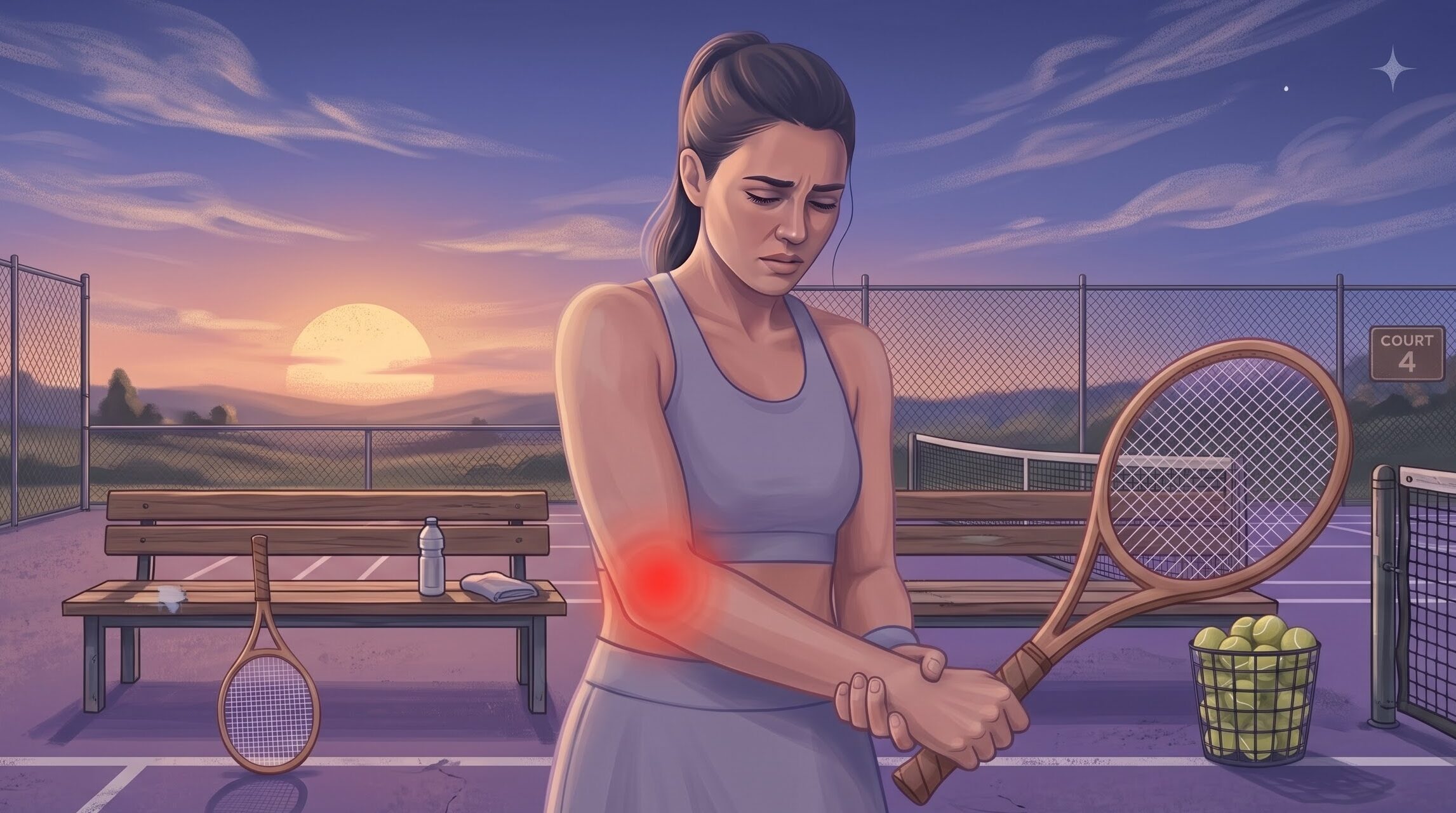
Tennis Elbow (Lateral Epicondylitis): Affects the outside of the elbow joint (wrist extensor tendons). [11]
Should I wear a compression sleeve during heavy pulls, or only after working out?
Sports medicine specialists recommend wearing an elbow compression sleeve during your active lifting sets. Wearing it during movements like barbell rows, lat pull-downs, or deadlifts dampens muscle vibrations and offloads peak mechanical tension from the flexor tendon anchor. You can also keep it on for 30–60 minutes post-workout to maintain therapeutic warmth and support circulation while muscles cool down.
Will a compression sleeve impair my forearm mobility or grip sensation on the wall?
No. Unlike rigid braces or heavy splints, a 4-way stretch compression sleeve provides dynamic elastic support without restricting joint range of motion or finger dexterity. Climbers often prefer lightweight compression sleeves because they retain elbow heat between routes without affecting tactile finger sensitivity on holds.[12]
How does an elbow compression sleeve help during long gardening sessions?
Gardening involves sustained, low-to-medium repetitive strain over hours. A compression sleeve applies continuous radial pressure across the forearm muscle mass, reducing soft-tissue fatigue, keeping the joint warm, and preventing localized swelling (edema) as you work.[13]
References:
1.https://www.mrhc.org/blog/news/not-just-for-athletes-golfers-elbow-can-affect-anyone/
2.https://www.mayoclinic.org/diseases-conditions/golfers-elbow/diagnosis-treatment/drc-20372872
3.https://www.mayoclinic.org/diseases-conditions/golfers-elbow/symptoms-causes/syc-20372868
4.https://www.google.com/search?q=https://www.cdc.gov/niosh/topics/ergonomics/default.html
9.https://calisthenicsassociation.org/blog/how-to-fix-elbow-pain-pull-ups-prevention-recovery
12.https://www.camp4humanperformance.com/blog/golfers-elbow
Disclaimer: This content is for informational purposes only and does not substitute professional medical advice, diagnosis, or treatment. Always consult a physician or physical therapist for persistent joint pain.