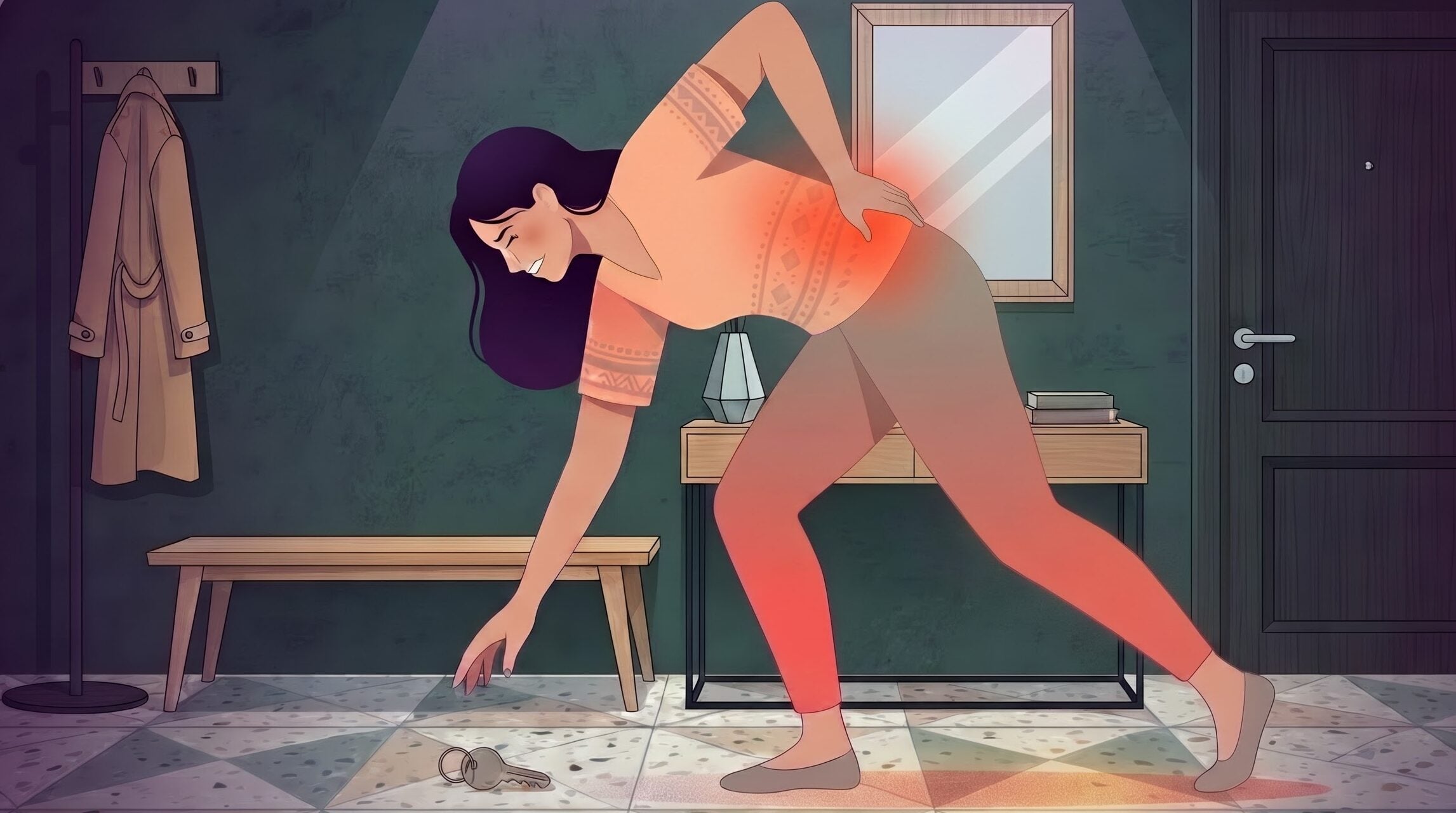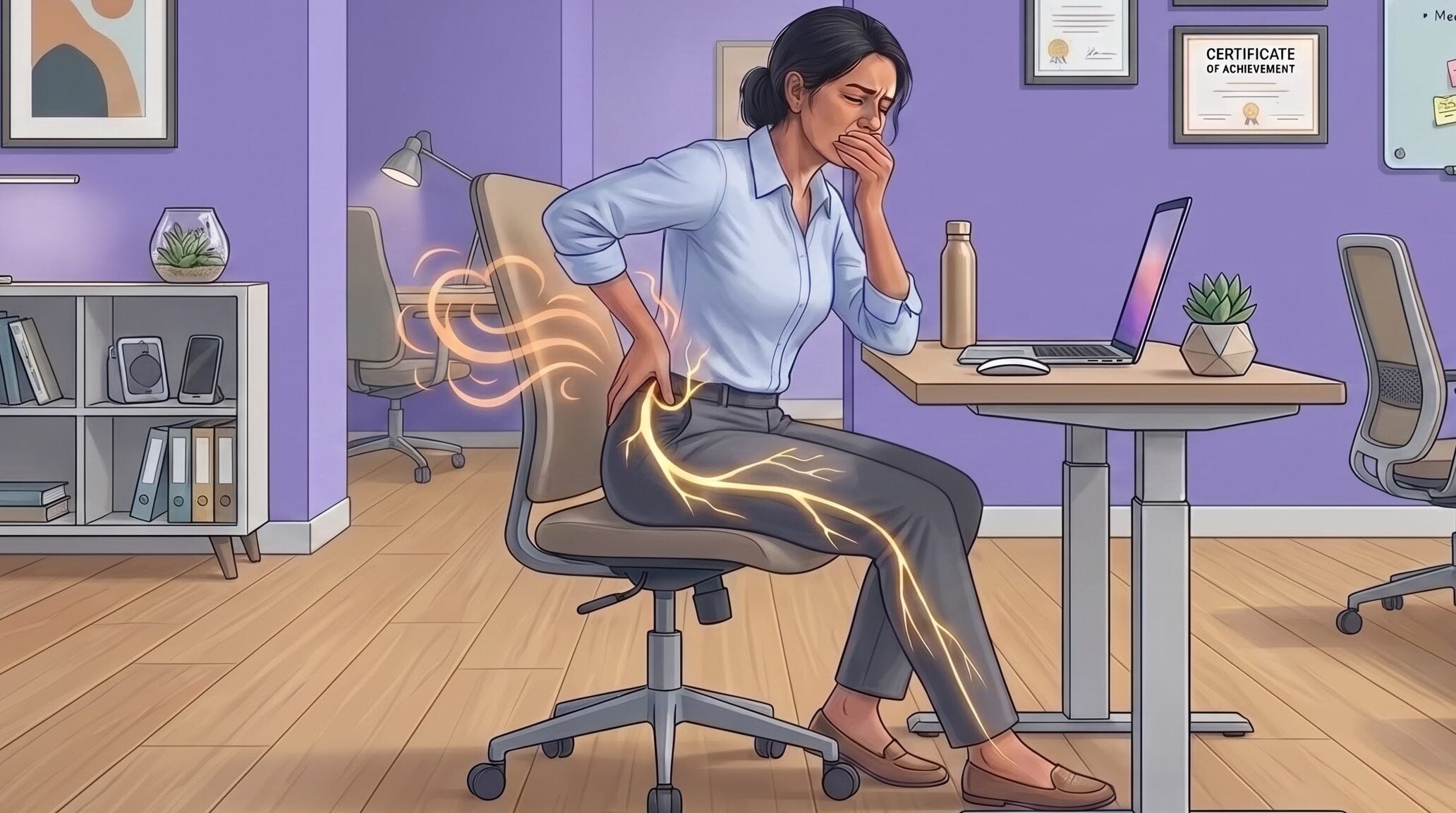




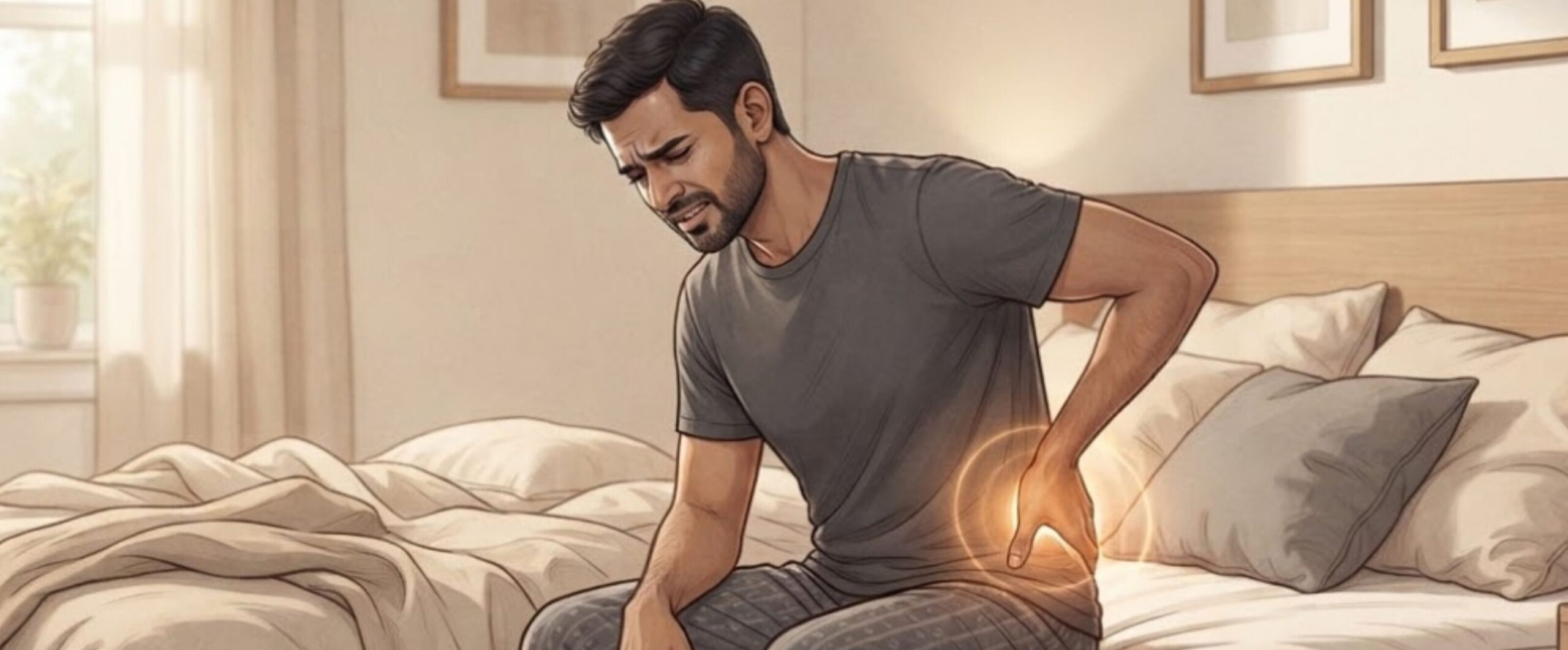
You go to bed feeling fine, but you may wake up with morning back pain and stiffness. For many people, this morning soreness makes the first 30 minutes of the day frustratingly difficult.
While persistent back pain can have many causes, your sleep environment plays a major role. Your sleep position, mattress support, and pillow placement all affect how your back feels when you wake up.
Why Do I Wake Up with Morning Back Pain?
Waking up with back pain or stiffness usually comes down to three factors: pressure from staying in one position, reduced movement, and a lack of support.
When you sleep, your joints and muscles stay still for six to eight hours. If your body rests in an awkward posture, certain muscles remain tense while your joints experience constant pressure. At the same time, your spinal discs naturally absorb fluid while you lie down, which increases pressure inside the discs and may contribute to a feeling of stiffness when you first stand up. [1]
However, a sore back does not automatically mean your bed is the only problem. Daytime posture, past injuries, joint sensitivity, and your overall movement habits also influence how you feel after a night’s rest.
Can Your Sleeping Position Cause Morning Back Pain?
Yes, your sleeping position can contribute to morning discomfort. Resting in one posture for hours can place uneven strain on your spine and neck, especially without proper support. [3]
Here is how common sleep positions affect your body:
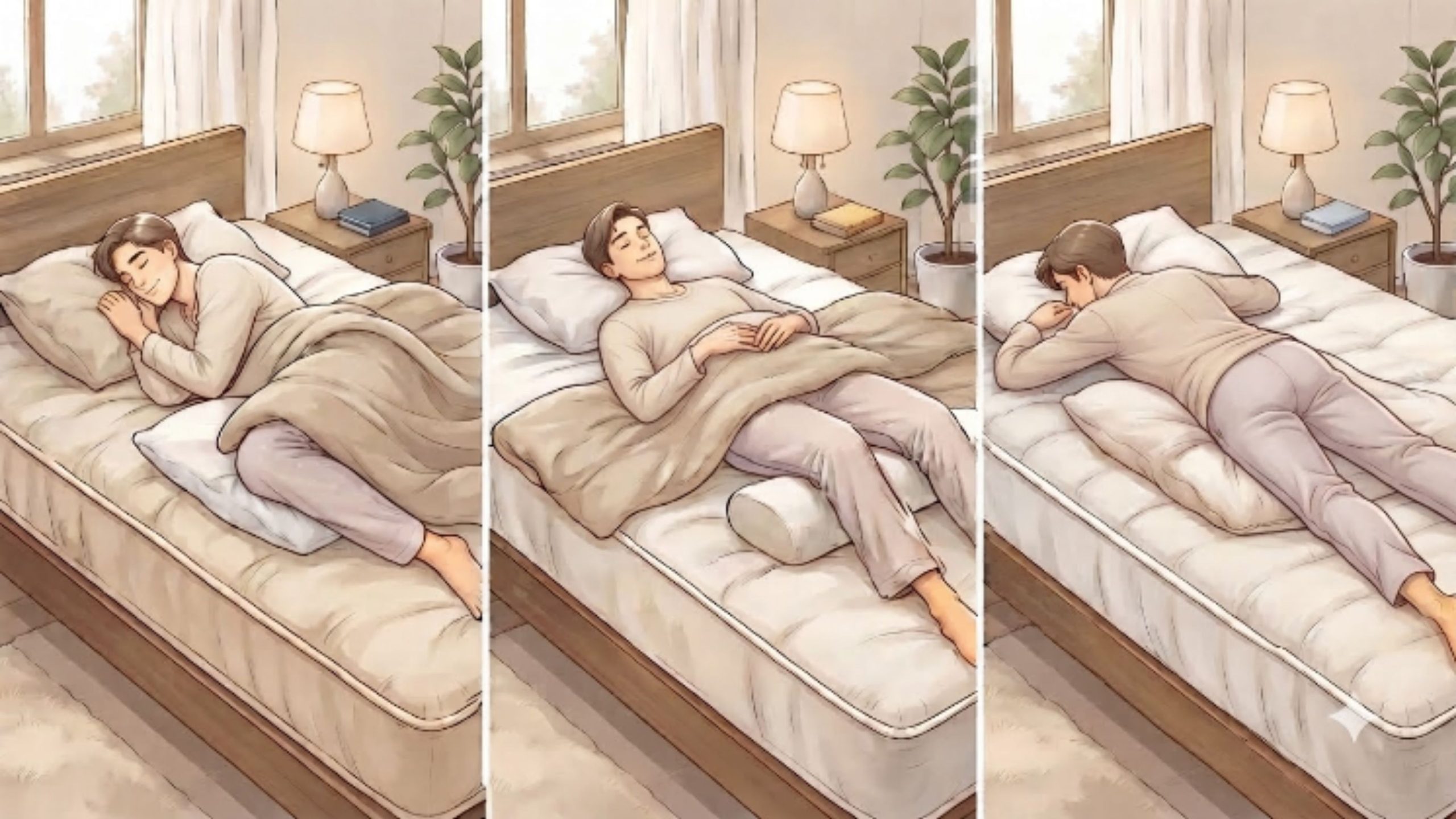
Side Sleeping and Morning Back Pain
Side sleeping is very common, but it often allows your top leg to slide forward. This motion twists your hips and pulls your lower spine out of a relaxed position. Without support between your knees, this subtle twist creates tension across your lower back all night. [3]
Why Does My Lower Back Hurt in the Morning?
Back sleeping distributes your weight evenly, but lying flat leaves a gap between your lower back and the mattress. If your mattress is too firm or your hips are tight, your lower back may arch unnaturally. This places extra stress on your lower spine. [3]
Why Stomach Sleeping Can Contribute to Morning Back Pain?
Stomach sleeping can place the lower back in an exaggerated arch while forcing your neck to turn to one side so you can breathe. As a result, this position can strain the muscles in both your neck and lower back. While not dangerous, stomach sleeping makes it hardest to keep your spine relaxed. [3]
What Is the Best Sleeping Position for Lower Back Pain?
There is no single sleeping position that works best for everyone. The right position is simply the one that keeps your body relaxed, comfortable, and well-supported. [3]
- For side sleepers: Keep your hips and knees stacked directly on top of each other.
- For back sleepers: Fill the empty space under your knees or lower back to prevent excessive arching.
- For stomach sleepers: Place support under your pelvis so your lower back does not sink too deep.
Instead of forcing yourself into an unfamiliar posture, use supportive pillows to make simple adjustments to your natural position.
How to Tell If Your Mattress Is Causing Morning Back Pain
A mattress that loses its support can no longer keep your spine aligned. Over time, bedding materials wear out, leading to sagging and uneven pressure.
In addition, common signs your mattress may be part of the problem include:
- You wake up with morning back pain or soreness, but the pain eases within an hour of moving around.
- You sleep much better in other beds, like at a hotel.
- Your mattress has visible sagging, lumps, or deep body impressions.
- You constantly roll toward the middle of the bed unintentionally.
Is a Firm or Soft Mattress Better for Morning Back Pain?
Neither a rock-hard surface nor a squishy pillow-top is ideal.
An overly firm mattress creates harsh pressure points at your shoulders and hips. An overly soft mattress can allow your hips to sink too deeply, which may place uneven strain on your lower back muscles. Clinical studies show that a medium-firm mattress often provides a better balance of surface cushioning and structural support compared to a hard mattress for individuals with back discomfort. [2]
Simple Pillow Placement Hacks for Better Sleep Comfort
Using pillows strategically reduces strain on your joints without requiring you to buy a new mattress. [3]
- Side Sleepers: Place a firm pillow between your knees and ankles. This stops your top leg from sliding forward and keeps your hips level.
- Back Sleepers: Place a small pillow under your knees. Bending your knees relaxes your hip muscles and lets your lower back rest flat against the bed.
- Stomach Sleepers: Place a thin, flat pillow under your lower stomach and hips to keep your back from arching too deeply.
Morning Movement: What to Do Before and After Waking
When you wake up stiff, sudden or aggressive stretching can irritate cold muscles. Gentle movement is a safer way to ease morning stiffness.
When Morning Back Pain Needs Medical Attention
Morning back stiffness often eases as you start moving. Light physical activity can help reduce tissue tension and discomfort as your body warms up. [4]
Safe Morning Movement Tips
Before getting out of bed, try these gentle habits:
- Gentle Knee Rolls: Lie on your back with your knees bent. Slowly sway your knees from side to side to loosen your lower back.
- Log-Roll Out of Bed: Roll onto your side first, then use your arms to push yourself up while swinging your legs over the edge of the mattress. This avoids twisting your spine.
- Light Walking: Walk around your home for a few minutes before bending over, lifting heavy items, or starting intense activity.
When Morning Back Pain Needs Medical Attention
Occasional morning stiffness is normal and easy to manage at home. However, persistent or severe symptoms require professional evaluation. [5]
Symptoms Requiring Urgent or Immediate Emergency Care
Seek immediate emergency medical attention if your back pain is accompanied by any of the following:
- Sudden loss of bowel or bladder control
- Numbness or sensory loss in your saddle area (groin, buttocks, or inner thighs)
- Severe or rapidly progressive weakness in your legs or feet
- High fever, chills, or pain following a major trauma or injury [5]
Symptoms Warranting Routine Medical Assessment
Schedule an appointment with a healthcare professional if you experience:
- Pain that lasts all day or steadily worsens over several weeks
- Persistent numbness or tingling spreading down one or both legs
- Unexplained weight loss accompanying back soreness [5]
Practical Sleep Comfort: The Role of Support Pillows
Standard bed pillows often flatten or shift out of place during the night, making it hard to maintain good posture.
Research on pillow design suggests that an appropriately supportive pillow may improve sleep comfort and quality.[6]
Supportive accessories like the Betterhood Neck Support Pillow offer a practical option for home comfort. Designed to fit between the knees for side sleepers or under the legs for back sleepers, contoured pillows help maintain alignment of the legs and hips throughout the night.
While a support pillow is an accessory for sleep comfort rather than a treatment for structural spinal conditions, adding dedicated support to your bed can reduce muscle tension so you wake up feeling more rested.
Frequently Asked Questions
Why does my back hurt after I wake up in the morning?
Morning back stiffness often happens from lying still for hours, overnight fluid changes within your spinal discs, and a lack of support from an unsupportive mattress or pillow setup. [1,3]
How do I know if my mattress is causing my back pain?
If you wake up stiff every morning but feel better shortly after moving around—or if you sleep significantly better away from home—your mattress may lack proper support. [2]
What is the best sleeping position for lower back pain?
There is no single best position. Side sleeping with a pillow between your knees and back sleeping with a pillow under your knees are generally practical options to keep your spine well-supported. [3]
Why does my lower back hurt when I sleep on my back?
Lying completely flat creates an unsupported gap under your lower spine, which places stress on your lower back muscles. Placing a pillow under your knees flattens your back comfortably against the mattress. [3]
Can sleeping position cause morning back stiffness that lasts all day?
Poor sleep posture mostly causes short-term morning stiffness. However, sustained tissue strain night after night can lead to lingering muscle fatigue throughout the day. [3]
Final Thoughts
Morning back pain can sometimes be influenced by how you sleep and the support your mattress and pillows provide overnight. Small adjustments, such as changing your sleep position or adding support between or under your knees, may improve comfort.
If morning back pain keeps returning, gets worse, or comes with symptoms such as numbness, weakness, or changes in bladder or bowel control, speak with a healthcare professional rather than assuming your sleep setup is the only cause.
The goal is not to find a perfect sleeping position but to create a sleep setup that keeps you comfortable and supported throughout the night.
References
- Kraemer J, Kolditz D, Gowin R. Water and electrolyte content of human intervertebral discs under variable load. Spine. 1985;10(1):69-71. https://pubmed.ncbi.nlm.nih.gov/3983704
- Kovacs FM, Abraira V, Peña A, et al. Effect of firmness of mattress on chronic non-specific low-back pain: randomized, double-blind, controlled, multicentre trial. Lancet. 2003;362(9396):1599-1604. PMID: 14630439. https://pubmed.ncbi.nlm.nih.gov/14630439/
- Cary D, Briffa K, McKenna L. Identifying relationships between sleep posture and non-specific spinal pain in adults living in the community. BMJ Open. 2019;9(6):e027633. https://pubmed.ncbi.nlm.nih.gov/31256029/
- Gordon R, Bloxham S. A Systematic Review of the Effects of Exercise and Physical Activity on Non-Specific Chronic Low Back Pain. Healthcare (Basel). 2016;4(2):22. PMID: 27417610. https://pubmed.ncbi.nlm.nih.gov/27417610/
- National Institute for Health and Care Excellence (NICE). Low back pain and sciatica in over 16s: assessment and management. NICE Guideline NG59. 2016; updated 2020. https://www.nice.org.uk/guidance/ng59
- Jeon MY, Jeong HC, Lee SW, et al. Improving the Quality of Sleep With an Optimal Pillow: A Randomised, Comparative Study. Tohoku J Exp Med. 2014;233(3):183-188. doi:10.1620/tjem.233.183. https://doi.org/10.1620/tjem.233.183