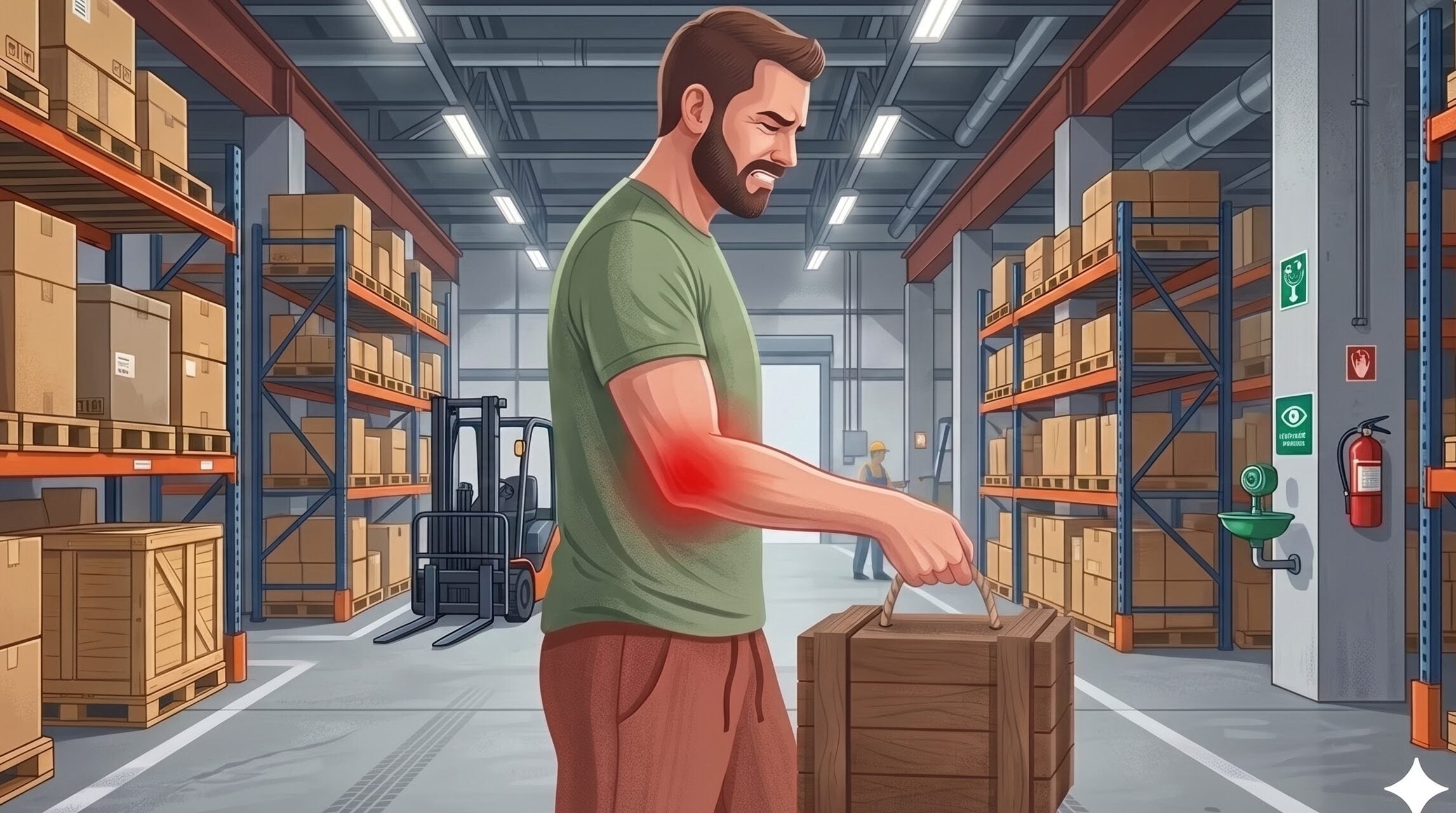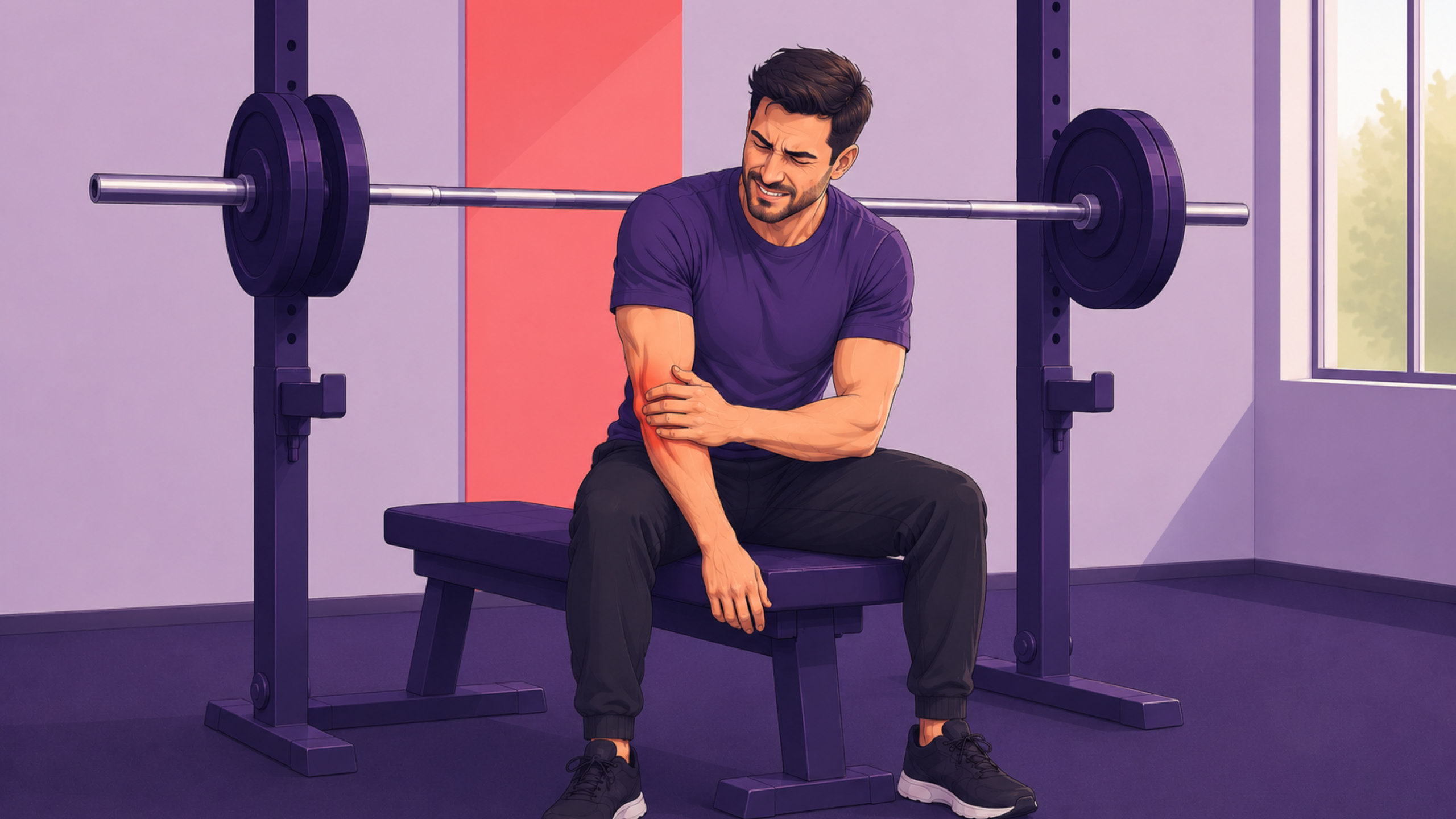




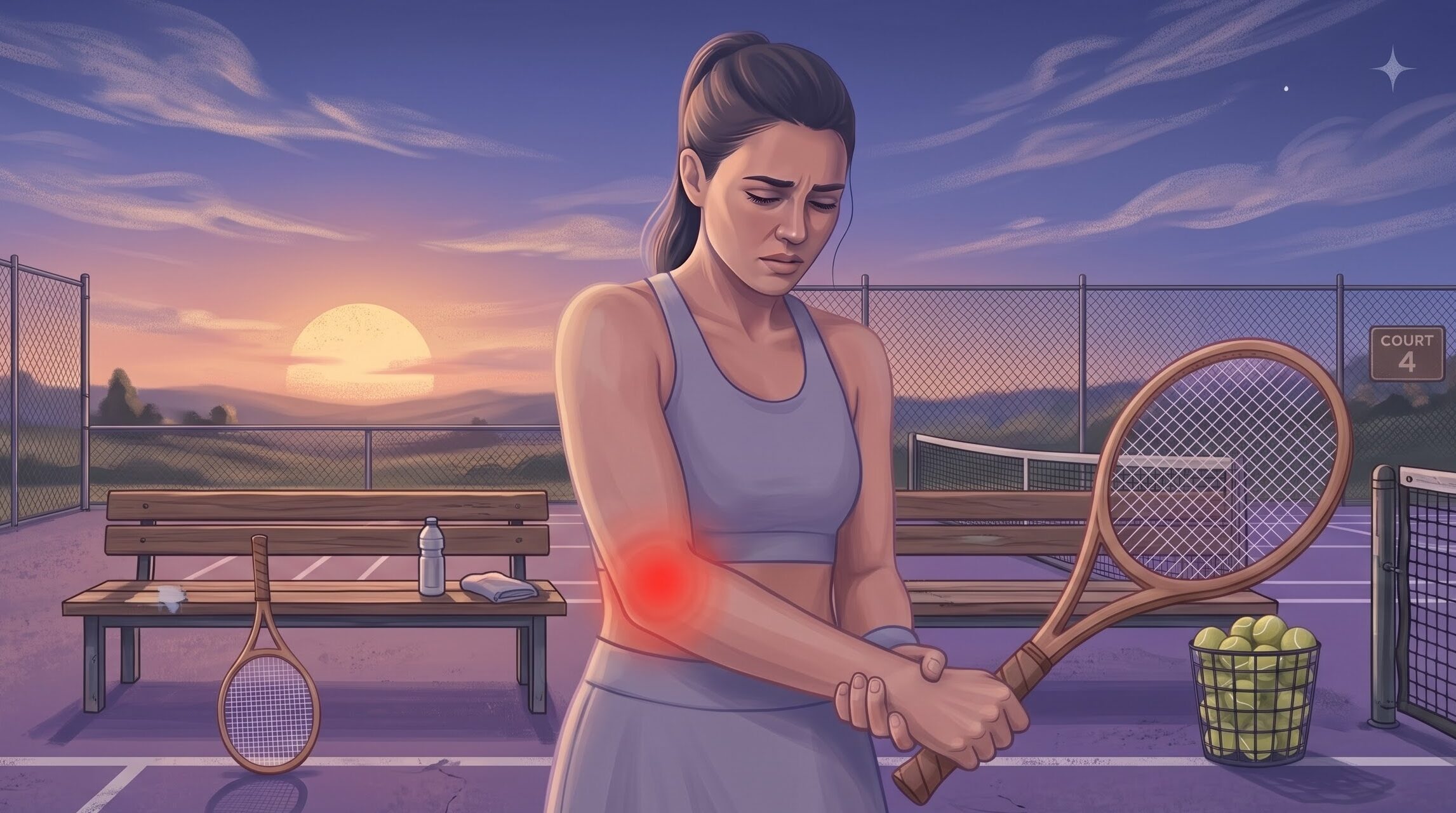
When every smash leaves your forearm throbbing, you need elbow strain support to recover and return to the court faster.
Recovering from elbow strain from racket sports support is key to getting back on court.
You know that sharp ache shooting down your arm after a long match? When every smash leaves your forearm throbbing, you struggle to hold your racket or perform simple daily tasks like opening a jar.
This strain builds gradually as repetitive strokes overload forearm tendons without adequate recovery. Sudden spikes in weekend play, tight racket grips, and inadequate warm-ups heavily increase stress on your forearm muscles.
What Causes Elbow Strain in Racket Sports?
Initial elbow strain occurs when repetitive wrist extension and impact forces create microtears in forearm tendons.
Casual Players
Strains typically stem from flawed mechanics (e.g., wrist flicking, late backhands), improper equipment (wrong grip size, tight strings), and weak wrist stabilizers that fail to absorb ball impact shock.
Professional Players
Strains stem from extreme repetitive volume, high-velocity impact, and cumulative muscular fatigue, which gradually overloads healthy tendons despite refined technique.[1]
Why Does Every Swing Send Pain Shooting Down Your Forearm?
Without proper elbow strain support, impact forces overload your forearm tendons.
When you swing a racket or paddle, the impact force generated by striking the ball or shuttlecock travels up the frame, through your grip, and straight into your forearm flexor and extensor muscles.
Arm-Dominant Swing: If you fail to initiate power from your legs, hips, and core, your forearm muscles are forced to compensate and absorb impact forces beyond their mechanical limit.
Wrist Flicking / Late Impact: Striking the ball late or snapping the wrist at impact increases peak torque on the forearm flexors and extensors.
Repetitive ImpactHigh-frequency vibrational shock waves travel up the kinetic chain upon contact.
Beyond the Court: How Elbow Compression Sleeves Complement Physical Therapy in elbow strain Recovery
Combining Passive Support with Active Rehabilitation to Accelerate Tendon Healing and Eliminate Forearm Fatigue
Returning to racket sports like tennis, pickleball, badminton, or squash after an elbow tendon strain requires a careful balance of structural rebuilding and symptom management. While physical therapy (PT) is the gold standard for restoring muscle capacity and repairing tendon tissue, an elbow compression sleeve serves as a vital daily companion. Together, they create a comprehensive multi-modal recovery strategy that speeds up your return to the court.
How Does an Elbow Compression Sleeve Work Alongside Active Physical Therapy for elbow strain?
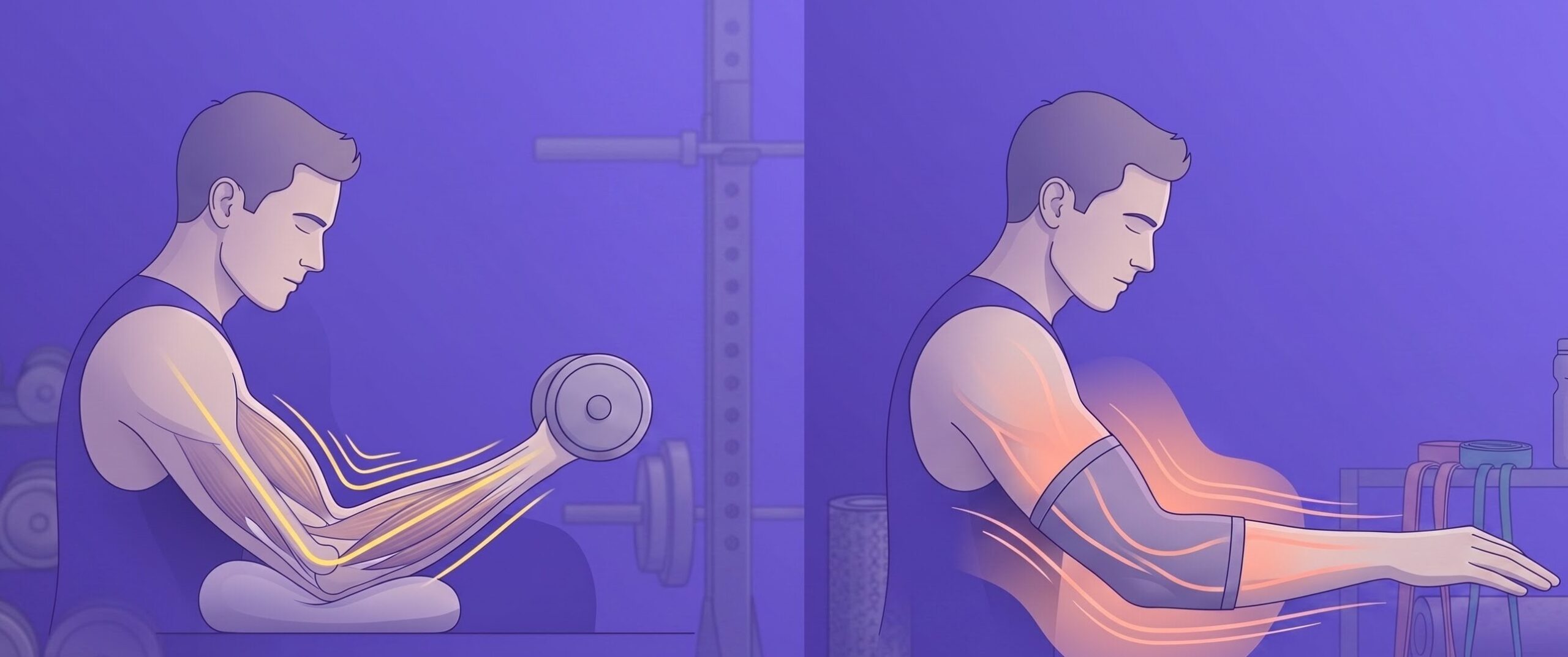
An elbow compression sleeve provides the best elbow strain support during rehab exercises.
Physical therapy focuses on active rehabilitation, using targeted eccentric loading, stretching, and strength training to stimulate collagen remodeling, however therapeutic loading can temporarily stress sensitive tissues.
An elbow compression sleeve provides essential passive support during and between therapy sessions. By applying uniform, gentle pressure across the forearm muscle belly and joint, the sleeve enhances local micro-circulation. This increased blood flow delivers vital nutrients and oxygen required for tissue repair, accelerates the removal of metabolic waste after exercise, and maintains joint warmth to prevent post-therapy stiffness.
Can Wearing a Compression Sleeve Speed Up Pain Relief During Rehab Exercises?
One of the primary obstacles in physical therapy is exercise-induced discomfort. If eccentric exercises (such as wrist extension curls or rubber flex-bar twists) trigger sharp pain, patients often compensate with flawed mechanics or stop performing their routines entirely.
A compression sleeve helps bridge this gap through neurological pain modulation. The continuous tactile pressure from the elastic fabric stimulates sensory skin receptors, which helps quiet down pain signals sent to the brain. Additionally, the sleeve dampens high-frequency muscle vibrations during movement, allowing players to complete their prescribed physical therapy exercises with higher compliance and less soreness.
Does a Sleeve Improve Joint Awareness and Movement Mechanics?
Proprioceptive feedback is critical when relearning proper swing mechanics and wrist control. When tendon strain occurs, your brain’s awareness of joint positioning is often diminished, increasing the risk of compensatory movements like wrist-flicking.
A 4-way stretch compression sleeve stimulates cutaneous mechanoreceptors surrounding the elbow joint. This heightened sensory input boosts proprioception, your body’s ability to sense joint position and movement. With improved awareness, players maintain cleaner stroke mechanics, reduce joint wobble during resistance training, and protect the healing tendon from sudden torque.
How Does an Elbow Compression Sleeve Aid Recovery from elbow strain?
Returning to sports like tennis, pickleball, badminton, or squash after a tendon injury can be challenging. An elbow compression sleeve, such as the Betterhood Elbow Support Sleeve, serves as a vital daily orthotic during rehabilitation, working alongside rest and targeted exercises to speed up tendon repair.
Will an Elbow Compression Sleeve Reduce Pain and Swelling During Daily Movement?
When you suffer from tennis elbow (lateral epicondylitis) or golfer’s elbow (medial epicondylitis), microtears in the forearm tendons cause localized inflammation and throbbing. Gentle, anatomical compression helps in two ways:
Fluid Management: Uniform surface pressure prevents the buildup of extracellular fluid, reducing localized swelling around the elbow joint.
Pain Modulation: Tactile input from the elastic knit stimulates cutaneous mechanoreceptors. This sensory feedback helps mask pain signals sent to the brain, providing natural, non-pharmacological relief during daily tasks like turning doorknob handles or carrying equipment.
Can Compression Improve Blood Flow and Speed Up Tissue Repair?
Unlike muscles, tendons have a poor blood supply, which can slow down natural healing. Graduated compression improves micro-circulation to the joint tissues:
Nutrient Delivery: Enhanced blood flow brings oxygen, collagen-building amino acids, and repair cells directly to damaged microtears.
Flushing Waste: Improved circulation helps clear metabolic waste and inflammatory byproducts built up after practice or physical therapy sessions, minimizing post-match muscle stiffness.
Does Wearing a Sleeve Boost Joint Stability and Confidence?
Strain injuries often disrupt your body’s internal positioning awareness (proprioception). Without firm feedback, your arm may compensate with faulty swing mechanics, raising the risk of re-injury.
The snug fit of a dynamic sleeve increases proprioceptive feedback by continuously stimulating skin receptors. This heightened sensory awareness gives you better control over wrist stability and joint tracking, preventing sudden twisting forces during quick backhands or overhead smashes.
How Does the Sleeve Dampen Impact Shock During Swings?
Every time your racket or paddle makes contact with a ball or shuttlecock, high-frequency kinetic vibrations travel through the frame into your forearm muscles. These sudden oscillations place repetitive tensile stress on the healing Extensor Carpi Radialis Brevis (ECRB) tendon.
A 4-way stretch knit sleeve, like the Betterhood Elbow Compression Sleeve, acts as a dampening layer across the muscle belly. By stabilizing muscle tissue and limiting excessive oscillation during explosive swings, the sleeve absorbs impact shock, offloading stress from fragile tendon attachment points.
Benefits and Uses of the Betterhood Elbow Compression Sleeve for elbow strain.
The Betterhood sleeve gives targeted elbow strain support for tennis, pickleball and badminton.
The Betterhood Elbow Support Sleeve is an anatomical compression orthotic designed to deliver targeted joint support, dampen impact shock, and manage pain during sports, workouts, and daily activities. Co-created with physiotherapists, it combines breathable, lightweight materials with structured support zones.
Key Benefits
Targeted Pain & Swelling Management: Applies uniform, gentle compression across the elbow joint and forearm musculature, which helps limit fluid accumulation, reduce localized inflammation, and mask pain signals during movement.
Vibration & Impact Dampening: The 4-way stretch knit dampens muscle oscillations caused by high-frequency contact, such as racket strikes in tennis or pickleball, reducing tensile strain on forearm tendons.
Improved Micro-Circulation: Promotes local blood flow to surrounding tissues, helping deliver oxygen and nutrients required for tendon and muscle recovery while flushing out metabolic waste after workouts.
Enhanced Proprioception & Joint Stability: The snug, contoured fit stimulates cutaneous sensory receptors, improving joint awareness and positioning to prevent sudden twisting or compensatory movements.
Unrestricted Flexibility: Engineered with seamless, breathable fabric that provides dynamic support without restricting full elbow flexion or wrist extension.
Frequently Asked Questions
Whether you are recovering from tennis elbow, managing gym fatigue, or seeking extra joint stability during sports, elbow compression sleeves are a popular orthotic solution. Here are answers to the most common questions about how they work, how to wear them, and what to expect.
How does an elbow compression sleeve actually work?
Elbow compression sleeves deliver uniform, targeted pressure across the forearm muscles and elbow joint. This gentle squeezing action:
Increases Micro-Circulation: Boosts local blood flow, delivering oxygen and nutrients to healing tissues while flushing out metabolic waste.
Dampens Impact Vibrations: Absorbs high-frequency muscle oscillations caused by racket strikes, heavy weightlifting, or repetitive movements, reducing stress on tendons.
Enhances Proprioception: Stimulates skin receptors to heighten joint position awareness, helping you maintain proper movement mechanics.
What is the difference between an elbow sleeve and a tennis elbow strap?
Elbow Compression Sleeve: Covers the entire elbow joint and surrounding arm. It offers broad support, warmth, general pain relief, and circulation benefits.
Counterforce Strap: A narrow band worn just below the elbow. It applies concentrated pressure directly over the forearm tendon to redirect pulling forces away from the injured epicondyle.
Tip: Many athletes use a targeted strap during intense play and a sleeve afterward to manage post-game stiffness.
Can I wear an elbow sleeve all day or while sleeping?
During Activity: Sleeves are designed to be worn during workouts, court play, or repetitive work tasks (typically 1 to 4 hours at a time).
All-Day Wear: You can wear breathable sleeves like the Betterhood Elbow Support Sleeve throughout the day if you take short breaks to let your skin breathe.
Sleeping: It is generally not recommended to sleep in a compression sleeve unless advised by a physician, as reduced movement during sleep can cause restricted circulation.
How tight should an elbow compression sleeve feel?
The sleeve should fit snugly with firm, even compression, but it should never restrict your range of motion or blood flow.
Warning Signs It Is Too Tight: Numbness, tingling, a throbbing sensation, cold fingers, or skin discoloration. If you experience any of these, remove or resize the sleeve immediately.
Will a compression sleeve cure tennis elbow or tendonitis on its own?
No. A compression sleeve is a supportive tool, not a standalone cure. While it effectively manages pain, reduces swelling, and offloads strain during movement, long-term recovery requires:
Targeted Physical Therapy: Eccentric strengthening exercises for forearm extensors and flexors.
Activity Modification: Resting or pacing high-impact movements.
Equipment Adjustments: Tuning grip sizes, racket string tension, or lifting form
What is the most common overuse injury in racket sports?
Answer: Lateral epicondylitis, commonly known as tennis elbow, is the most frequent overuse injury in racket sports. It involves microtearing and degeneration of the forearm extensor tendons, primarily the Extensor Carpi Radialis Brevis (ECRB), due to repetitive impact and wrist extension during stroke execution.
What causes “pickleball elbow” or “tennis elbow” during play?
While high repetitive volume contributes, the primary triggers include:
- Off-Center Ball Contacts: Off-center hits twist the racket frame, sending torsional shock up the arm.
- Grip Over-Squeezing: Squeezing the handle too tightly places continuous tensile stress on forearm tendons.
- Equipment Setup: Stiff polyester strings, high string tension, or inappropriate handle sizes increase impact transfer to the forearm.
- Flawed Mechanics: Flicking the wrist or hitting late backhands forces the smaller forearm tendons to absorb forces meant for larger shoulder and core muscles.
For lasting relief, combine therapy with daily elbow strain support.
References:
2. Struijs, P. A., et al. (2004). Orthosis for lateral epicondylitis: A systematic review. British Journal of Sports Medicine, 38(4), 427–430
3. Kraemer, W. J., et al. (2001). Influence of compression garments on movement and muscle performance. Journal of Strength and Conditioning Research, 15(3), 364–370.
4. Birmingham, T. B., et al. (1998). Effect of a neoprene sleeve on joint position sense. Journal of Orthopaedic & Sports Physical Therapy, 28(6), 400–406.
5. Page, P. (2010). Clinical results of eccentric wrist extension exercises for tennis elbow. North American Journal of Sports Physical Therapy, 5(3), 169–175.
6. https://pubmed.ncbi.nlm.10398692/ – Google Search
7. https://www.jospt.org/doi/10.2519/jospt.1998.28.6.400 – Google Search
Disclaimer: This content is for informational purposes only and does not substitute professional medical advice, diagnosis, or treatment. Always consult a physician or physical therapist for persistent joint pain.