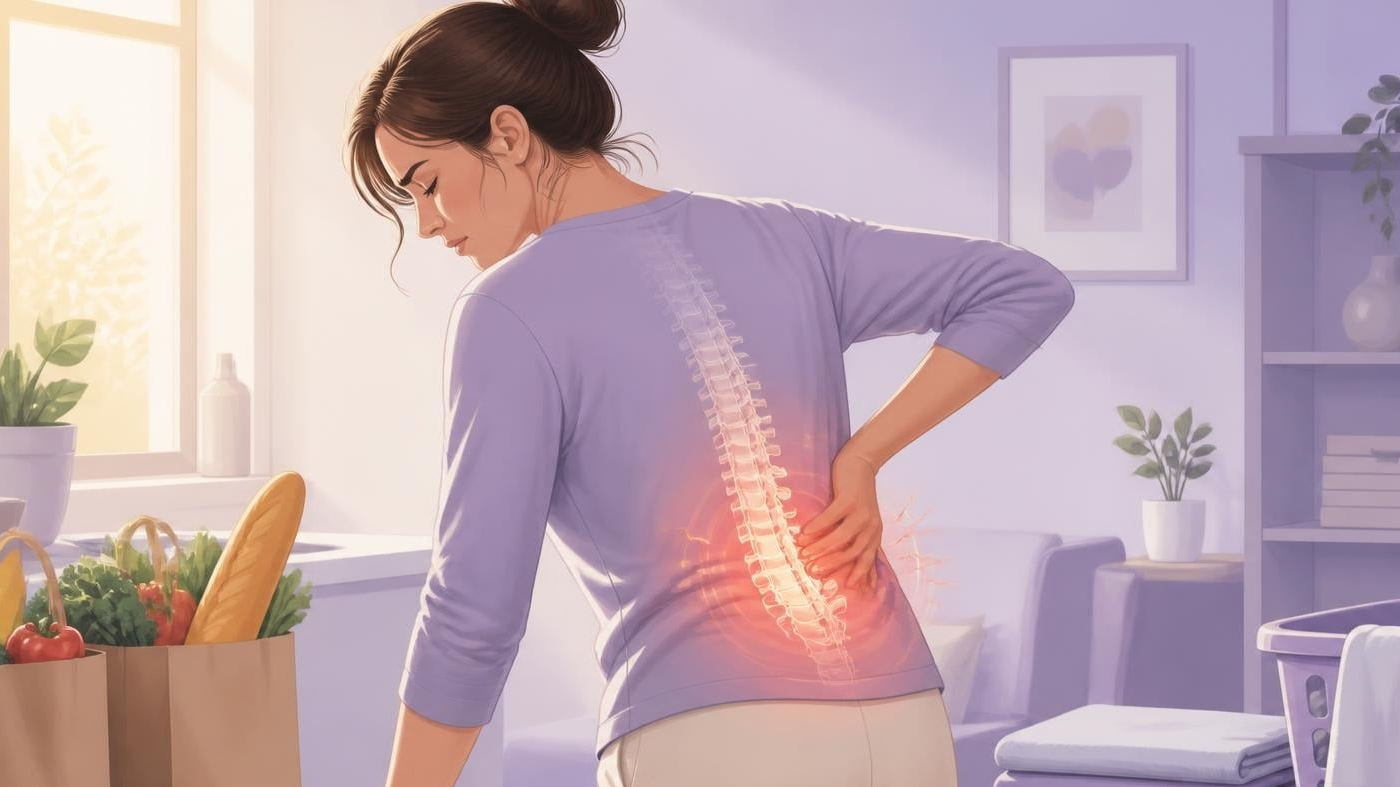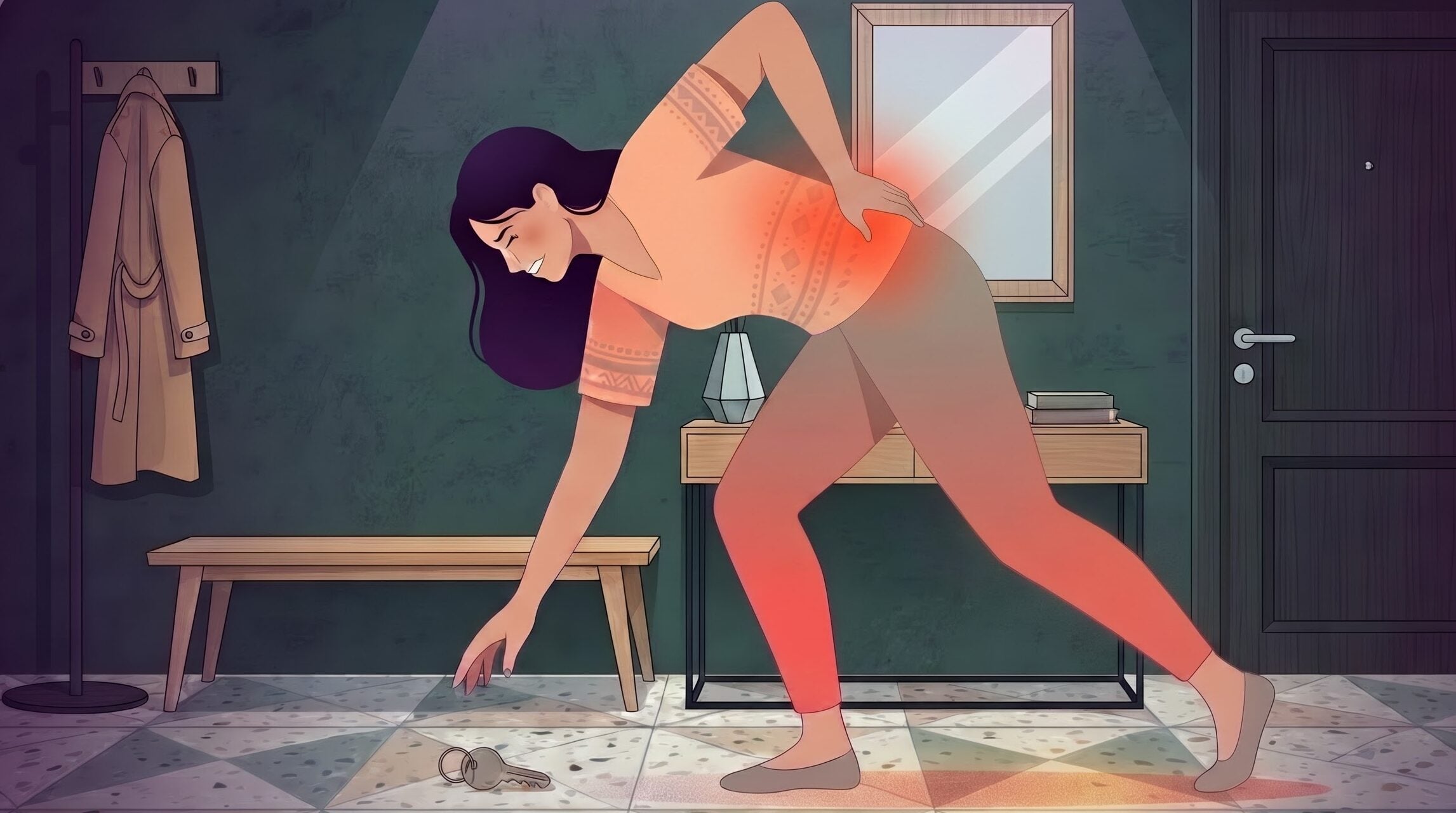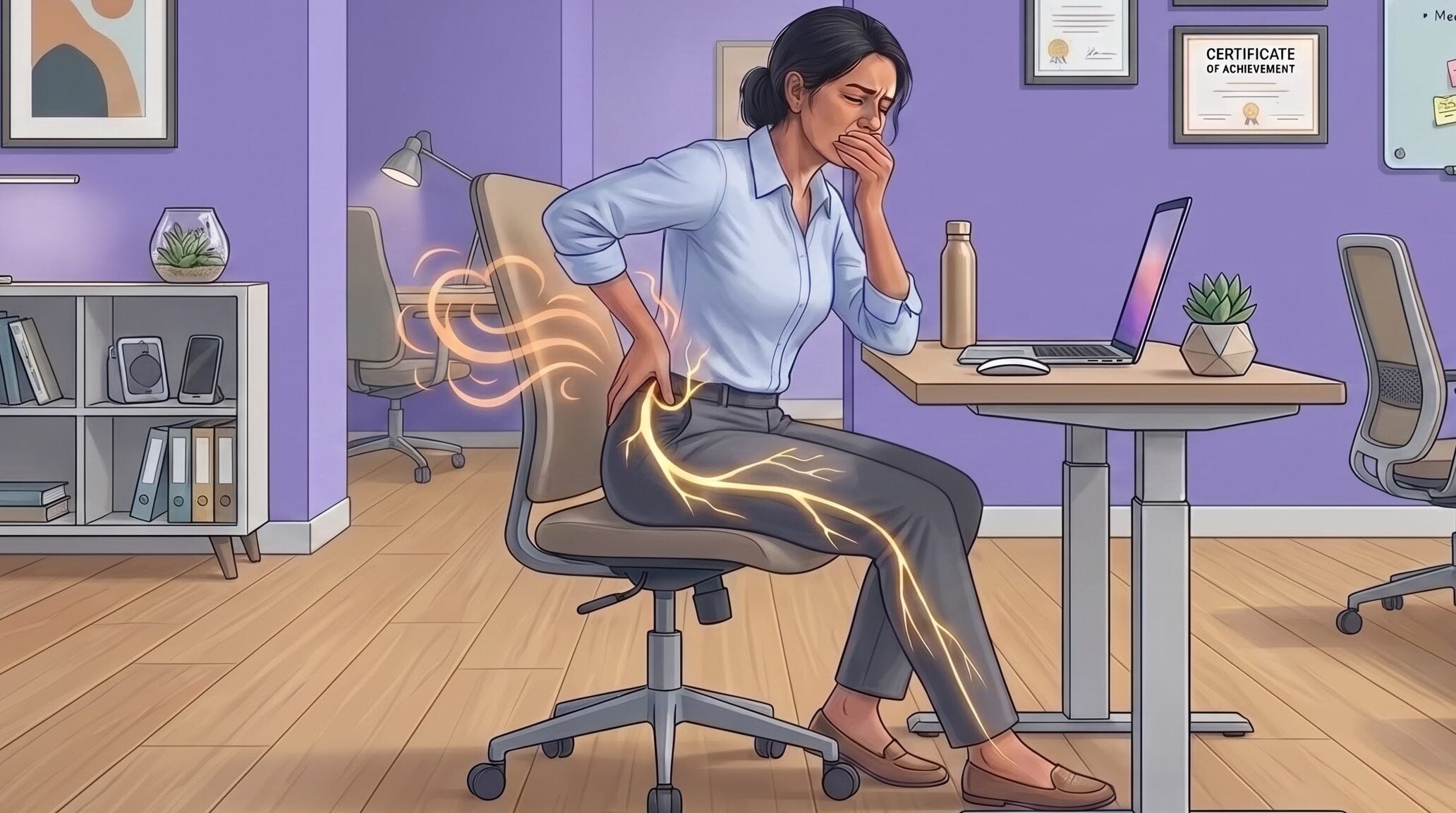




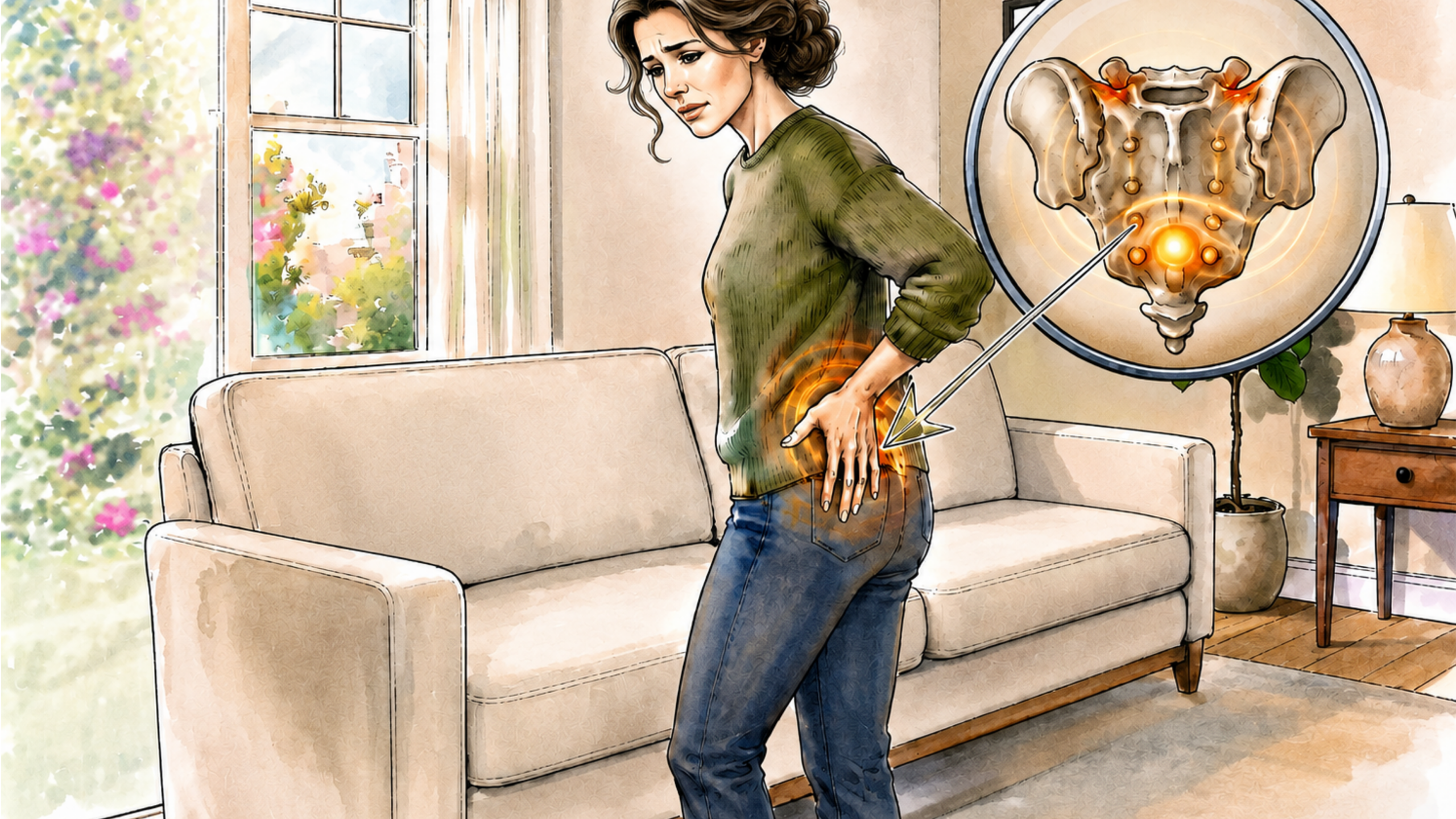
Finding effective SI joint pain relief is crucial when discomfort around your lower back, buttocks, or sacrum makes everyday activities uncomfortable. You likely want straightforward answers about how to ease pelvic stiffness and return to your normal routine safely.
Achieving long-term SI joint pain relief often starts with understanding what causes strain around the sacroiliac joint. Gentle exercises, proper pelvic movement, and targeted lifestyle adjustments can significantly reduce pressure on the joint to support better mobility. In this guide, we’ll explore exercises and practical strategies that can help manage SI joint pain safely.
With that in mind, here is a practical guide to managing flares at home and supporting long-term pelvic recovery.
What Helps SI Joint Pain?
To relieve SI joint discomfort, first focus on easing joint irritation, while also building stability around your pelvis [1].
In general, the most effective management plan typically includes:
- Gentle movement: Instead of resting in bed completely, stay active with comfortable movement [3].
- Targeted exercise: Strengthening your glutes, core, and hips to support your lower spine [2].
- Activity modification: For example, adjust how you sit, lift, and stand during a flare-up [1].
- Heat or cold therapy: Soothing muscle tightness or numbing sharp discomfort.
- Supportive devices: When needed, wear a temporary SI belt for extra pelvic support while walking or standing.
- Topical pain relief: Easing localized muscle soreness to make daily movement easier [4].
- Professional care: If your pain persists, consider seeing a doctor or physical therapist [1].
Conservative Treatment for SI Joint Pain
Conservative, non-surgical management is the primary path toward lasting SI joint pain relief [1]. The goal is to reduce localized inflammation, restore natural movement, and prevent future flare-ups [1].
In practice, a comprehensive plan usually combines several practical steps:
- Temporary adjustments: Pause high-impact workouts or heavy lifting while keeping up with daily walking [1].
- Targeted strengthening: Build strength in the muscles around your lower back and hips [2].
- Physical therapy: Work with a professional to correct movement habits that stress your pelvis [1].
- Symptom relief: Use ice, heat, or topical remedies to stay comfortable while staying active [4].
- Medical evaluation: If home care brings no improvement, a doctor can evaluate options like guided joint injections [1].
SI Joint Pain Exercises
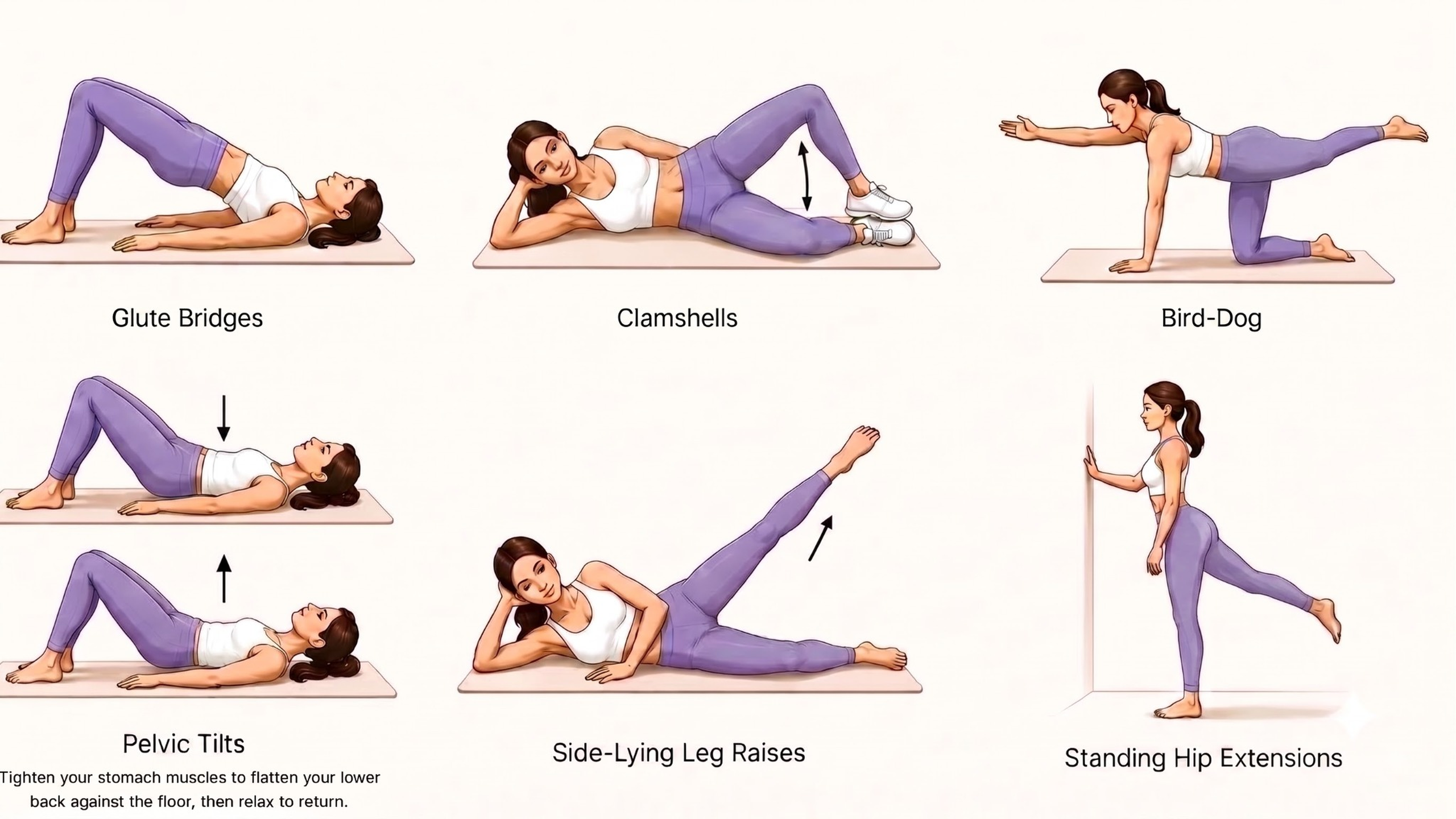
Targeted exercise plays a major role in achieving SI joint pain relief by building lumbopelvic stability. Strong supporting muscles help distribute forces evenly across your hips and pelvis [2].
Safety Rule: Every exercise should feel manageable. Move gently, stay in a comfortable motion range, and stop if you feel sharp or worsening pain.
Glute-Strengthening Exercises
Your glutes support your pelvis whenever you walk, stand, or climb stairs [2].
Glute Bridges: Lie on your back with knees bent and feet flat on the floor. Squeeze your glutes and press through your heels to lift your hips until your shoulders and knees form a straight line. Lower down slowly.
Clamshells: Lie on your side with knees bent and feet stacked together. Slowly raise your top knee upward while keeping your pelvis steady, then lower it back down.
Core and Pelvic Stabilization Exercises
A strong core reduces unnecessary shear stress on your lower pelvic joints [2].
Bird-Dog: Start on all fours with hands under shoulders and knees under hips. Keep your core lightly engaged as you extend one arm forward and the opposite leg straight back. Pause, return to center, and switch sides.
Pelvic Tilts: Lie on your back with knees bent. Tighten your stomach muscles slightly to flatten your lower back against the floor. Hold for 3 to 5 seconds and release.
Hip-Strengthening Exercises
Strong hip muscles keep your pelvis balanced when standing on one leg or taking strides [2].
Side-Lying Leg Raises: Lie on your side with your bottom leg bent and top leg straight. Lift your top leg toward the ceiling without tilting your hips, then lower it smoothly.
Standing Hip Extensions: Stand tall near a wall for balance. Slowly extend one leg straight back behind you by squeezing your glute, without arching your back.
Gentle Stretches for SI Joint Pain
Meanwhile, strengthening builds stability, while gentle stretching relaxes tight muscles surrounding your lower spine and buttocks [3].Instead, focus on light mobility rather than trying to force or aggressively twist your pelvis.
Piriformis Stretch: Lie on your back with knees bent. Cross one ankle over your opposite knee to make a figure-4 shape. Then, pull your uncrossed thigh toward your chest until you feel a gentle glute stretch.
Knee-to-Chest Stretch: First, lie flat on your back. Next, pull one knee toward your chest with both hands while keeping your opposite leg relaxed on the floor.
Hip-Flexor Stretch: Next, kneel on one knee with your other foot planted in front at a 90-degree angle.Then, keep your upper body tall and shift your weight slightly forward until you feel a soft stretch in the front of your hip.
Should You Walk With SI Joint Pain?
Yes, gentle walking is safe and encouraged for most people with SI joint pain [1].
Gentle walking can help you stay active and avoid prolonged inactivity, as long as it does not significantly worsen your symptoms [1]. Complete bed rest often makes pelvic stiffness worse [1].
Keep these simple tips in mind:
- Start with short 10- to 15-minute walks on flat, smooth surfaces.
- Take short, natural strides rather than pushing for speed or distance.
- Slow down or pause if you feel sharp, escalating discomfort.
- Gradually increase your duration as your comfort improves.
What Not to Do With SI Joint Pain
Managing SI joint pain is not about becoming afraid of normal movement. Instead, simply modify activities that clearly trigger your symptoms while your body heals [1].
| Action Strategy | Focus Area | Practical Adjustment |
| Modify Activity | Workout Intensity | Avoid sudden spikes in heavy lifting or high-impact training. |
| Adjust Movement | Twisting & Bending | Limit repetitive, forceful twisting at your waist during flares. |
| Distribute Weight | Standing Habits | Avoid standing for long periods with all your weight on one leg. |
| Respect Pain | Exercise Rules | Do not push through sharp, shooting, or increasing pain. |
Sitting, Sleeping and Daily Movement Tips
Small changes to your sitting and movement habits may make daily activities more comfortable.
Sitting
- Take breaks: Stand up and move around every 30 to 45 minutes.
- Ground your feet: Sit with both feet flat on the floor and knees at or slightly below hip level.
- Uncross your legs: Avoid crossing one leg over the other, which pulls your pelvis out of alignment.
Sleeping
- Side sleepers: Place a firm pillow between your knees and ankles to align your hips.
- Back sleepers: Place a pillow under your knees to relax your lower back.
- Stomach sleepers: Try switching to your side or back, as stomach sleeping can strain your lower spine.
Daily Movement
- Log-roll from bed: To get up, roll onto your side first, then use your arms to push up while swinging your legs over the edge.
- Lift smart: Hold objects close to your chest and bend through your knees and hips rather than rounding your back.
Heat and Cold for SI Joint Pain
Heat or cold may provide temporary symptom relief for some people [3].
Ice: Best for acute flares or sharp pain right after activity. Apply an ice pack wrapped in a towel for 15 to 20 minutes to soothe localized discomfort.
Heat: Best for lingering muscle tightness or before stretching. Apply a warm heating pad for 15 to 20 minutes to relax tight tissues.
Always keep a cloth barrier between temperature packs and your skin to avoid injury.
Can a Sacroiliac Belt Help?
A sacroiliac (SI) belt is a wide, non-elastic strap worn low around the hips, sitting just below your waistline across your pelvic bones.
Some people may find temporary external support more comfortable during activities such as walking or standing.
An SI belt should be viewed as an optional support tool rather than a replacement for exercise or professional care. If you are unsure whether a belt is appropriate for your symptoms, ask a healthcare professional.
Can Topical Pain Relief Help With SI/Sacrum Discomfort?
Topical products can offer temporary, localized SI joint pain relief by soothing surface-level soreness and surrounding muscle tightness . While topicals do not fix internal joint mechanics, they can ease discomfort during daily tasks [4].
Applying a spray, roll-on, or gel can make daily movement and stretching much more comfortable.
Sprays and Roll-Ons: Products like Betterhood Pain Relief & Recovery Spray or Betterhood Recovery Roll-On provide convenient, mess-free application directly to sore gluteal and pelvic muscles.
Gels and Patches: Options like Betterhood Cryogel or Pain & Recovery Patches offer cooling or lingering soothing sensations to calm surface soreness during daily tasks.
Topical options work best as ONE supportive option for localized symptom relief within a complete strategy alongside gentle exercises and posture adjustments [1, 4].
How Long Does SI Joint Pain Take to Improve?
Recovery timing varies from person to person depending on the underlying cause and individual factors [1].
Mild to moderate flares: Many mild-to-moderate flares show gradual improvement over time with consistent conservative care [1].
Chronic discomfort: May take longer to resolve and usually responds best to structured physical therapy [1, 2].
A consistent trend toward less intense flares is the best sign that your recovery plan is working.
When Should You See a Doctor?
Self-care works for many people, but professional medical guidance is essential when progress stalls [1].
Schedule a medical appointment if:
- Your pain shows no improvement after several weeks of self-care [1].
- Symptoms recur frequently or get progressively worse [1].
- Pain routinely interrupts your sleep or prevents normal walking [1].
Emergency Warning Signs
Seek immediate emergency medical care if lower back or pelvic pain comes with:
- Sudden loss of bowel or bladder control [5].
- Numbness or tingling in your groin, inner thighs, or saddle area [5].
- Sudden, progressive leg weakness or difficulty lifting your foot [5].
- Fever, unexplained weight loss, or pain following a major fall or impact [5].
Frequently Asked Questions
Can SI joint pain cause pain in the groin or hip?
Yes. SI joint irritation can sometimes cause referred pain toward the groin or upper hip. However, pain in these areas can also have other causes, so persistent symptoms should be evaluated by a healthcare professional.
Is heat or ice better for SI joint pain?
Either may provide temporary relief, depending on what feels more comfortable. Ice may help during an acute flare, while heat can be useful for lingering muscle tightness.
How should I sleep with SI joint pain?
Side sleepers can place a firm pillow between their knees and ankles to help align the hips. Back sleepers may find a pillow under the knees more comfortable.
Can sitting for too long make SI joint pain worse?
It can. Staying in one position for long periods may aggravate symptoms. Taking regular movement breaks and changing positions can help reduce prolonged stress on the area.
When should I stop exercising with SI joint pain?
Exercise should remain within a comfortable range. Stop if a movement causes sharp or worsening pain rather than simply mild effort or muscle fatigue.
Can SI joint pain come back after it improves?
It can. Consistent strengthening, sensible activity changes, and gradual return to demanding activities may help reduce future flare-ups.
References
- Newman DP, Soto AT. Sacroiliac Joint Dysfunction: Diagnosis and Treatment. Am Fam Physician. 2022;105(3):239-245. https://www.aafp.org/afp/2022/0300/p239
- Kamali F, Zamanlou M, Ghanbari A, Alipour A, Bervis S. Comparison of manipulation and stabilization exercises in patients with sacroiliac joint dysfunction patients: A randomized clinical trial. J Bodyw Mov Ther. 2019;23(1):177-182. https://pubmed.ncbi.nlm.nih.gov/30691749/
- National Institute for Health and Care Excellence (NICE). Low back pain and sciatica in over 16s: assessment and management. NICE Guideline [NG59]. Updated Dec 2020. https://www.nice.org.uk/guidance/ng59
- Derry S, Wiffen PJ, Kalso EA, et al. Topical analgesics for acute and chronic pain in adults: an overview of Cochrane Reviews. Cochrane Database Syst Rev. 2017;5(5):CD008609. doi:10.1002/14651858.CD008609.pub2 https://pubmed.ncbi.nlm.nih.gov/28497473/
- Finucane LM, Mercer C, Greenhalgh A, et al. International Framework for Red Flags for Potential Serious Spinal Pathologies. J Orthop Sports Phys Ther. 2020;50(7):350-372. doi:10.2519/jospt.2020.9971 https://doi.org/10.2519/jospt.2020.9971