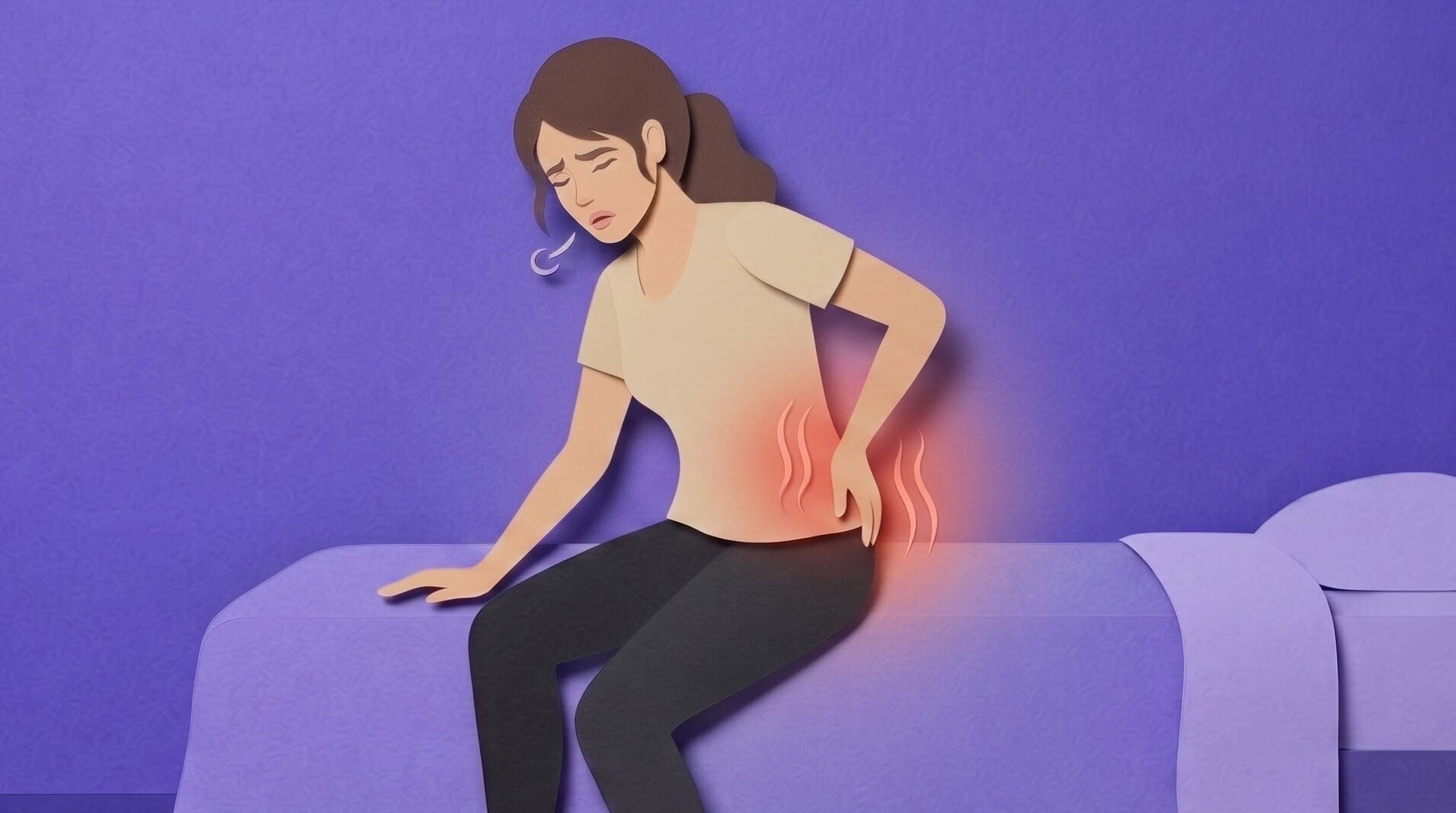





Ever finish a long workday and realise the area between your shoulder blades feels uncomfortably stiff, tight, or burning? Upper back pain from sitting is a common issue today. Indeed, many people spend long hours working at a desk. Sitting for eight or more hours each day hunched over a laptop or smartphone places sustained stress on your upper back. Consequently, these daily habits often lead to persistent soreness, muscle fatigue, and a tight feeling right between the shoulders [1, 2].
But why does sitting still make your upper back feel like it has been working all day?
To understand why this happens, it helps to look at how your upper back is built. The upper back, or thoracic spine, is the section of the spine between the neck and lower back. It also connects directly to your rib cage. Meanwhile, staying in one position while looking down at a screen can place extra strain on this part of your spine [1, 2].
For example, when you lean toward your screen, dropping your head forward or allowing it to drift increases the mechanical demand on your neck and upper back [1, 2]. As a result, your shoulders naturally round to help keep you balanced. This, in turn, forces the upper back muscles to work harder against gravity [1].
What Causes Upper Back Pain From Sitting?
So what is actually happening behind the scenes while you sit for hours? Several key factors can contribute:
- Prolonged Static Posture: Remaining in one position for long periods limits circulation. As a result, this habit contributes to muscle fatigue in both the upper back and neck [1].
- Prolonged Screen Lookdown: Constantly dropping your chin to view a low monitor increases physical tension. Consequently, this strains the muscles along your neck and thoracic spine [1].
- Thoracic Stiffness: Limited movement can contribute to stiffness and reduced comfort in the thoracic region.
- Over time, an upright position may start to feel increasingly unnatural [2].
- Workspace Misalignment: Displays set too low, keyboards positioned too far away, or chairs lacking proper lower back support can force the upper body to compensate through slouching and reaching [1].
Importantly, prolonged static posture and limited movement can contribute to upper-back discomfort. However, posture alone does not determine whether someone experiences pain [1, 2].
How Do I Know If My Upper Back Pain Is From Poor Posture?
Postural upper back strain typically develops gradually over the course of the workday. It is less likely to strike suddenly from a single movement [1, 2].
If your upper back discomfort stems from prolonged sitting, desk slouching, or screen lookdown, you may recognise a distinct cluster of daily sensations:
- Deep Aching or Tightness Between the Shoulder Blades: A persistent, dull ache may develop in the mid-to-upper back. It can build gradually after hours at a computer [1, 2].
- The Feeling of a Muscle “Knot”: Many people experience localised, tender areas between the shoulder blades or along the tops of the shoulders. These areas may feel tight or sensitive to touch [2].
- Postural Fatigue: By mid-to-late afternoon, maintaining an upright position may start to feel exhausting or uncomfortable. This can happen as your upper back muscles become fatigued [1, 2].
- Thoracic Stiffness or Restricted Movement: You may notice difficulty or discomfort when arching your upper back or twisting side-to-side. Rolling your shoulders backward may also feel uncomfortable after a long stint at your desk [2].
- Worsening Discomfort During the Workday: Symptoms may peak toward the end of a long screen session. They may ease when you step away, change positions, or take a break [1, 2].
Is It Upper Crossed Syndrome?
In physical therapy and rehabilitation, this specific pattern of postural fatigue is closely linked to chronic neck pain due to muscle imbalance, often described using a clinical framework known as Upper Crossed Syndrome (UCS) [4].
Upper Crossed Syndrome illustrates how sustained posture and screen use encourage specific muscle groups to adapt across two intersecting pathways [4]:
- Overactive / Tight Groups: Pectoral (chest) muscles and upper trapezius / levator scapulae (neck and shoulder tops) [4].
- Lengthened / Weakened Groups: Deep cervical flexors (front of neck) and middle/lower trapezius and rhomboids (between shoulder blades) [4].
Therefore, using the UCS framework helps guide smart exercise selection, focusing on stretching tight chest muscles while strengthening overworked upper back muscles [4].
What Else Causes Pain Between the Shoulder Blades?
While upper back pain from sitting can be linked to muscle fatigue and postural strain, other underlying factors can cause discomfort in the exact same region:
- Cervical Nerve Irritation: Irritation or compression of a nerve root in the neck can cause pain, numbness, or burning. These symptoms may extend into the upper back, scapula, or down the arm [5]. Understanding how compressed nerve irritation affects the spine can help clarify these symptoms.
- Joint Stiffness or Irritation: Stiffness or irritation in the joints connecting the ribs to the spine can cause localised pain. For example, thoracic facet joint irritation may worsen with deep breathing or turning the torso [2].
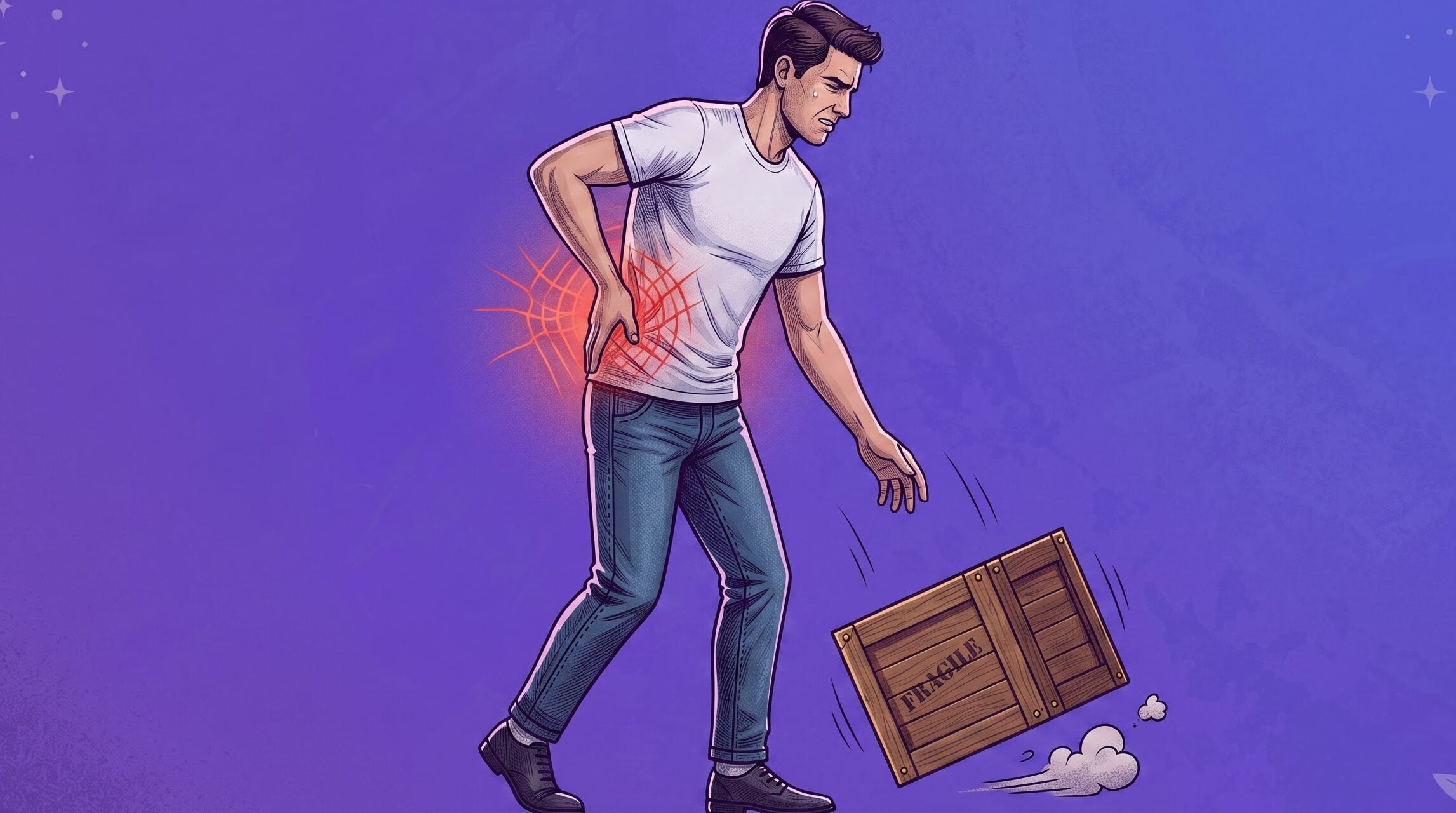
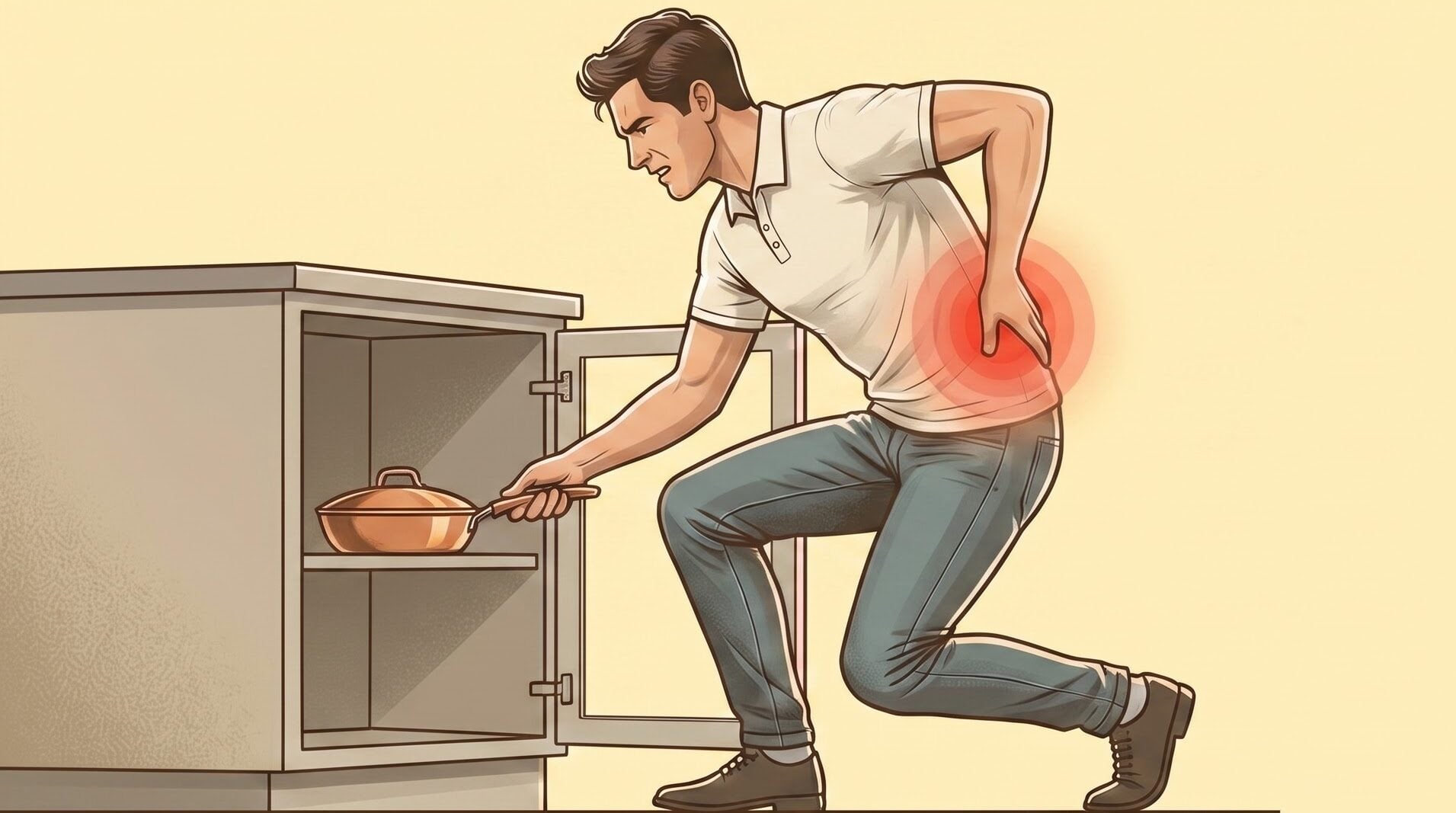
- Acute Muscle Strain: A sudden tear or strain in the upper back muscles can occur after heavy lifting or explosive movement. As a result, this usually causes sharp, immediate pain rather than gradual fatigue [2].
How Can I Relieve Upper Back Pain Between the Shoulder Blades?
Relief for upper back pain between the shoulder blades from sitting requires a multi-pronged approach: adjusting your armrest and keyboard placement, taking movement breaks, and incorporating targeted stretches [2, 4].
1. Optimise Your Workspace Ergonomics
Adjusting your desk environment specifically addresses upper back pain from sitting by taking direct physical load off your upper body muscles [1]:
- Adjust Armrests to Support Upper Trapezius Muscles: Ensure your chair armrests are height-adjusted so your forearms rest comfortably at a 90-degree angle without forcing your shoulders to shrug. Supporting your arms takes the physical weight of your limbs off the upper back and shoulder blade muscles. [1].
- Pull Keyboards Close to Prevent Scapular Reaching: Keep your keyboard and mouse close to your body so your elbows rest naturally beside your ribs. Reaching forward pulls your shoulder blades away from your spine (scapular protraction), causing the rhomboids and mid-trapezius to work overtime against gravity [1].
- Position Monitors at Eye Level: Keep the top third of your display screen directly at eye level to reduce continuous head droop, preventing excessive tensile stress across your upper thoracic spine and shoulder blades. [1].
2. Take Regular Movement Breaks
Taking regular brief movement breaks disrupts prolonged static posture and can help ease muscle fatigue in the upper back [1]. Avoid remaining in one fixed position for extended stretches throughout the workday [1].
3. Practice Targeted Stretches and Mobility Exercises
Incorporating movement routines, such as physical therapy or targeted yoga stretches for back pain relief, can help restore mobility between the shoulder blades and ease tension [4]
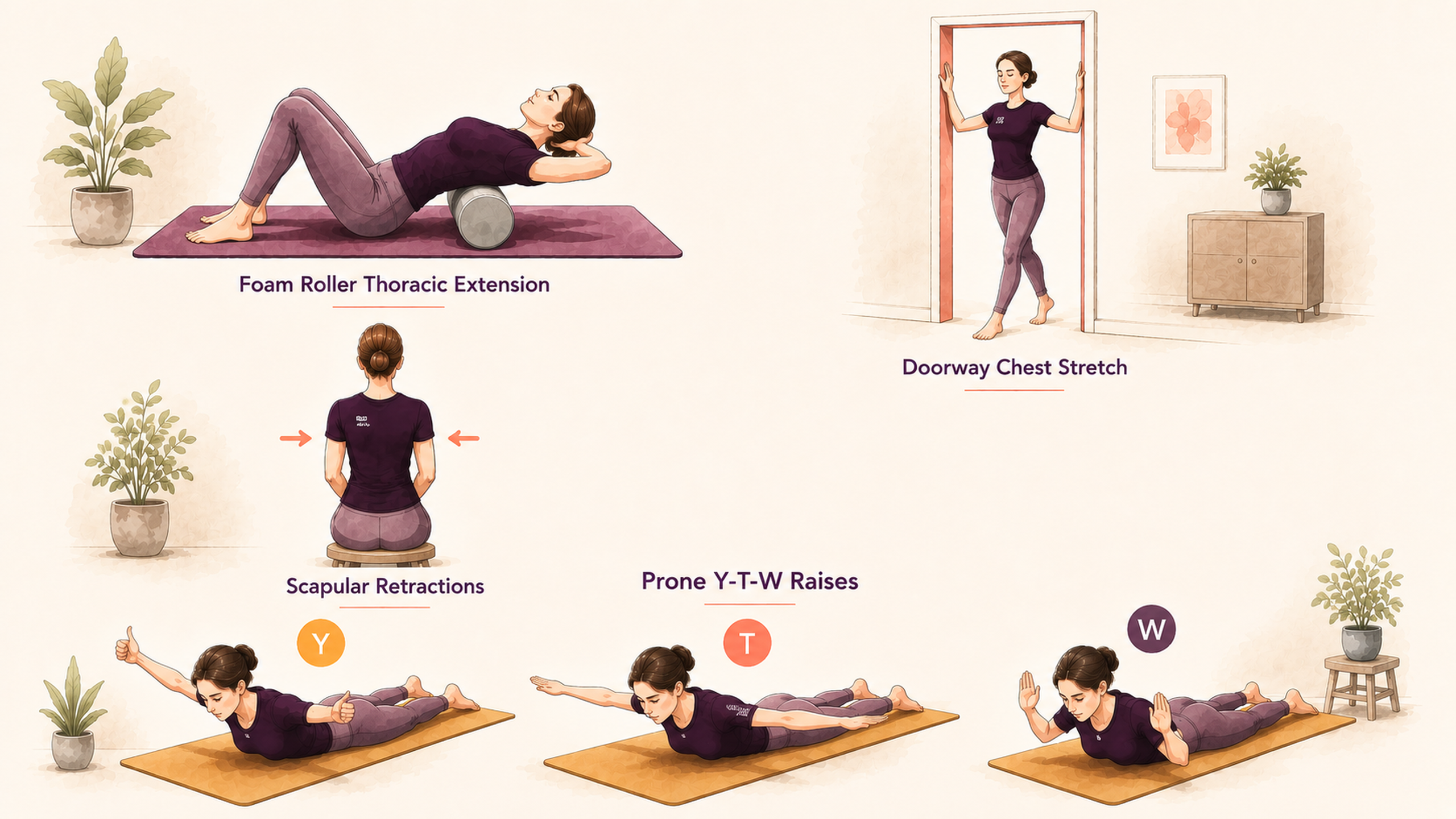
- Foam Roller Thoracic Extension: Sit on the floor with a foam roller positioned horizontally behind your mid-back. Support your head with your hands, keep your hips on the floor, and gently lean back over the roller to extend your thoracic spine. Self-myofascial release tools like foam rollers help improve short-term thoracic mobility [3]. Move within a comfortable, pain-free range of motion, holding for a few seconds. Stop immediately if you experience sharp pain.
- Doorway Chest Stretch: Stand in a doorway, place forearms against the frame at 90-degree angles, and step forward gently until you feel a comfortable stretch across the chest. Hold for 20–30 seconds to open tight pectoral muscles [4].
- Scapular Retractions: Sit or stand tall, and draw your shoulder blades together and slightly downward as if gently squeezing a pencil between them. Hold for 3–5 seconds, then release. Perform 10–12 repetitions to engage the middle trapezius and rhomboids [4].
- Prone Y-T-W Raises: Lying face down (or leaning over a stability ball), lift your arms into ‘Y’, ‘T’, and ‘W’ configurations to strengthen the muscles between and below the shoulder blades [4].
Can Ergonomic Supports and Recovery Tools Help?
Alongside movement and proper desk setup, supportive self-care accessories can serve as gentle physical prompts and provide temporary comfort from everyday muscle tension [1, 3].
To complement your workplace habits, consider these optional support options:
- Ergonomic Seating Support: Incorporating an option like the Betterhood Ergonomic Lumbar Support Cushion behind your lower back provides a continuous physical cue that helps maintain neutral lower back alignment. Naturally supporting the lower spine makes prolonged sitting sessions more comfortable and helps discourage slouching strain on the upper back and shoulders [1].
- Topical Soreness Relief: For temporary, localised relief from muscle soreness after long hours at your desk, Betterhood Pain Relief products can be used as a self-care aid alongside rest and regular stretching.
- Targeted Self-Massage: Simple tools such as a generic massage ball or foam roller allow for gentle self-myofascial release against a wall or floor to help temporarily ease tight tissue between the shoulder blades [3].
Note: Supportive accessories and topical relief options serve as helpful self-care aids for temporary comfort; they are not medical devices designed to cure structural spinal conditions or correct posture permanently on their own [1, 3].
When Should I See a Doctor About Upper Back Pain?
Most desk-related upper back discomfort improves with movement and ergonomic tweaks. However, upper back symptoms can occasionally point to underlying medical concerns that require prompt professional evaluation [5].
Contact a healthcare provider immediately if your upper back discomfort is accompanied by any of the following:
- Chest Pain or Pressure: Pain radiating to the arm, jaw, or chest, or accompanied by shortness of breath, dizziness, or sweating, requires emergency cardiovascular evaluation [5].
- Neurological Deficits: Numbness, tingling, or weakness spreading down the arms, hands, or fingers [5].
- Unexplained Systemic Symptoms: Unintended weight loss, fever, chills, or night sweats [5].
- Trauma or Severe Onset: Sudden, severe pain following a fall, injury, or physical impact [2, 5].
- Bowel or Bladder Dysfunction: Sudden loss of bowel or bladder control [5].
Frequently Asked Questions
Is standing at a desk better than sitting for upper back pain?
Neither sitting nor standing exclusively solves upper back discomfort. Sustained standing can induce lower back and leg fatigue, while sustained sitting encourages thoracic slouching. Varying between sitting, standing, and moving throughout the day can help avoid remaining in one position for prolonged periods [1, 2].
Should I use heat or ice for my upper back stiffness?
Heat is often used for chronic, dull muscle stiffness and tension associated with long hours at a desk because it helps relax tight, fatigued tissue [5]. Cold application is generally most useful immediately following an acute muscle strain or injury to help manage swelling [5].
How long does desk-related upper back pain take to recover?
Recovery varies depending on the cause, severity, and individual circumstances. Minor muscle fatigue or mild strain may ease through regular movement, self-care, and ergonomic adjustments [2, 3]. Persistent or worsening symptoms should be assessed by a healthcare professional [2, 5].
References
- Occupational Safety and Health Administration (OSHA). Computer Workstations eTool: Components – Monitors, Keyboards, Chairs. U.S. Department of Labor; 2021. https://www.osha.gov/etools/computer-workstations/components/
- Cleveland Clinic. Upper Back Pain. Cleveland Clinic Health Library; 2026. https://my.clevelandclinic.org/health/symptoms/22866-upper-back-pain
- Cheatham SW, Kolber MJ, Cain M, Lee M. International Journal of Sports Physical Therapy. 2015;10(6):827-838. https://pubmed.ncbi.nlm.nih.gov/26618062/
- Seidi P, Bayattork M, Minoonejad H, Letafatkar A, Rivera CE. A comprehensive corrective exercise programme improves alignment, muscle activation and movement pattern in men with upper crossed syndrome. Scientific Reports. 2020;10(1):20688. https://doi.org/10.1038/s41598-020-77571-4
- Mayo Clinic. Back pain: Symptoms and causes. Mayo Clinic Health Information; 2023. https://www.mayoclinic.org/diseases-conditions/back-pain/symptoms-causes/syc-20369906
Disclaimer: This content is for informational purposes only and does not substitute professional medical advice, diagnosis, or treatment. Always consult a physician or physical therapist for persistent pain.