




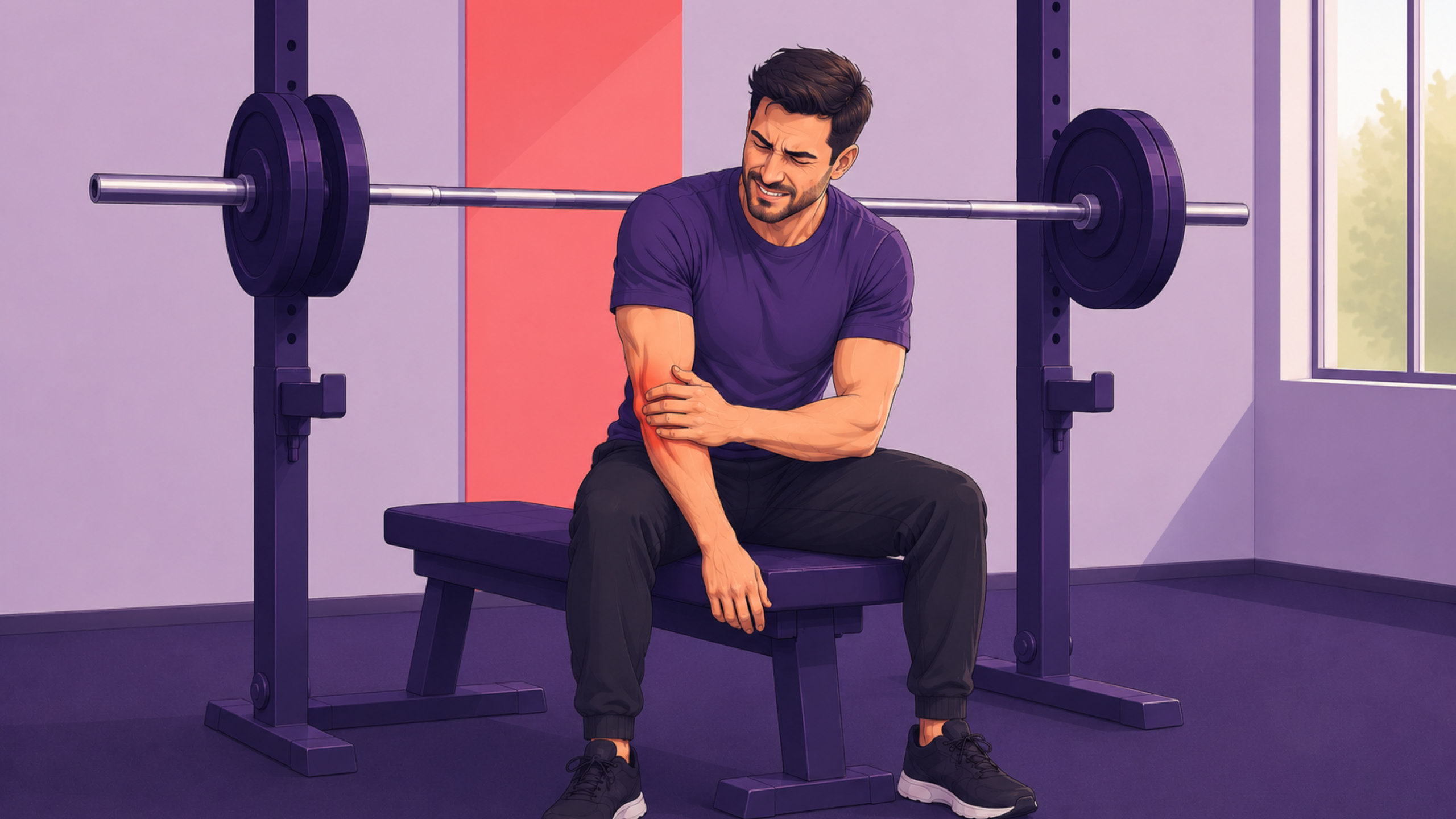
Arjun rested the barbell back onto the rack and rubbed the back of his right arm. He was midway through his third working set of bench presses, and while his chest and shoulders still felt ready for more, bench press elbow pain was starting to slow him down. The weight was well within his normal range, but with every lockout, a dull, stubborn pressure was building around the joint.
Rather than forcing his way through the rest of his sets, Arjun paused. He had already done a few quick shoulder circles before loading the bar, yet as his push day progressed, his arms were clearly taking the brunt of the effort.
It is a moment most gym-goers recognise. Heavy pressing exercises demand a lot from the upper body, and as fatigue settles in, the elbows often absorb the strain of subtle form changes or built-up training stress. Following Arjun’s workout step-by-step offers a practical look at why this happens and how small adjustments to your prep, technique, and supportive gear can keep your workouts on track.
What Causes Bench Press Elbow Pain?
Looking down at his arms, Arjun wondered why his elbows were giving out before his chest muscles even felt fully tired. He wasn’t trying for a personal record, so why were his joints feeling the strain?
When you bench press, your elbows act as hinges that transfer force from your upper body to the barbell. [1]
Lowering the weight keeps your muscles under tension. Pressing it back up requires your triceps to extend your arms. [1]
Multiple pressing movements can add up quickly. Bench presses, overhead presses, and dips all require repeated elbow movement. [2]
Bench press elbow pain rarely happens out of nowhere. It is usually driven by a few common training factors:
- High Pressing Volume: Doing too many total sets for the chest, shoulders, and triceps in one session. [2]
- Rapid Increases in Load: Adding weight to the bar faster than your connective tissues can comfortably handle. [2]
- Aggressive Lockouts: Snapping your arms completely straight at the top of a rep, which shifts stress away from the muscle and directly onto the joint. [1,3]
- Wrists Bending Back: Allowing the wrists to collapse backward under heavy weight, altering how force travels down your forearm. [3]
Understanding this helped Arjun see that his elbows weren’t simply “weak.” Instead, they were reacting to the cumulative work he was asking them to do.
How Should I Warm Up My Elbows Before Bench Pressing?
Thinking back to how his workout started, Arjun realized his warm-up had been pretty rushed. He had spent a minute swinging his arms around, loaded a warm-up plate onto the bar, and moved straight into his heavier sets.
Connective tissues and joint structures generally benefit from progressive preparation before handling heavy loads. [2] Taking a few extra minutes to prepare the entire arm can make a noticeable difference in how your joints handle heavy pressing. [2,3]
A Practical Warm-Up Approach for Push Days
- Get Blood Flowing: Spend a few minutes on dynamic movements or light cardio to raise your body temperature before picking up a barbell. [2]
- Light Triceps and Forearm Work: Do a couple of easy, high-rep sets with light resistance bands or a cable machine like light triceps pushdowns or gentle wrist curls to get movement through the joint before loading it heavily.
- Start with the Empty Bar: Resist the urge to jump quickly to your working weight. Perform a set or two with just the barbell, focusing on a smooth, controlled motion. [3]
- Build Up Incrementally: Add weight in smaller, progressive steps over warm-up sets, keeping the reps controlled as the bar gets heavier so you stay fresh for your main sets. [2]
For his next session, Arjun decided he would stop rushing his setup and give his arms the progressive warm-up they needed.
Should I Keep My Elbows In When Bench Pressing?
Re-racking the bar for his next set, Arjun tried to remember advice he had heard in the gym: “Tuck your elbows all the way in to protect your arms.” He tried tucking his arms tightly against his ribs, but the movement immediately felt awkward, and the pressure on his triceps only seemed to increase.
The truth is, there is no single elbow position that works for everyone. Physical guidelines on exercise form emphasize that individual anatomy such as shoulder width, chest depth, and arm length determines what press path feels most natural. [2,3]
Instead of chasing an exaggerated position, keep these practical concepts in mind:
- Avoid Extreme Flaring: Pressing with your elbows flared straight out at a 90-degree angle to your torso can place unnecessary torque on both your shoulders and elbows. [3]
- Avoid Over-Tucking: Scraping your elbows directly against your sides can feel unnatural and shift extra strain onto the triceps tendon. [3]
- Find Your Natural Path: For most lifters, keeping the elbows at a comfortable diagonal angle somewhere comfortably between fully flared and tightly tucked allows the chest, shoulders, and arms to share the load evenly. [3]
Arjun let go of the idea that he needed to force his arms into a rigid angle and focused instead on finding a smooth, comfortable pressing path that fit his natural body shape.
Can Bench Press Form Affect Elbow Strain?
As Arjun paid closer attention to his remaining reps, he noticed a few subtle habits creeping into his sets as he got tired. His wrists were bending backward under the bar, and he was snapping his arms straight at the top of each rep to finish the movement quickly.
Small form adjustments can significantly change how much stress reaches your joints during a press, which may contribute to bench press elbow pain when poor habits are repeated.
- Stack Your Wrists: Keep your wrists straight and aligned directly over your forearms. If your wrists bend backward, the load sits behind the joint, creating extra pull on the forearm muscles. [3]
- Control the Lowering Phase: Don’t let the barbell drop quickly onto your chest. Lowering the weight with control keeps your muscles engaged and avoids sudden jarred movements at the bottom. [3]
- Soft Lockouts at the Top: Focus on squeezing your triceps to complete the movement rather than aggressively snapping your elbow joints straight. [3]
- Keep Your Grip Balanced: A grip that is excessively wide or extremely narrow can shift forces unevenly through the arm. A moderate grip keeps the forearms relatively vertical during the lift. [3]
By keeping his wrists stacked and slowing down his lockout, Arjun noticed his reps felt smoother almost immediately.
How Can I Manage Bench Press Elbow Pain?
Arjun finished his bench press sets, but as he moved on to his auxiliary exercises, he could still feel a dull irritation in his right arm. He realized he needed a clear plan for what to do after stepping away from the rack.
If you finish a workout with bench press elbow pain or lingering elbow tightness, taking proactive steps can help keep a minor issue from turning into a lasting problem:
- Pause Testing: Avoid constantly bending or poking the joint to check for tightness.
- Check Volume: Look back at your training logs to see if you added sets or weight too quickly.
- Swap Exercises: Switch to dumbbells or machines if the barbell path feels rigid.
- Allow Recovery: Give the joint time to settle before scheduling your next push day.
It helps to differentiate between muscle fatigue and joint strain. [1,2] Broad muscle soreness in your arms or chest that fades after a couple of days is normal. However, localized, sharp discomfort right over the elbow joint means it is time to reduce your training load and allow for adequate recovery before your next heavy pressing day. [1,2]
Can an Elbow Sleeve Help With Bench Press?
Sitting on the bench after his workout, Arjun began thinking about how to handle his next push day. He planned to revamp his warm-up, refine his bar path, and manage his total sets. But he also wondered if adding extra physical support might help his joints feel more comfortable during heavier work.
This is where gear like an elbow sleeve for bench press workouts can fit into a training routine. Supportive sleeves are not a cure for poor technique, nor do they give you permission to train through sharp pain. However, when combined with smart training habits, using elbow support when lifting weights offers practical benefits:
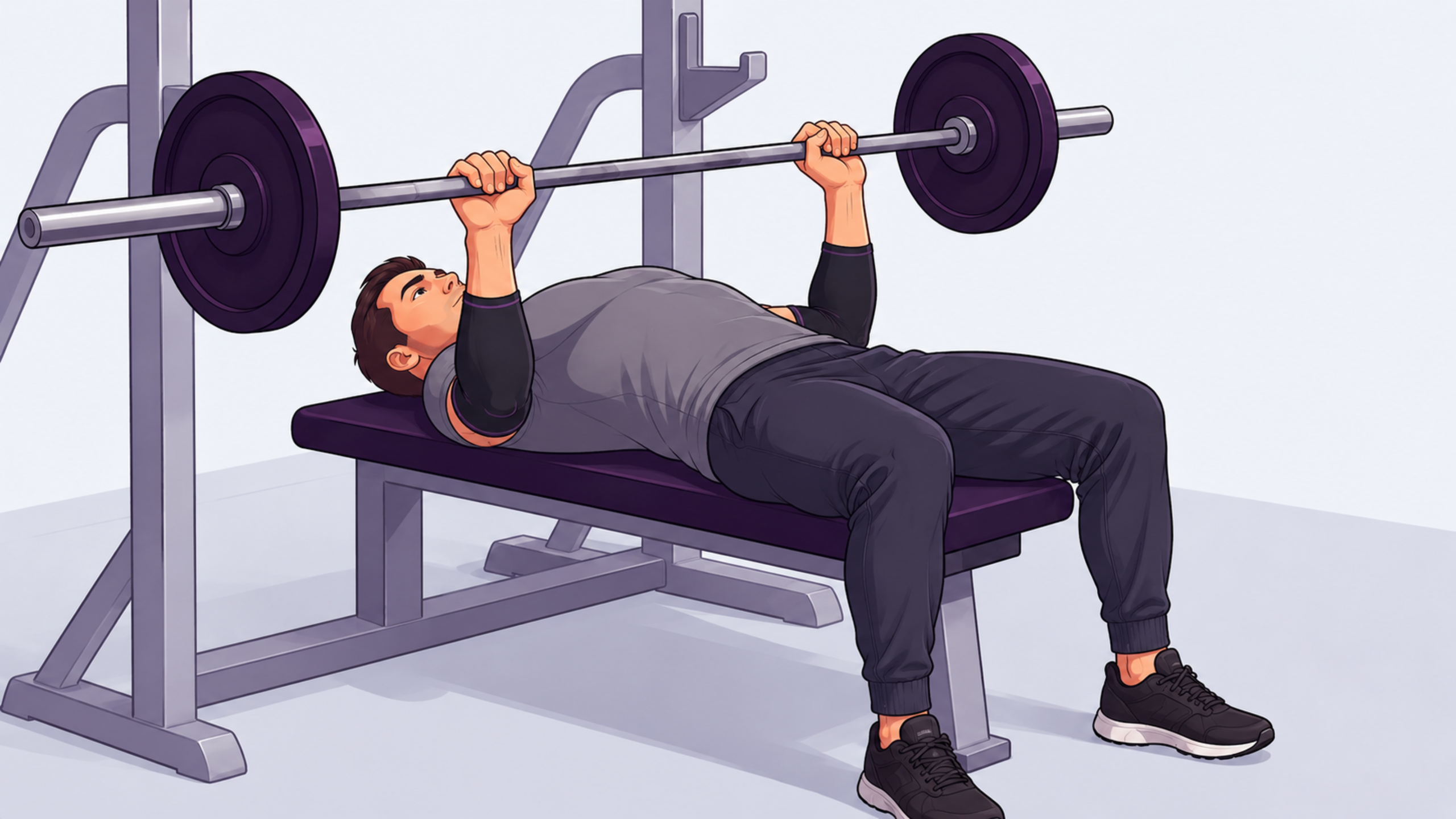
- Comfortable Warmth: A well-fitted sleeve provides a comfortable layer of warmth around the joint, which can help keep the surrounding area feeling comfortable between sets.
- Tactile Awareness: The light, consistent touch of an elbow compression sleeve for bench press sets gives you tactile feedback, helping you stay mindful of your arm positioning throughout the movement.
- Reassurance During Lifts: Many gym-goers find that elbow sleeves help bench press workouts by providing a snug, reassuring feel while working through demanding sets.
For Arjun, supportive gear wasn’t a magic cure, but rather an extra layer of comfort to complement the changes he was making to his routine.
Betterhood Elbow Support Sleeve
When looking for flexible joint support that fits easily into a regular workout, the Betterhood Elbow Support Sleeve [4] offers a functional option designed for daily gym use.
Proper Fit: Contours naturally to your arm and stays securely in place around the joint as your arm bends and straightens during presses, dips, and extensions, without sliding down or bunching up. [4]
Lightweight & Breathable: Uses breathable fabric to provide targeted elbow support while maintaining a comfortable layer of warmth around the joint. [4]
Flexible Support: Supports natural arm movement while providing an extra supportive layer without feeling overly rigid or restrictive under heavy loads. [4]
How Should I Wear an Elbow Sleeve During a Workout?
To get the most comfort from a sleeve during your gym sessions:
- Choose the Right Size: Look for a snug fit that provides gentle pressure without cutting off circulation, pinching your skin, or restricting your natural movement. [4]
- Position It Correctly: Pull the sleeve up so it sits evenly over the elbow joint, extending comfortably onto both your forearm and upper arm. [4]
- Use It When Needed: Put the sleeve on during your warm-ups to retain local warmth, or slide it on specifically for your working sets depending on personal preference.
- Pay Attention to Comfort: If you experience any tingling, numbness, or unexpected discomfort, slide the sleeve off and check the sizing or position.
When Should I Stop Bench Pressing Because of Elbow Pain?
Arjun made a mental note to monitor his arms closely over the coming weeks. While mild tiredness is expected after a tough gym session, knowing when to pause is essential for long-term health.
Stop pressing and seek professional medical guidance if you notice any of the following warning signs: [1,2]
- Sharp or Severe Pain: Any sudden, intense pain during or immediately after a rep. [1]
- Swelling or Redness: Visible inflammation or puffiness around the elbow joint. [1]
- Numbness or Tingling: Sensations spreading down into your forearm, wrist, or fingers. [1]
- Restricted Movement: Inability to bend or straighten your arm through its normal range. [1]
- Persistent Discomfort: Pain that continues into simple daily tasks like lifting a water bottle or opening doors. [1]
Listening to these signals early prevents minor joint irritation from turning into a major training delay.
Frequently Asked Questions
Should I keep my elbows in when bench pressing?
Tuck your elbows at a comfortable, natural angle rather than flaring them straight out or forcing them tightly against your ribs. [3]
Can an elbow sleeve help with bench press?
An elbow sleeve provides comfortable warmth and light compression, helping your joints feel supported and comfortable throughout heavy pressing sets.
Do elbow sleeves help when lifting weights?
Elbow sleeves offer tactile feedback and joint warmth, which can improve your comfort and confidence during challenging resistance exercises.
How do I warm up my elbows before bench pressing?
Warm up with light cardio, simple arm and wrist movements, and progressive barbell sets before working with heavy pressing weights. [2,3]
Should I bench press if my elbows hurt?
You should hold off on bench pressing if you have sharp pain, focusing instead on light recovery or modifying the exercise. [1,2]
Can I wear an elbow sleeve for every workout?
You can wear a comfortable, well-fitting elbow sleeve whenever you want additional joint warmth and light support during your routine. [4]
Summary
Arjun’s push-day experience shows that managing elbow health isn’t about finding a single secret trick. By building a thorough warm-up routine, keeping wrists stacked and movements controlled, managing overall weekly volume, and adding an optional supportive layer like the Betterhood Elbow Support Sleeve, you can keep your arms feeling good and stay consistent on your fitness journey.
References
- American Academy of Orthopaedic Surgeons. Triceps Tendon Tear at the Elbow. OrthoInfo. AAOS. Published 2022. Accessed August 2026. https://orthoinfo.aaos.org/en/diseases–conditions/triceps-tendon-tear-at-the-elbow/
- American College of Sports Medicine. Resistance Training Prescription for Muscle Function, Hypertrophy, and Physical Performance in Healthy Adults: An Overview of Reviews (Position Stand). Med Sci Sports Exerc. 2026;58(4):851-872. https://doi.org/10.1249/MSS.0000000000003897
- Cleveland Clinic. How to Do a Bench Press: Proper Form and Technique. Cleveland Clinic Health Essentials. Published May 2023. Accessed August 2026. https://health.clevelandclinic.org/bench-press-form
- Betterhood Elbow Support Sleeve. Official Product Specification Page. Accessed August 2026. https://shop.betterhood.in/products/elbow-support-sleeve