



Ever arched your back to stretch and felt a sharp pinch? If standing makes your back throb but bending forward over a cart brings relief, you likely have facet joint syndrome. This article explains, what facet joint syndrome is and why arching hurts.
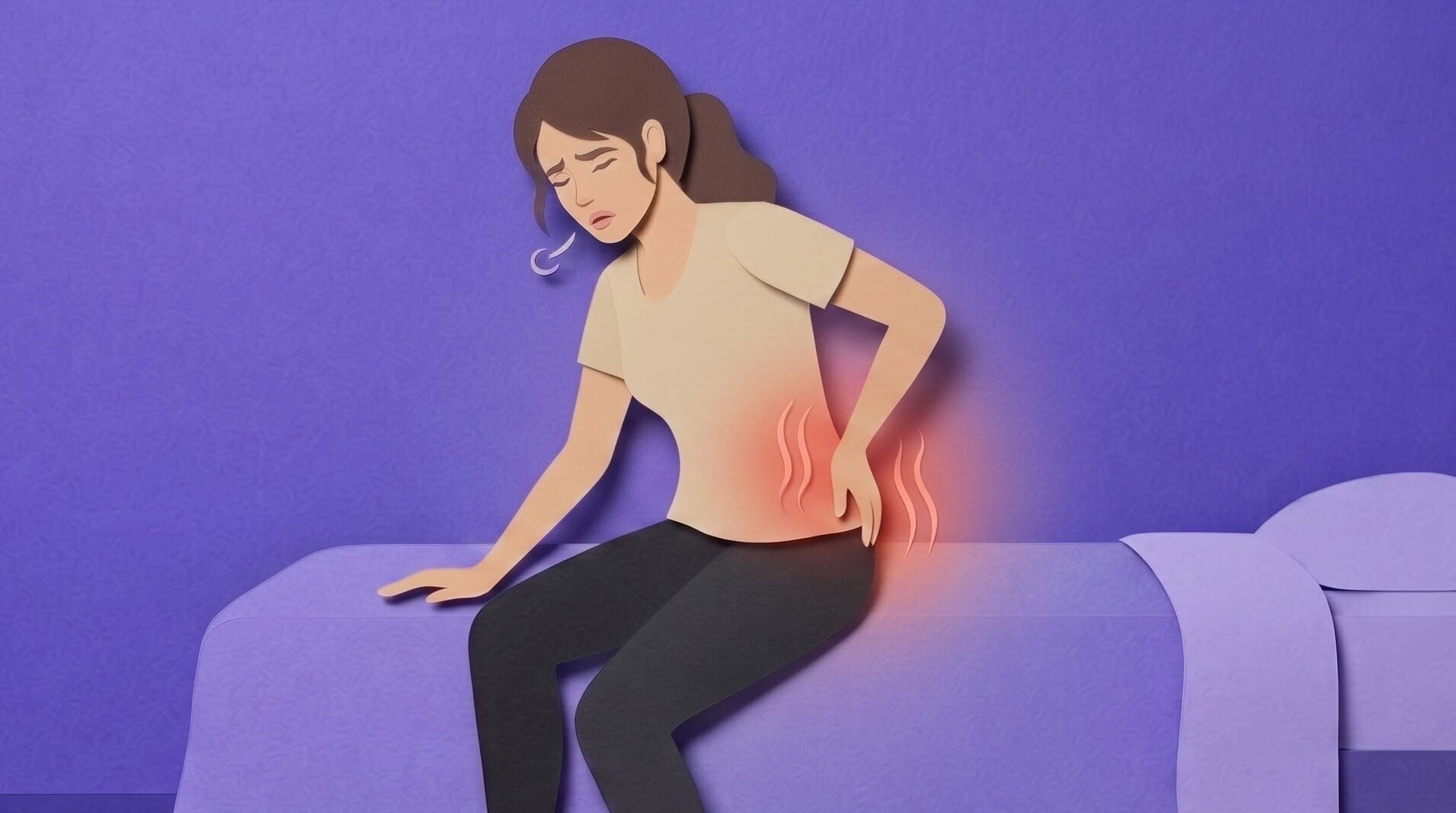
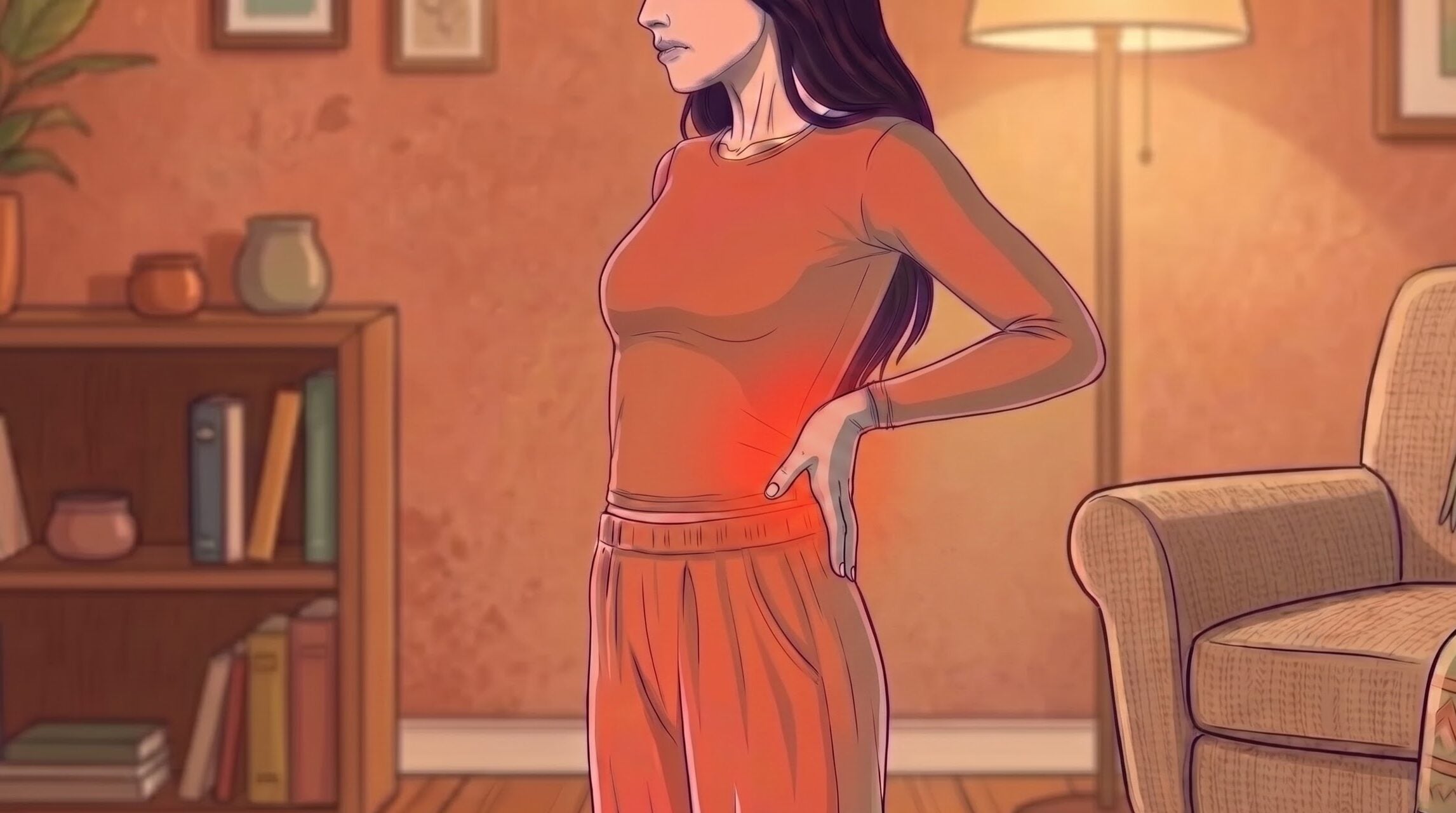
Ever arched your back to stretch after sitting for hours, only to be hit by a sharp, pinching ache in your lower back? Or maybe standing in line at the grocery store makes your back throb, but bending forward over the shopping cart brings instant relief?
If this sounds familiar, you aren’t dealing with a typical slipped disc or muscle pull. You are likely experiencing Facet Joint Syndrome, a common, highly misunderstood mechanical issue that affects the “hinges” at the back of your spine.
What Is Facet Joint Syndrome and Why Does It Hurt?
Think of your spine as a stack of building blocks (vertebrae). While big gel cushions called discs sit between the blocks in the front, small paired joints called facet joints (zygapophyseal joints) link the vertebrae together in the back.
These small joints are lined with smooth cartilage and lubricated by synovial fluid, allowing your spine to bend and twist smoothly without grinding. Over time, wear and tear, repetitive stress, or poor posture can wear down this cartilage. When bone begins to rub against bone, bone spurs (osteophytes) form, and the joint capsule inflames, resulting in localized axial back pain [1].
Front vs. Back: The “Anterior Disc” vs. “Posterior Facet” Divide
Understanding why your back hurts comes down to basic biomechanics: where the load rests.
Anterior Column (Discs)
Bending forward (flexion) or sitting compresses the front of your spine. If you have Degenerative Disc Disease (DDD) or a herniated disc, bending forward usually worsens the pain [2].
Posterior Column (Facet Joints)
Leaning backward (extension), twisting, or standing tall presses the rear joints firmly together. If your facet joints are inflamed, these movements trigger immediate pain [1, 2].
Facet Joint Syndrome vs Sciatica: Key Differences
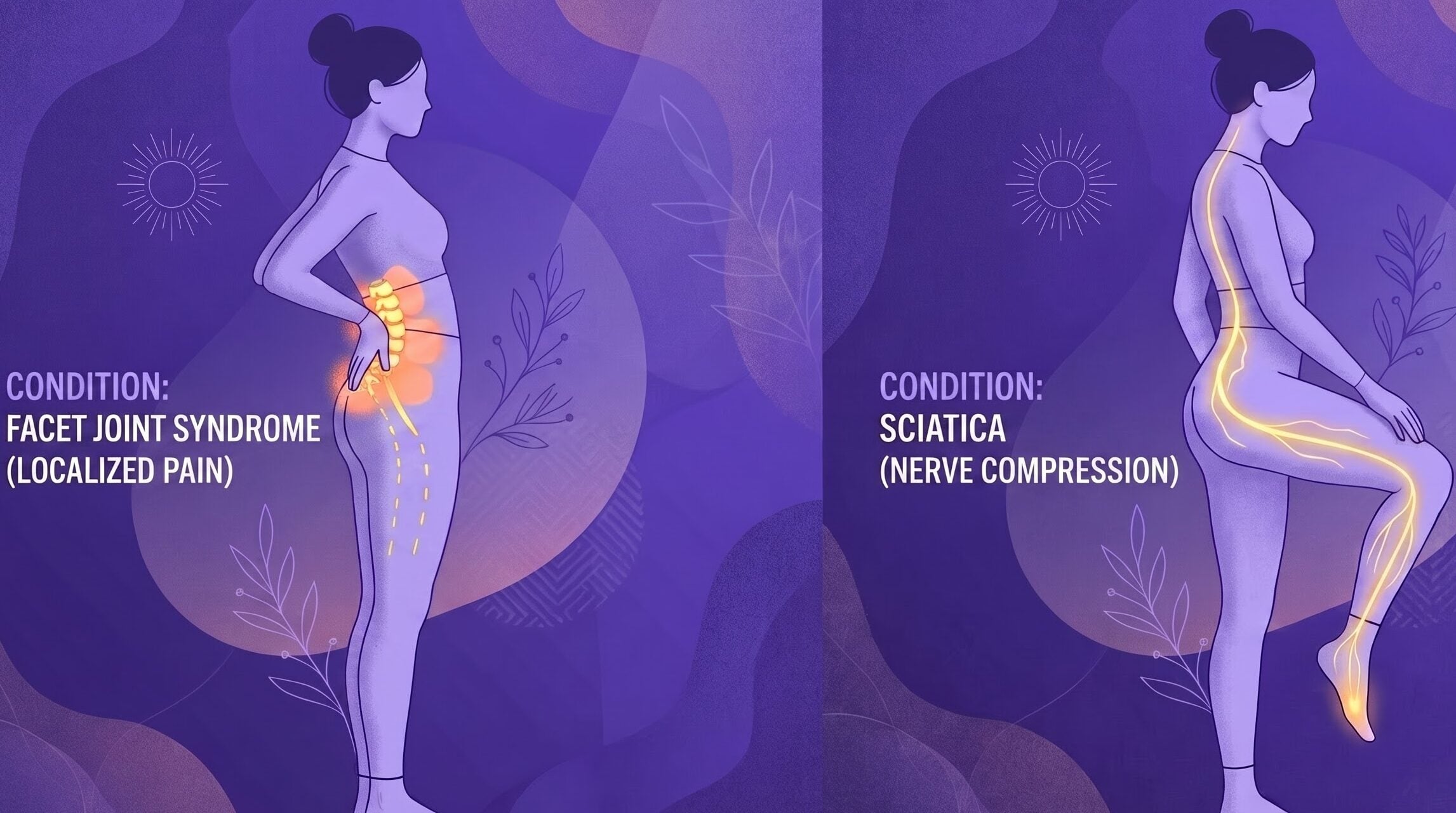
It is easy to confuse facet joint syndrome with sciatica because both cause lower back discomfort. However, their root causes and symptom paths are completely distinct [1, 2].
Sciatica
Occurs when a disc or bone spur pinches the main nerve root. It creates a sharp, shooting, or electric-shock pain traveling past the knee and into your foot [2, 3].
Facet Joint Syndrome
The pain stays localized in your back, upper buttock, or outer hip. While it can cause referred pain into the upper thigh, it rarely travels below the knee [1, 2].
Can Topicals and Cushions Really Help?
Quick answer: They provide temporary daily comfort, but they won’t fix the underlying joint.
Topical Relief Products (Patches, Sprays, Roll-ons)
When deep spinal joints become inflamed, your body’s natural reflex is to tighten the surrounding back muscles to create a biological splint, a phenomenon known as muscle guarding. This secondary muscle tightness creates a severe, aching layer of surface pain on top of the deeper joint issue.
Mechanism via Gate Control Theory
Topical pain products, including Betterhood Pain Relief Patches, Sprays, and Roll-ons, utilize active counterirritants like menthol and camphor. When applied to the skin, these ingredients stimulate cold and warm sensory nerve fibers. According to the nervous system’s Gate Control Theory, these rapid sensory signals travel to the spinal cord and temporarily “close the gate” on slower, deeper pain signals traveling from the spine to the brain.
Targeted Benefits
Topicals excel at easing secondary muscle spasms, softening localized back stiffness, and breaking the cycle of muscle guarding. By reducing surface pain, they make it significantly easier to perform daily tasks and stick to your rehab exercises.
Clinical Context
Because facet joints are deep synovial structures located beneath thick layers of spinal musculature, topical applications cannot cure structural joint degeneration or repair cartilage loss underneath. They serve as an effective daily comfort layer that lowers your pain levels so active recovery can take place.
Ergonomic Support Products (Cushions, Pillows, Supports)
While topicals calm sensory nerves, ergonomic products work mechanically by keeping your spine in neutral positions that prevent joint compression.
Lumbar Support Cushions (For Lower Back Pain)
Standard office chairs and car seats often lack targeted support, forcing your lower back to collapse into an unnatural arch (excessive lumbar lordosis). This position squeezes the posterior facet joints together. Placing a contoured Betterhood Lumbar Support Cushion behind your lower back maintains a balanced, neutral lumbar curve while sitting, taking direct physical pressure off your facet joints.
Cervical Memory Foam Pillows (For Neck Pain)
If facet joint irritation occurs in your neck (cervical facet syndrome), flat or overly firm sleeping pillows can force your neck into extended or twisted angles overnight. A contoured cervical memory foam pillow cradles the neck in proper alignment, preventing overnight joint compression so you wake up without stiffness.
Exercise Guidelines: Exercises to Avoid With Facet Joint Syndrome
Because facet joint syndrome is an extension-sensitive condition, traditional back stretches that involve arching can aggravate your symptoms if performed incorrectly.
Stretches to avoid
The Cobra Stretch (Upward Press-ups)
Lying on your stomach and pressing your torso upward arches your lower back directly backward, jamming irritated facet joint surfaces together under load.
Standing Back Bends
Arching backward while standing upright places maximum gravitational force directly onto the posterior joint column.
Superman Exercises
Lifting your arms and legs off the floor simultaneously forces the lower spine into hyperextension, squeezing the joint capsules.
Complete Non-Surgical Medical Roadmap
When daily ergonomic supports and topical applications are combined with core exercises, the vast majority of people achieve lasting relief. However, if deep joint pain persists, pain management specialists follow a progressive clinical treatment path:
Conservative Management: First-line care includes targeted physical therapy, core stabilization exercises, pelvic tilt training, paired with daily symptomatic support from Betterhood topicals for muscle guarding and lumbar cushions for posture management.
Diagnostic Medial Branch Blocks: If pain remains unresponsive to exercise, a specialist performs a diagnostic injection of a local anesthetic near the tiny nerve branches (medial branches) that carry pain signals from the facet joint. If your back pain temporarily drops to zero for a few hours, it confirms the exact joint responsible.
Radiofrequency Ablation (RFA): Once the problem joint is identified, RFA uses mild radiofrequency heat energy to deaden the nerve endings supplying that specific joint. This interrupts pain transmission for 6 to 18 months, giving you a pain-free window to build deep core strength for permanent stability.
Intra-Articular Steroid Injections: In cases of intense local inflammation within the joint capsule, anti-inflammatory steroid injections can be placed directly inside the joint to calm severe flare-ups.
FAQ
Is walking good or bad for facet joint syndrome?
Walking is generally beneficial because it increases blood flow and maintains joint mobility. However, walking with an exaggerated arch in your lower back (anterior pelvic tilt) or walking downhill can aggravate the joints by forcing the spine into extension. Short, frequent walks on flat surfaces while keeping your core slightly engaged yield the best results.[1]
Can facet joint syndrome lead to spinal instability like Spondylolisthesis?
Yes. Severe, chronic degeneration of the facet joints and supporting ligaments can weaken the mechanical “locks” holding the spine together. This can allow one vertebra to slip forward over the one below it, a condition known as degenerative spondylolisthesis.[4]
How long does relief from Radiofrequency Ablation (RFA) last, and do the nerves grow back?
Radiofrequency ablation (RFA) uses heat energy to deaden the medial branch nerves that transmit pain from the facet joint. While the procedure provides significant pain relief, sensory nerves do naturally regenerate over time. On average, RFA provides relief for 6 to 18 months. If the nerve grows back and joint pain returns, the procedure can safely be repeated.[2]
What is the difference between Facet Joint Syndrome and Lumbar Spinal Stenosis?
While both affect the back of the spine and cause pain when standing or walking, spinal stenosis involves actual narrowing of the spinal canal or nerve passages, leading to heaviness, numbness, or weakness in both legs. Facet joint syndrome is localized osteoarthritis of the joint capsules themselves. However, advanced facet joint wear often causes bone spurs (osteophytes) that eventually grow into the spinal canal, leading to secondary spinal stenosis.[3]
Can facet joint syndrome cause referred pain in other parts of the body?
Yes. While it does not compress main nerve roots like sciatica, inflamed facet joints frequently cause referred pain, a dull, aching discomfort felt away from the source. Lumbar facet issues commonly refer pain into the buttocks, groin, and upper thighs. Cervical (neck) facet issues can refer pain into the shoulders, upper back, and the base of the skull, often triggering tension-type headaches.[1]
References:
- https://www.physio-pedia.com/Facet_Joint_Syndrome
- https://stl-pain.com/2022/05/04/can-facet-joint-syndrome-cause-sciatica/
- https://www.totalpainspecialist.com/lower-back-pain-the-differences-between-sciatica-and-facet-joint-syndrome/
- https://www.samitivejhospitals.com/article/detail/spondylolisthesis
Disclaimer: This content is for informational purposes only and does not substitute professional medical advice, diagnosis, or treatment. Always consult a physician or physical therapist for persistent pain.