



Desk work with sciatica during 8-hour shifts can trigger a searing electric shock down your leg. If you want to prevent spinal disc bulging at work, Learn how to protect your sciatic nerve.
If sitting through your 8-hour shift brings that electric zing down your leg, you are not alone. Here is why it happens and what may help.
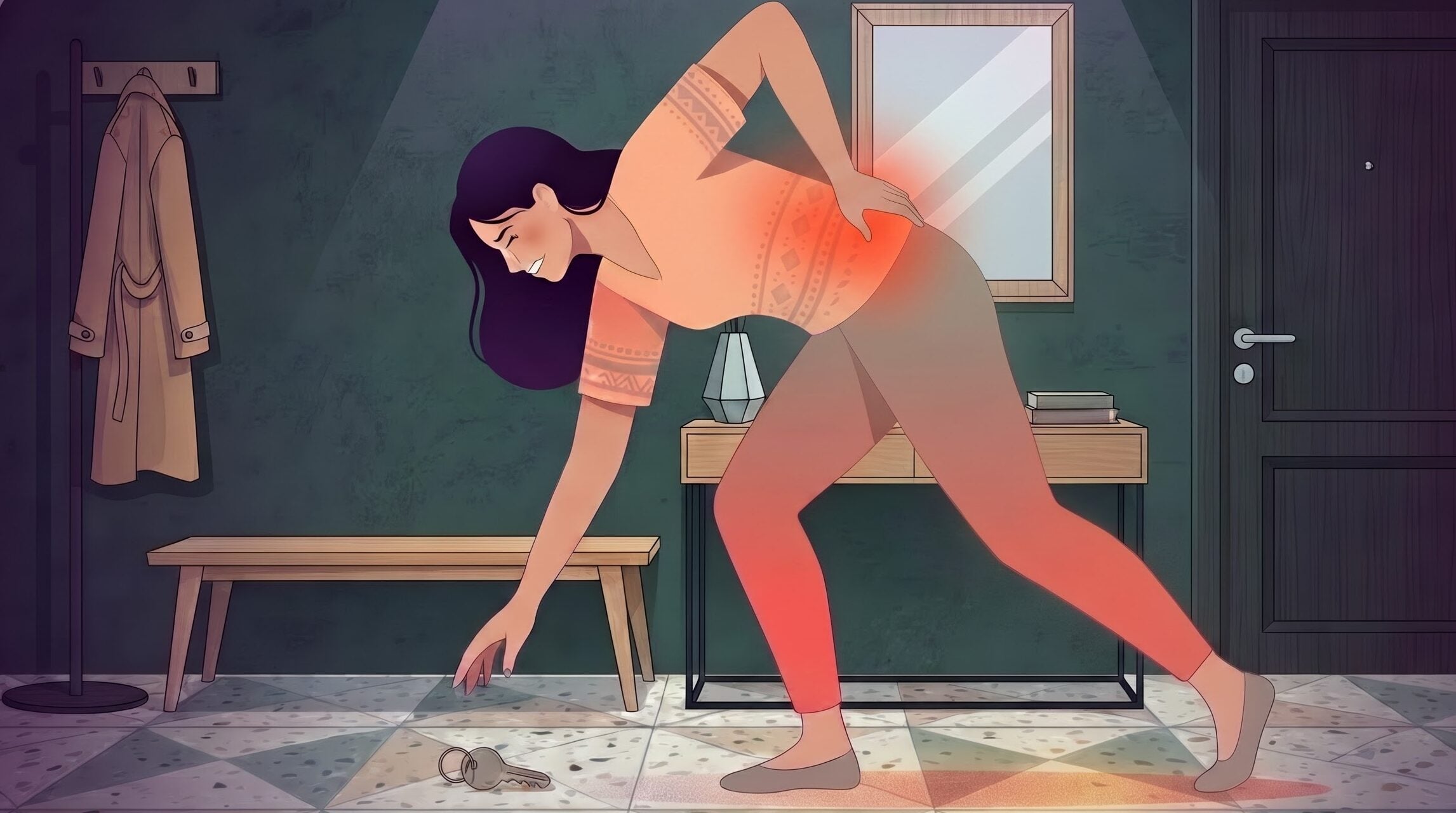
You’re reaching into the back seat to grab your bag, or simply sitting through a 30-minute commute. Suddenly, a searing electric shock zaps down one side of your body. You catch your breath, shifting your weight to the good leg.
You want to stay active, get through your work day, and keep moving, but every bend, lift, or long stretch of sitting feels like you’re rolling the dice with your spine.
Could it be Sciatica?
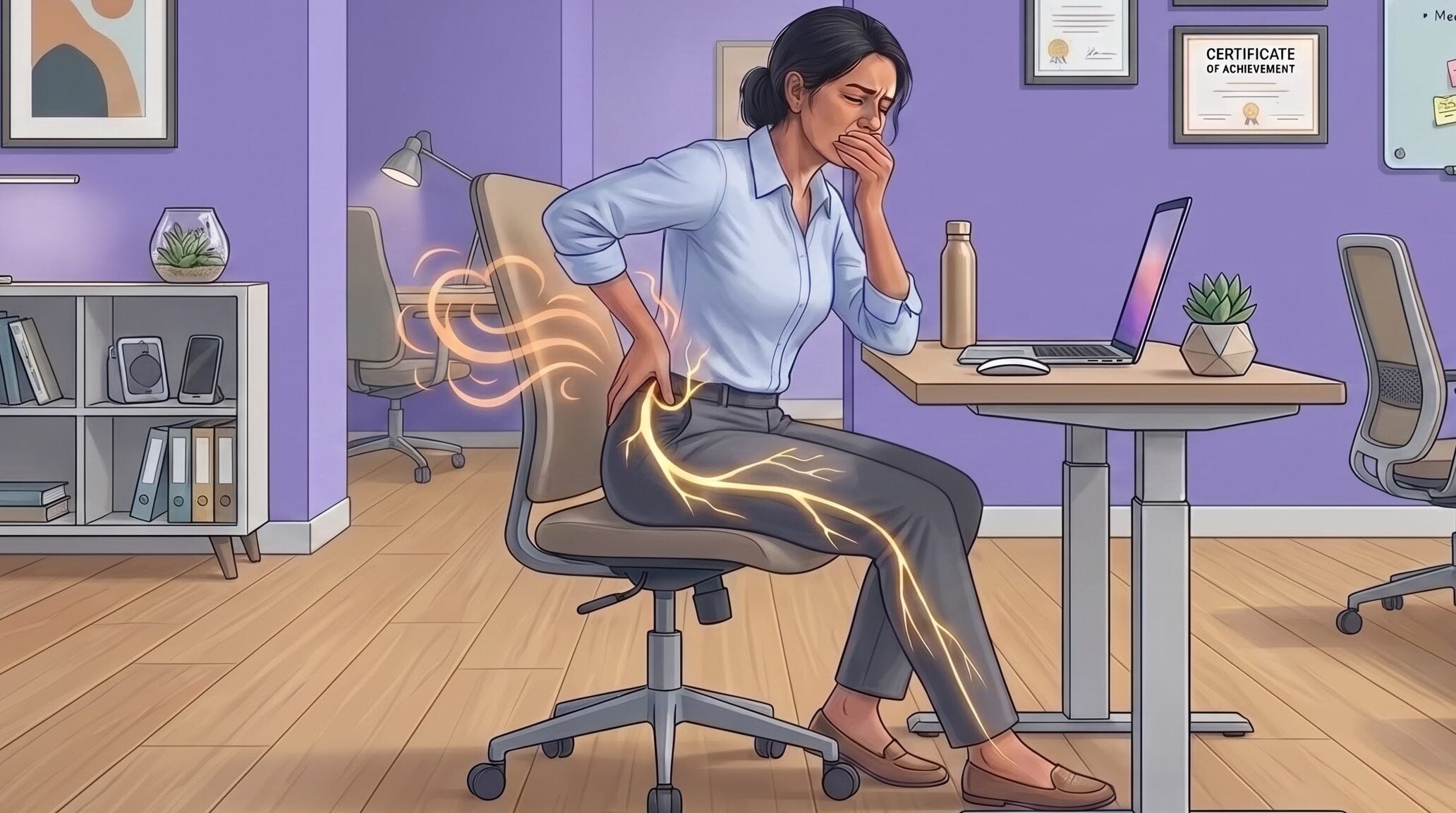
You can feel it in your lower back, butt and leg. It’s a common condition that may cause pain, numbness or tingling. The sciatic nerve, thick as a thumb, originates in your lower spine and branches down each leg. When a herniated disc, bone spur pinches this critical highway, the result is an immediate, fiery overload.
It often brings a bizarre sensory cocktail of tingling “pins and needles,” sudden numbness, or a heavy, buckled feeling in the leg. It turns basic daily movements like getting out of bed, bending to tie a shoe, or walking to the kitchen into a calculated exercise in risk management, serving as an unyielding reminder of just how deeply connected your spine is to every step you take.
Why Does Spinal Disc Bulging Cause Sciatica?
Think of your spinal disc like a jelly donut.
When you sit for 8 hours, lift wrong, or just age, the outside of that “donut” cracks. The jelly inside bulges out.
Now that bulge does 2 things:
It squishes the nerve: Physically pressing on your sciatic nerve root like a foot on a hose.
It inflames the nerve: The disc releases chemicals that make the area puffy and hypersensitive.
The tricky part? The problem starts in your back, but because it’s the sciatic nerve, your brain feels the pain down your whole leg.
Signs you might have a bulging spinal disc.
Ever notice how your body speaks to you in very specific ways when your back is unhappy?
If tying your shoes, scooping up a dropped pen, or slouching in your chair triggers a sudden spike in pain.
You’re not alone bending forward is often the main culprit. In fact, even a simple cough, sneeze, or hearty laugh can send a sharp, unexpected jolt straight to your lower back or down your leg!
Notice how standing up, going for a short walk, or gently arching your back gives you an immediate sense of relief? That’s a classic clue.
And if that pain isn’t staying put, if it’s transformed into a sharp, burning, or electric sensation shooting from your lower back, through your glute, and all the way down one leg to your foot, your nerves are definitely trying to tell you something.
Coupled with pins and needles, numb patches on your calf or toes, or a foot that feels oddly weak and heavy when you walk, these are clear signals that a nerve in your lower spine is feeling the squeeze.
Listening to these subtle body cues is the very first step toward finding the right support and getting back to moving comfortably!
How Spinal Disc Bulging Happens During Your 8-Hour Shift
Your 8-hour shift might be the reason your spinal disc is bulging.
And it’s not just because of your 8-hour shift.
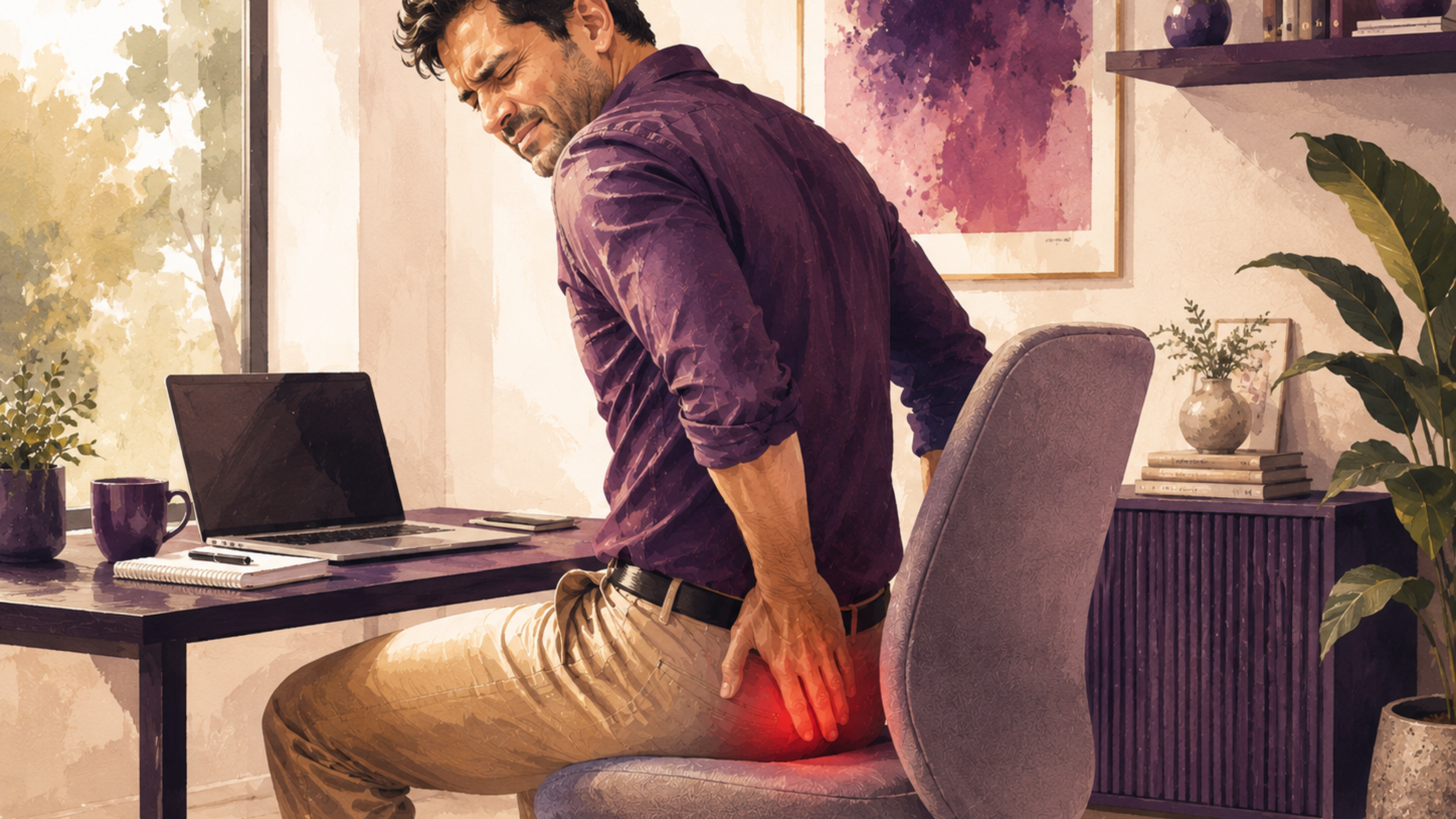
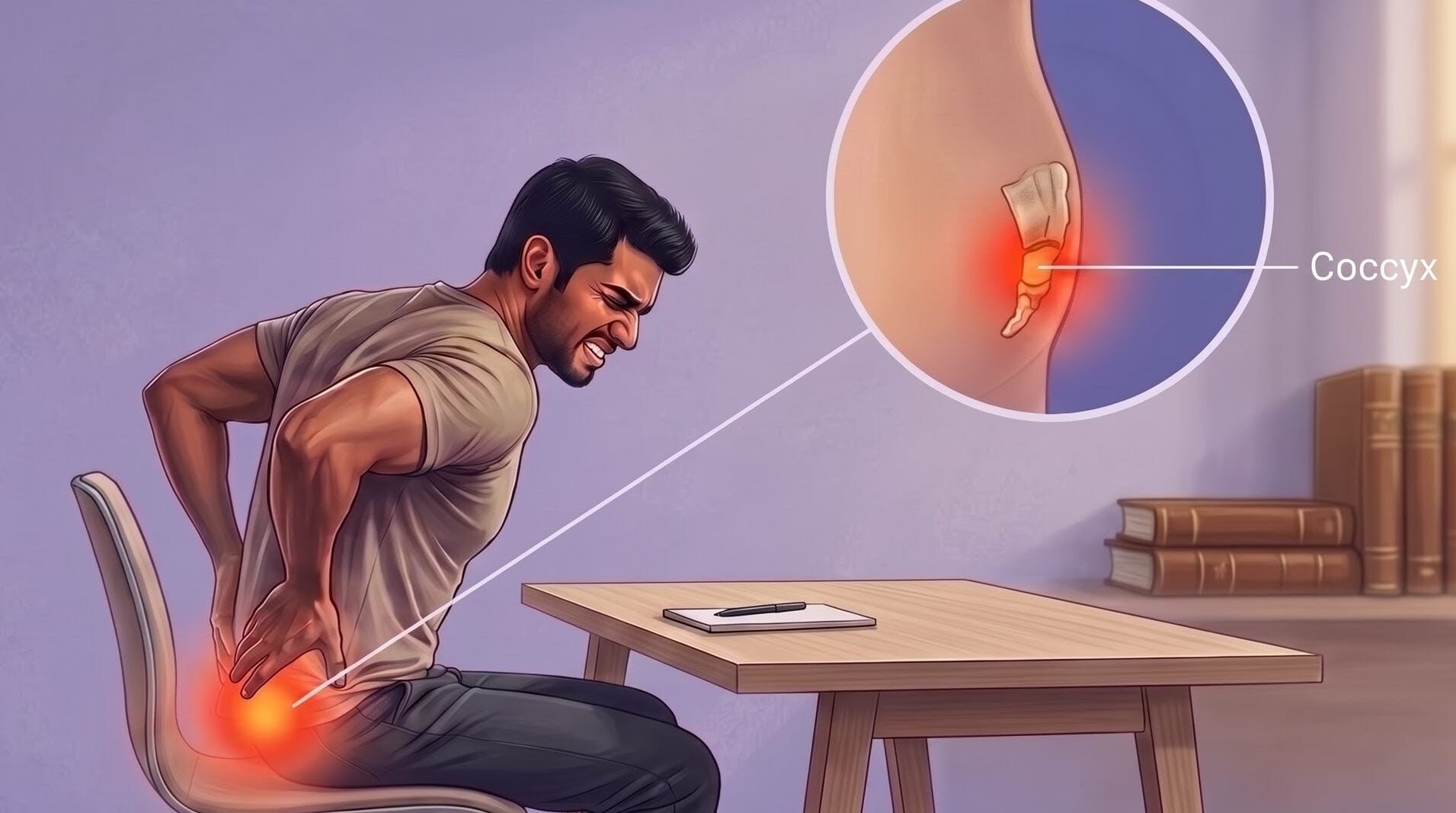
The real problem is how your body handles sitting for that long. When you’re at your desk, your lower back naturally rounds, your hips tighten, and all your body weight presses down on the front of your spinal discs.
So it’s not only the hours. It’s your posture, your chair, and how your anatomy reacts to sitting all day.
How does your bad posture bring a negative impact on your body?
When you sit, especially for long hours or in a slouched position, your body undergoes several mechanical changes that can lead to discomfort and long-term strain.
You might be sitting in a wrong posture if:
- You slump – You slide your hips forward on the chair, slide your lower back down, and round your upper body into a giant “C” shape.
- You lean forward -Your head juts forward toward the computer screen like a turtle poking its neck out.
- You sit on the front edge of your chair without leaning against the backrest.
- You sit with one leg crossed over the other for hours, or shift all your weight onto one side of your seat.
You can correct your sitting posture by:
- Placing your feet completely flat on the floor.
- Adjust your chair height so your hips sit at a 90-100 degree angle.
- Sit all the way back in your chair so your lower back rests gently against the chair’s built-in support.
- Keep your shoulders relaxed.
- Stand up, stretch, or walk around for at least 1 to 2 minutes every half hour.
Other common causes
Aging: As we get older, our spinal discs naturally lose water and elasticity. The outer wall gets a bit brittle, making it much easier for tiny cracks to form over time.
Bad Lifting Form: Trying to lift heavy objects by bending at your waist instead of using your legs puts massive, uneven pressure right on the back wall of your discs.
Repetitive Twisting & Bending: Doing the same bending, twisting, or slouching motions over and over, like during certain jobs or sports, acts like bending a paperclip back and forth until the disc wall gives out.
Sudden Traumatic Injuries: A direct impact, such as a bad fall, car crash, or sudden blow to the back, can instantly force a healthy disc to crack under extreme pressure.[9]
How do you treat buldging disc through exercises?
Exercise and Physical Therapy ( Osteopaths/Physiotherapy) are often the most important parts of recovery from a bulged disk.
Gentle activities that can help you are:
- Pilates
- Yoga
- Swimming
- Walking
- Cycling
Perform all exercises in a slow and controlled manner, especially when bending or lifting. If a person feels pain, they should stop doing the exercises and speak with your Osteopath.[6]
Safety Tips to follow:
Move slowly: Take your time when you bend or lift things.
Stop at pain: Do not push through sharp or strong aches.
When you should see a doctor if your condition worsens:
No improvement: Pain or numbness does not get better after 4 to 6 weeks of home care like resting and OTC medicine.
Interference: Pain stops you from working, sleeping, or doing normal daily tasks.
Nerve symptoms: You feel ongoing tingling, burning, or mild weakness in your arms, hands, legs, or feet.[9]
What is the solution to prevent spinal disc bulging during your 8-hour shift?
Core prevention habits you can follow:
The 30-Minute Break Rule: Discs need pressure relief to absorb fluid. Set a silent timer to stand up, shake out your legs, or take 5 steps every 30 minutes.
On-Shift Extensions (Decompression): Every couple of hours, stand up, place your hands on your lower back, and gently lean back 3–5 times. This pushes internal disc gel forward, away from your sciatic nerve.
Core Bracing, Not Flexing: Avoid deep forward bends or toe touches when taking back breaks. Instead, do standing pelvic tilts or gentle glute squeezes to engage support muscles.
You can try and build good habits, but eventually we all slip back into your bad posture by 3pm.
Is there a solution that can solve this?
How Betterhood LS Belt Prevents Spinal Disc Bulging
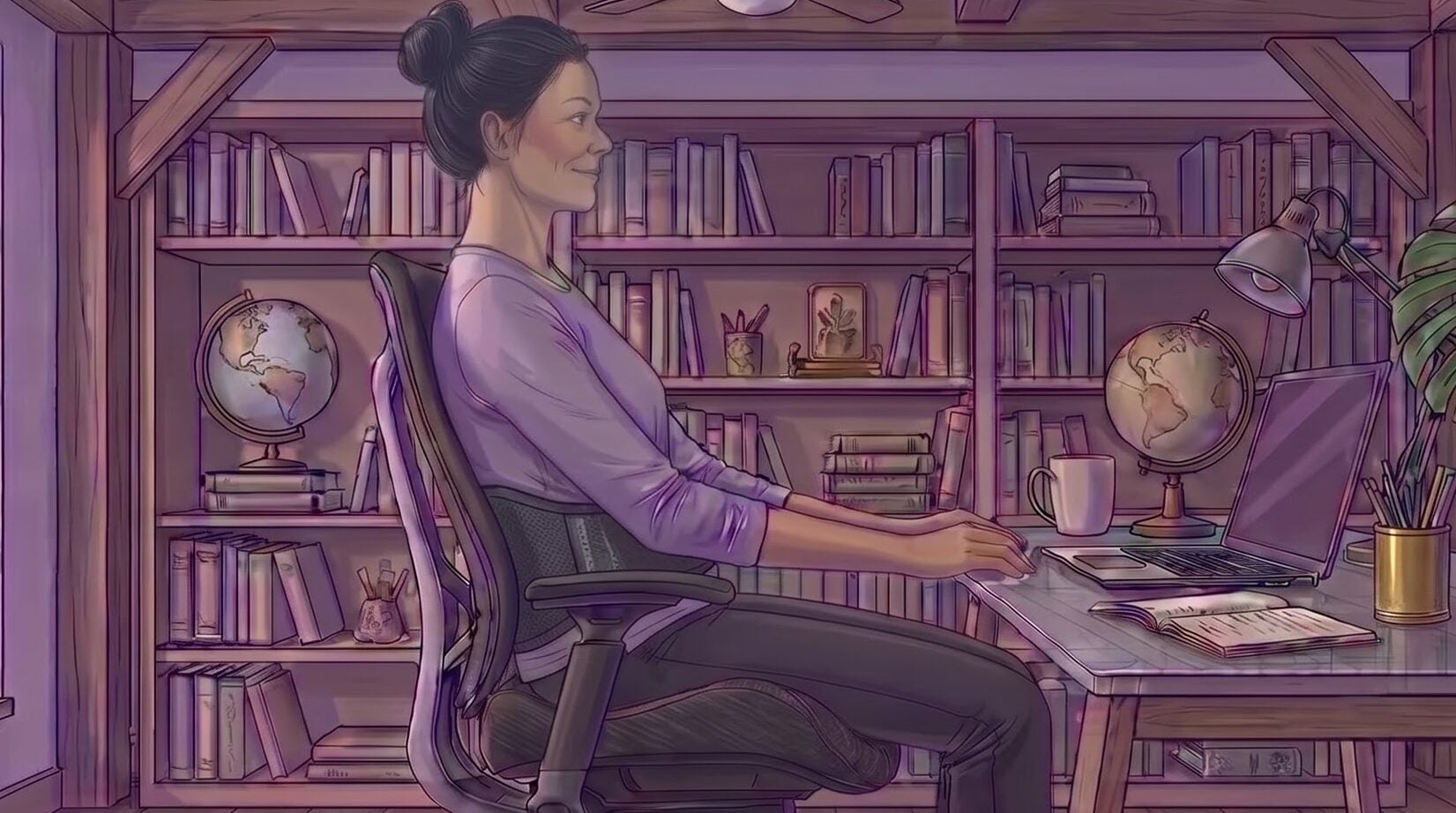
Have you thought about guarding your back without thinking?
If you are bracing before you lift, your body is asking for support.
How does the Betterhood Lumbo-sacaral belt help you in this?
Co-created with physiotherapists, the betterhood LS Belt was engineered specifically to break the cycle of lower back compression and radiating sciatic pain without restricting your natural movement.
Whether you’re managing end-of-day back fatigue or fighting off shooting nerve pain, betterhood gives your spine the reinforcement it needs to move freely and confidently again
Benefits:
Targeted Sciatica & Disc Relief: Features a central rigid contour stabilizer flanked by
8 flexible side stabilizers that decompress lumbar disc pressure and take the load off irritated nerve pathways.
Ultra-Lightweight & Invisible: Designed as India’s lightest lumbar support, it slips discreetly under your regular clothing.
All-Day Breathable Comfort: Crafted with 4-way stretch AeroMesh fabric, keeping you cool whether you’re working at a desk, running errands, or exercising.
Customized Compression: Dual-strap adjustment lets you lock in the exact level of support your back needs for lifting, sitting, or driving.
Ideal Use Cases
- Daily Chores & Lifting: Provides a muscular safety net when bending and pivoting to handle groceries, laundry, or household cleaning.
- Desk & Sedentary Work: Prevents slouched lumbar flexion and disc compression during long hours of sitting.
- Travel & Driving: Dampens engine micro-vibrations and stabilizes the lower back during commutes.
- Active Rehab & Exercise: Assists spinal alignment during light workouts, walking, and gym compound movements.
Common FAQ
What is the difference between a bulging disc and a herniated disc?
Bulging Disc: The outer fibrous wall (annulus fibrosus) remains intact, but the gel core (nucleus pulposus) pushes outward, causing the disc to bulge evenly across a wider area (like a slightly deflated tire bulging under weight).
Herniated Disc: The outer ring actually tears or ruptures, allowing the inner gel core to squeeze completely out into the spinal canal.
How long does it take to get used to an ergonomic desk kit?
Transition Period: It usually takes 1 to 2 weeks for your body to adapt, Why it feels strange initially: Postural muscles that have been inactive during slouched sitting are suddenly engaged. Start by using full ergonomic support for 1–2 hours at a time during the first few days, gradually building up to your full shift.
Can an ergonomic desk kit fix a bulging disc or sciatica on its own?
It prevents worsening, but works best with movement. An ergonomic kit reduces continuous mechanical pressure on your lumbar discs and nerve roots while sitting.
Is ice or heat better for a bulging disc?
Ice: Best during the first 48–72 hours of an acute flare-up to reduce local swelling and numb sharp nerve pain (apply for 15–20 minutes at a time).
Heat: Best for chronic stiffness or muscle tightness after initial swelling decreases, as it relaxes tight lower back and hip muscles.
What exercises should I avoid with a bulging disc?
You should avoid any movements that increase backward pressure on the disc wall:
- Toe touches or standing forward bends.
- Sit-ups / Crunches (which flex the lumbar spine under load).
- High-impact activities (running, jumping, heavy deadlifts, or squats) during an active flare-up.
Why does my bulging disc pain get worse when I sit down?
· Sitting especially with a rounded or slouched lower back increases compressive force on your lumbar discs by up to 40% to 50% more than standing.
· This pressure pinches the front edge of the vertebrae, squeezing the internal gel backward directly into the spinal nerves.
References:
1. https://mayfieldclinic.com/pe-sciatica.htm
2. https://www.sportsandspinal.net.au/disc-herniation-vs-bulge/
3. https://www.google.com/search?q=https://doi.org/10.1302/0301-620X.65B3.6841406
4. https://www.google.com/search?q=https://doi.org/10.1007/s00586-009-1052-8
5. https://www.google.com/search?q=https://doi.org/10.1080/095939801300125247
6. https://www.healthfirstosteopathy.co.uk/post/2019/06/06/lower-back-disc-bulges-the-8-best-exercises
7. https://shop.betterhood.in/collections/desk-ergonomic
8. https://www.healthdirect.gov.au/spinal-disc-problems