



If you get back pain while washing dishes, you are not alone. This simple third-point support trick offloads your lower back during chores.
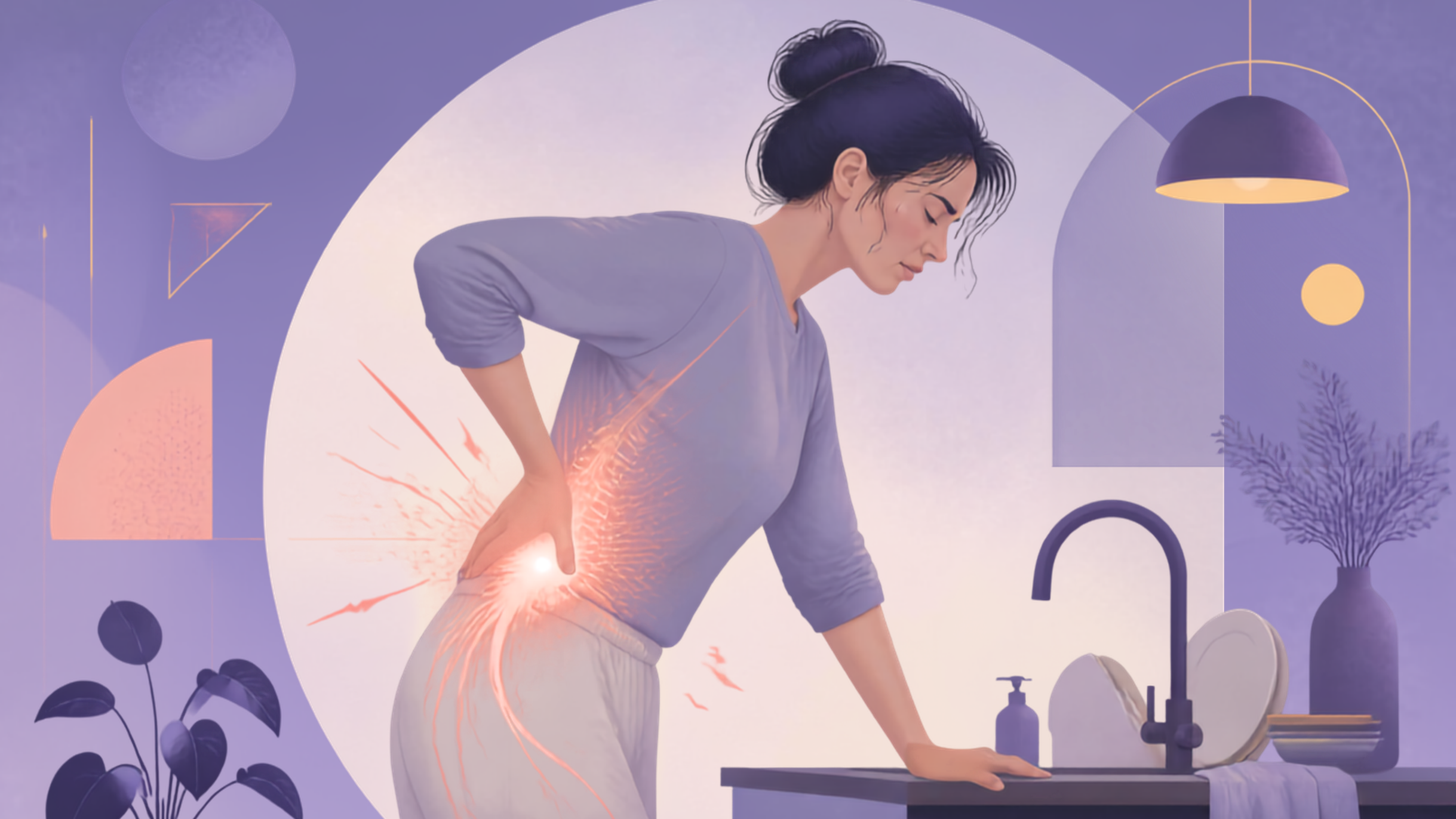
You’re standing at the sink, halfway through rinsing a stack of dinner plates. Then you lean forward just an inch or two over the counter, nothing heavy, just your usual evening chore.
Then, out of nowhere, it hits.
A sharp, locked-in ache flared up across my lower back out of nowhere.
You had to drop the sponge, grip the edge of the sink, and freeze mid-rinse just to take a breath. It’s crazy how a task as simple as washing dishes can turn a quiet afternoon into a sudden back pain emergency.
Why You Get Back Pain While Washing Dishes? Are you curious on what happens to your body?
When you stand at the sink for a prolonged period of time and continually lean in a forward position over a standard-height sink basin, causes your lower back mechanical stress.This postural misalignment forces the paravertebral muscles to maintain a continuous, unsupported state and all your weight goes to your lower back leading directly to acute mechanical back pain.[2]
What are the signs that you might have that kind of pain?
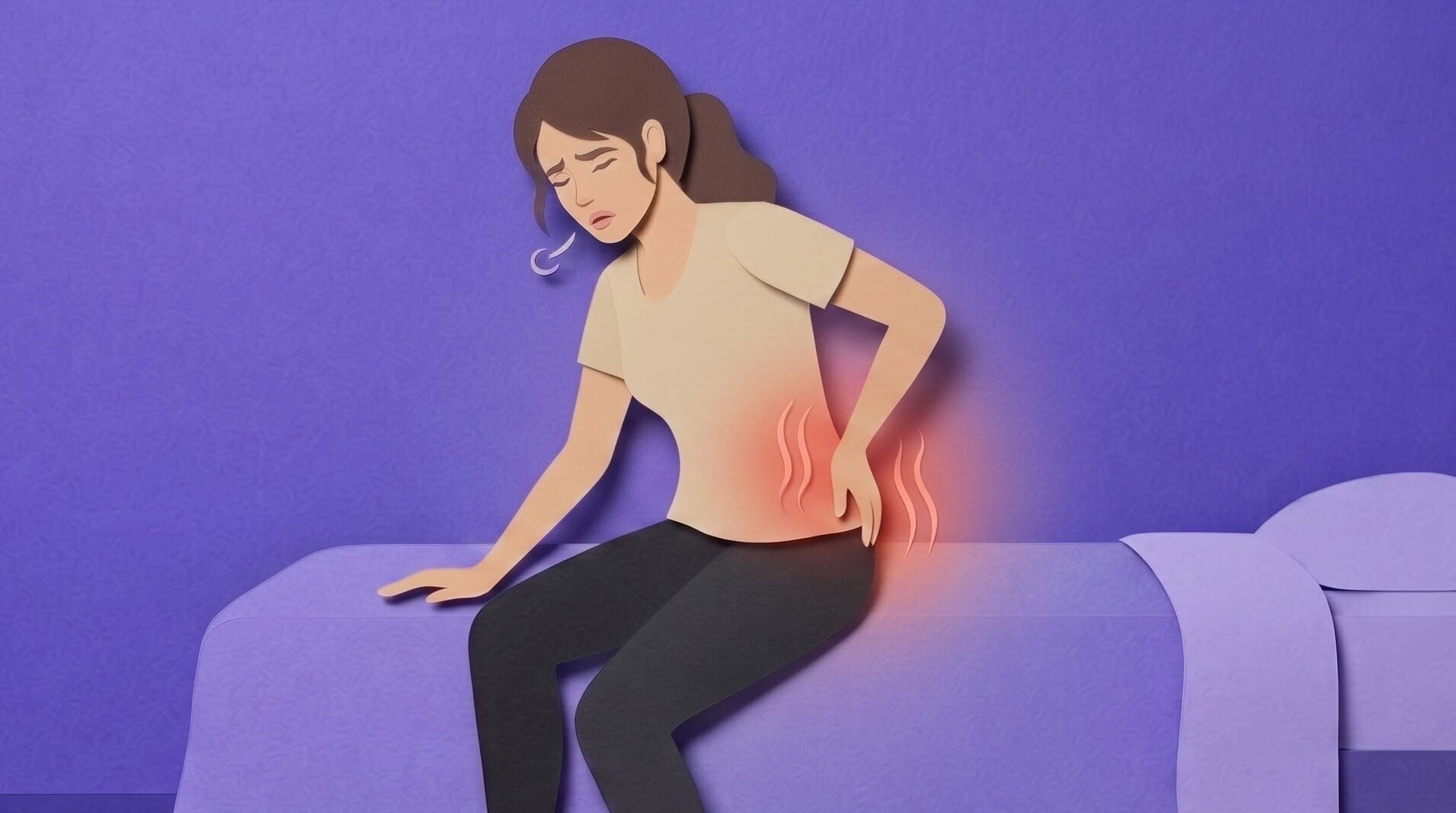
First, you feel a deep, dull ache across your lower back.
Also, you feel stiff. Therefore, it is hard to stand up straight again.
In addition, your hamstrings and calves feel tight.
Finally, your lower back feels tired, like it might give out.3]
Have you thought it might be your posture, not washing dishes?
The pain doesn’t come from washing dishes itself. It comes from how you stand while doing it.
When you lean forward, lock your knees, and reach into the sink, the entire weight of the upper body falls on the lower back. Over 10-15 minutes, this puts continuous strain on the lumbar muscles. The dishes aren’t the problem the unsupported posture is. By correcting how you stand, you can do the same task with far less pain.
How Third-Point Support Fixes Back Pain While Washing Dishes
Third-Point Support is a biomechanical principle used in physiotherapy and ergonomics. Normally you have 2 points of contact: both feet. All your body weight goes through your spine to those 2 points. By adding a third point of contact like resting your forearm on the counter you create a tripod. A tripod distributes weight across 3 points instead of 2.
What this does to your spine:
20-30% of your upper body weight shifts from your lumbar discs to the counter through your arm. Less load equals to less muscle fatigue to less pain.This is the same principle as using a cane, walker, or leaning on a desk when tired. It doesn’t cure the cause, but it gives immediate relief during activity.
This simple countertop trick-Third point support helps you avoid pain during washing dishes:
· Get as close to the sink as possible. Make sure you are not standing in a forward stooped position.
· Stand on cushioned mat- this encourages you to shift your weight as you stand.

Other Causes of pain While washing dishes
Could your daily habits be stressing your lower back?
The “Desk Zombie” Posture: Houching over a laptop for eight hours straight turns your hip flexors into tight rubber bands and forces your lower back to pull all the weight.
The Weekend Warrior Trap: Sitting on the couch all week and then suddenly deciding to dig up the entire garden, run a half-marathon, or move a heavy sofa is a surefire way to shock your muscles.
The Overloaded Backpack or Purse: Carrying your entire life on one shoulder throws your spine out of alignment, forcing one side of your back to work twice as hard.[4]
Muscle Strains & Ligament Sprains (The “Oops” Moments)
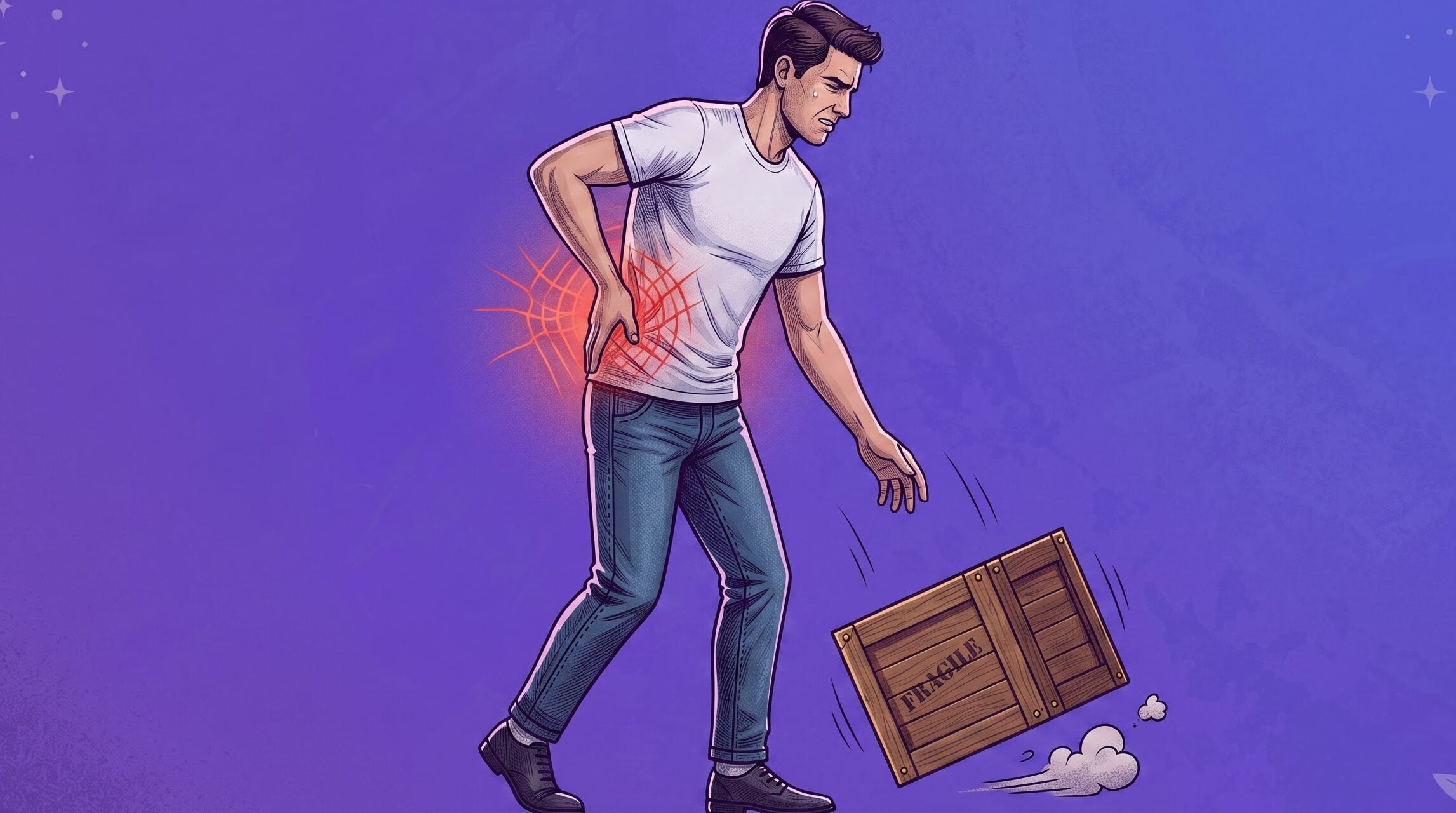
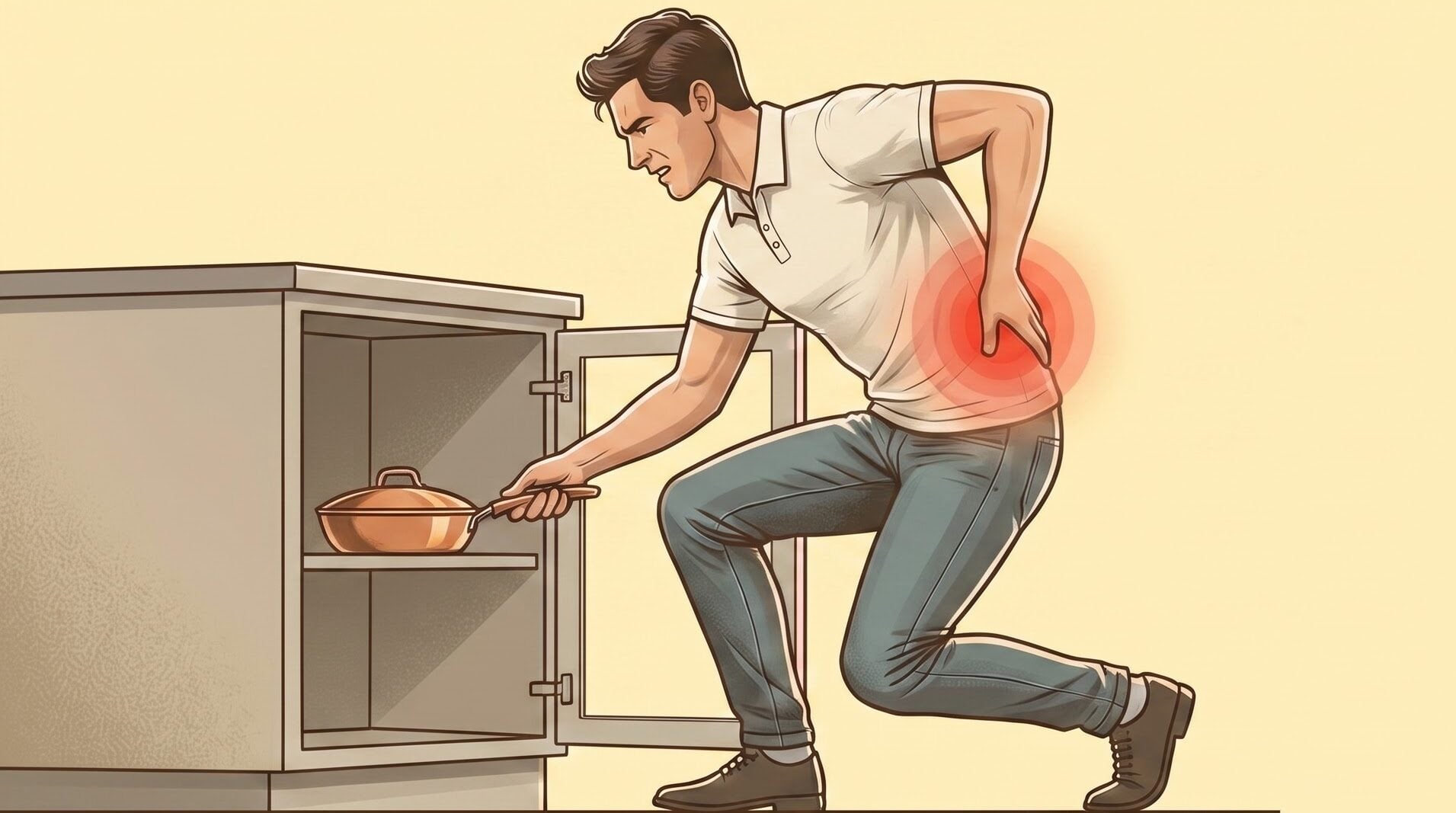
What happens when you lift something heavy with your back instead of your legs, or you twist too fast while reaching for something?
This causes microscopic tears in the muscles or stretches the tough ligaments holding your vertebrae together.
You feel a dull, aching muscle spasm that makes every single twist or turn feel like a major negotiation.[4]
Does your back hurt more on high-stress days?
It sounds wild, but your brain and your back are deeply connected.
What happens when you’re chronically stressed, anxious, or overwhelmed, your body stays in a constant “fight or flight” mode?
It causes your neck and lower back to stay locked in a tight.[4]
What are the types of pain you might have?
The “Nagging Knot”
This is the most common culprit.
It stays strictly in your lower back no shooting down the legs and usually feels like a dull ache, a deep stiffness, or a sharp twinge when you move the wrong way.Pain that is confined to the lower back and does not radiate down the legs.[5]
The “Electric Zap”
Instead of staying put in your back, this pain travels.
It’s famous for sending a sharp, burning, or electric-shock-like jolt straight from your lower back, down through your glutes, and all the way into your leg.[5]
The “Walking Fatigue”
Imagine your spinal canal the tunnel holding your nerves getting a little too cramped.
When you stand up straight or walk around, it pinches those nerves, making your legs feel heavy, cramped, or weak.[5]
The “Morning Rust”
Unlike normal back pain that acts up when you move, this kind acts up when you don’t. It’s a deep, systemic ache that doesn’t care about how much you lifted or how you twisted.[5]
How can you avoid lower back pain?
You cannot prevent all causes of back pain,
But you can take some steps to avoid injuries that cause lower back pain, like maintaining a weight that’s healthy for you.
Strengthening your abdominal, hip and back muscles like practicing pilates and other exercise programs strengthen core, hip and back muscles that support your spine.
Lifting safely to avoid injuries, lift with your legs, not your back. Hold heavy items close to your body. Try not to twist your torso while you’re lifting.
Warming up before physical activity or sports, do gentle stretches to warm up your body properly before exercise.[1]
How can you prevent Lower back pain by yourself?
Self-care is an important part of managing back pain and returning to your day-to-day activities.
- being physically active
- optimizing mental well-being
- maintaining a healthy body weight
- not smoking tobacco
- getting good sleep
- being engaged in social and work activities
- making ergonomic adjustments in the workplace.
When should you see a doctor?
It is a good idea to check in with a doctor if:
- Pain sticks around for more than 2 to 4 weeks, even with rest and gentle movement
- Pain feels severe or constant and does not feel better when you change positions
- Pain travels down one or both legs, or feels worse when you cough, sneeze or strain
- Pain starts getting in the way of your daily activities, work, or sleep
Is it safe to wear an Lumbo-Sacaral belt while standing for long periods during daily chores?
Here’s the good news when used thoughtfully, a belt like the betterhood LS Belt is a safe and incredibly effective for your daily chores. Think of it as a temporary scaffolding for your lower spine. By utilizing integrated splints and customizable straps, it takes the heavy compressive load off your lumbar region, keeping your posture supported so those painful spasms don’t catch you off guard.
So, how do you get the instant relief without relying on it forever?
That’s where betterhood’s clever design comes in. Crafted with ultra-light, breathable materials, it’s built for comfortable all-day wear during those high-strain tasks. But more importantly, it comes with clear sizing and professional guidance, including targeted core exercises, so you can safely protect your back during heavy chores while keeping your natural muscles strong for the long run!
In orthotics, the Three-Point Support System (or Three-Point Force System) is the gold standard biomechanical principle used to stabilize the spine against forward bending.
Here is how the betterhood LS Belt creates that three-point support system while you’re leaning over the dish sink:
The Biomechanical Equilibrium (The 3 Points)
To keep your spine upright without your muscles burning out, the belt applies three targeted force vectors across your midsection:
- Point 1 (Back Force – Center): This acts as the main focal pivot, preventing your lower spine from rounding out backward.
- Point 2 (Front Force – Upper Abdomen): The upper band of the dual-strap closure pushes inward and back across your upper abdomen.
- Point 3 (Front Force – Lower Pelvis): The lower band pulls inward and back right across your lower hips/pelv
Lumbar support belts are commonly recommended for people with:
- Chronic lower back pain.
- Herniated or bulging discs.
- Muscle strain or ligament sprain.
- Degenerative conditions such as osteoarthritis.
- Occupational risks (e.g., heavy lifting in construction or warehouse jobs).
- Post-surgical recovery.
Safe Usage Guidelines for Lumbar Support Belts[7]
- To maximise benefits and avoid risks, here are some practical recommendations:
- Use only when needed: Wear the belt during activities that aggravate pain or require extra support, not 24/7.
- Combine with exercise: Strengthening the core, glutes, and back muscles is essential for long-term relief.
- Choose the right fit: A poorly fitted belt may do more harm than good. Select a belt suited to your body size and condition.
- Follow medical advice: Consult a doctor or physiotherapist before prolonged use, especially post-surgery or if you have chronic conditions.
- Take breaks: Remove the belt periodically to allow muscles to work naturally.[7]
LS belt uses
- Relief, Stability and fast recovery
- Relieves back pain stiffness and strain
- Improves posture alignment and spinal alignment
- Speeds recovery and reduces daily fatigue
Features
- Comes with musculoskeletal longevity toolkit.
- Protocols on posture and recovery included.
- Ergonomic contours distribute pressure evenly.
- Orthopedic memory foam ensures firmness.
- 100% pure memory foam offers lasting comfort
- Large size and anti-slip base offer secure support
- Cotton based fabric cover gives soft, premium feel.
Frequently asked questions
Will wearing a back belt weaken my back muscles?
· Yes, if you wear it too much.
· The details: An LS belt acts as an external anchor, taking over the job of your core and spinal stabilizers. If you wear it all day, every day, your natural muscle corset doesn’t have to work, which can lead to muscle weakening (atrophy) over time. To avoid this, use the belt strictly as a temporary tool for heavy lifting, high-strain tasks, or acute flare-ups.[6]
Can I wear my LS belt all day at work?
· Generally, no. Most doctors and physical therapists recommend limiting belt wear to 1 to 2 hours at a time, or only during specific activities that trigger pain or strain. If your job requires heavy manual labor, try to use the belt during your highest-risk lifting tasks, and take it off during breaks or low-impact desk work to let your natural muscles engage.[6]
How tight should the belt actually be?
· It should feel snug and supportive, but never restrictive or painful. A good rule of thumb: you should be able to breathe comfortably, talk without gasping, and fit two fingers underneath the edge of the belt. If it’s pinching your skin, squishing your ribs, or causing numbness in your legs, it is way too tight.[6]
Can a back belt fix a herniated disc or completely cure back pain?
· No. A lumbar support belt is a symptom-management tool, not a cure. It doesn’t heal damaged discs, fix structural issues, or replace medical treatment. It simply stabilizes the area, reminds you to watch your posture, and reduces mechanical strain while your body heals on its own or with physical therapy.[6]
Do I wear the belt under my clothes or over them?
· It is almost always best to wear the belt over a thin, breathable layer (like a fitted cotton undershirt). Wearing it directly against bare skin can trap sweat, cause chafing, lead to skin rashes, and make the belt slip around uncomfortably.[6]
When should I stop wearing the belt entirely?
· You should phase out the belt as your pain subsides and your core strength improves. If you’ve been using it for a minor muscle strain, you generally want to ditch it within a couple of weeks so your natural muscles can resume their full job of keeping you stable. If you are recovering from surgery or a major injury, always follow your doctor’s specific timeline for weaning off the brace.[6]
References:
1. https://biomedicus.gr/back-ache-washing-dishes/
2. https://www.ca/washing-the-dishes-with-back-pain
3. https://my.clevelandclinic.org/health/diseases/7936-lower-back-pain