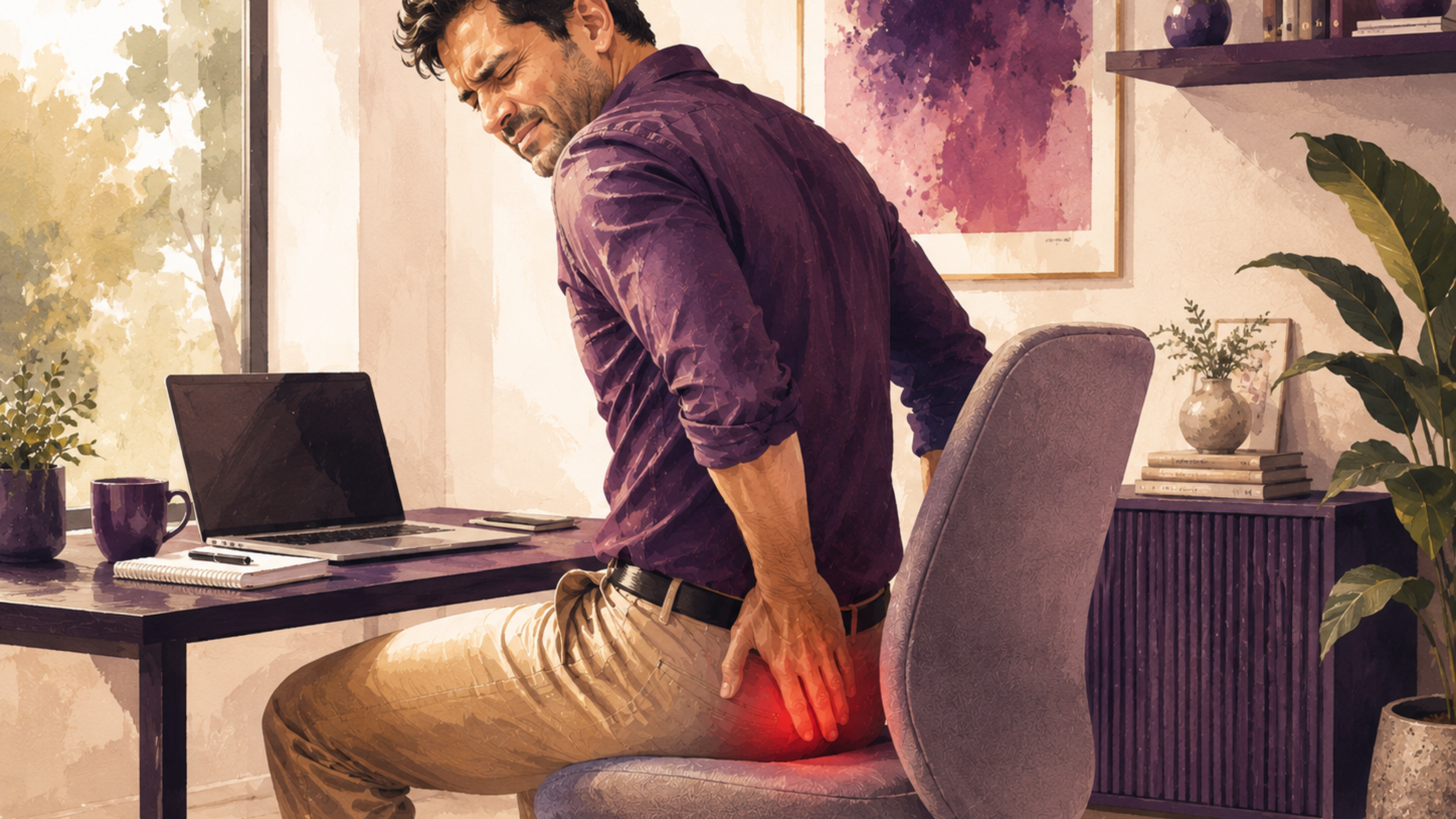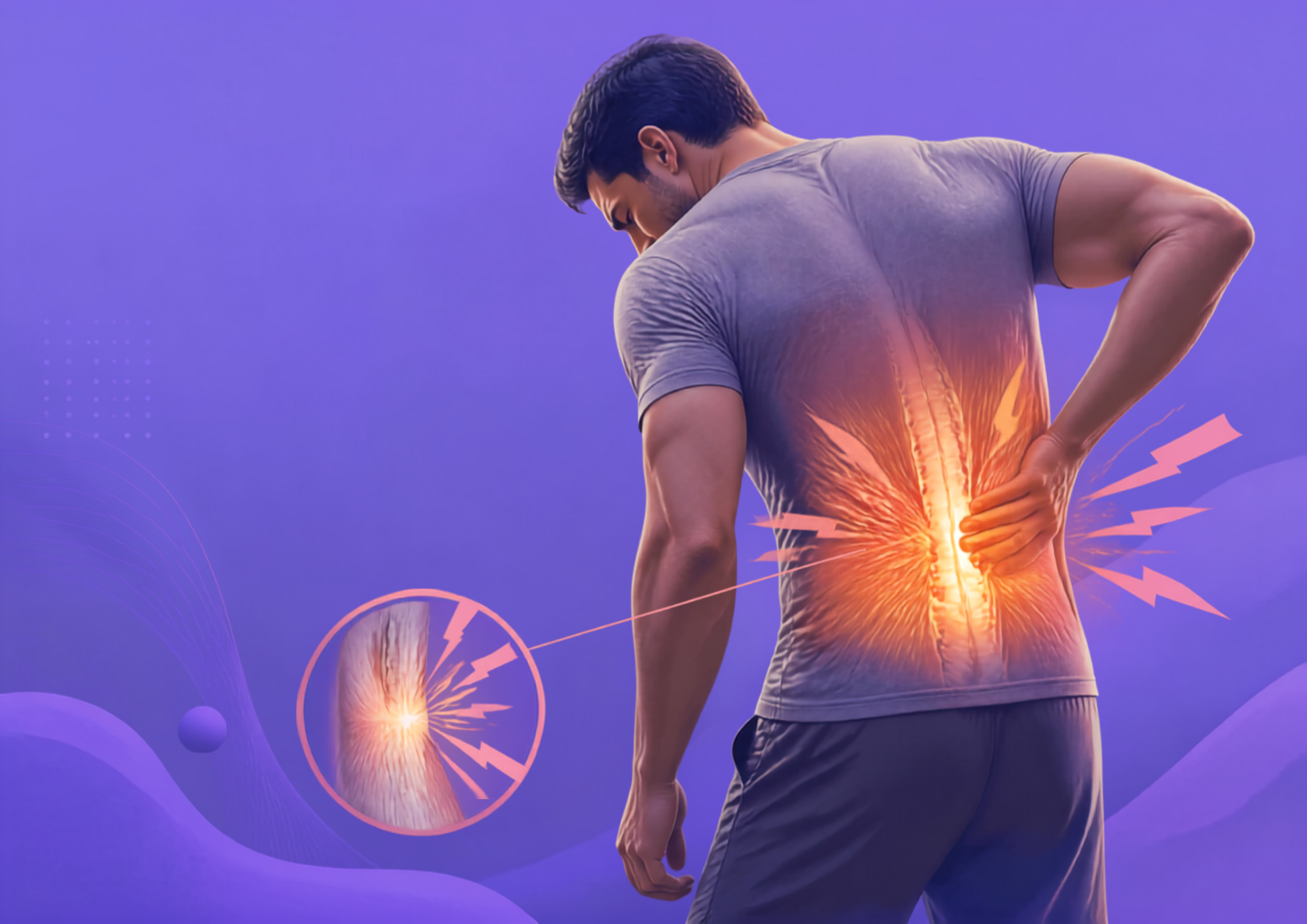




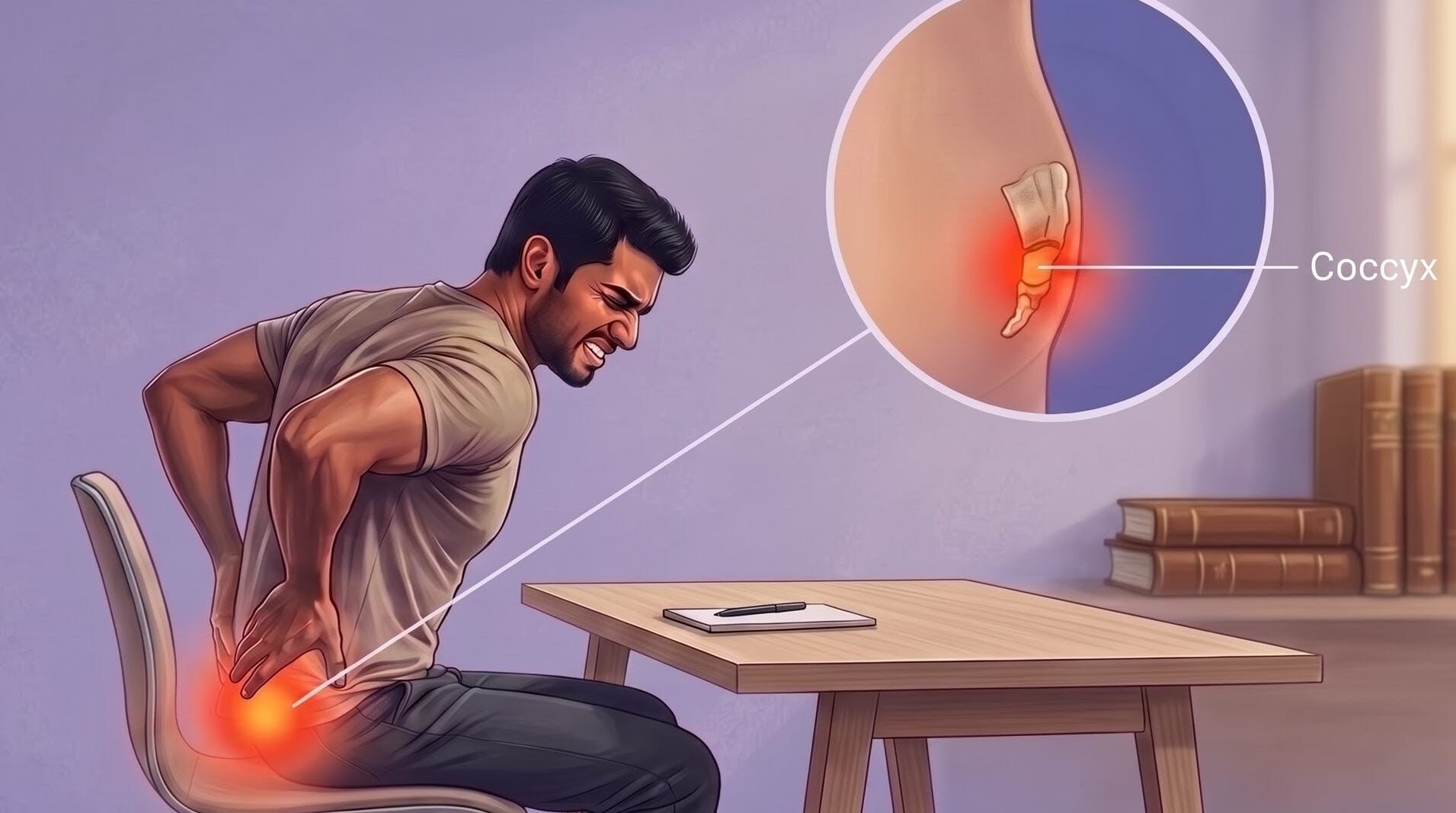
Does tailbone pain get worse when you sit? If you have a pilonidal cyst, tailbone pain while sitting is common.
Sitting down should be an effortless rest state, but when structural conditions affect your sacrococcygeal region. Taking a seat converts your upper body weight into concentrated mechanical stress.
Have you ever felt a sharp, throbbing pain near your tailbone the moment you lean back in a chair?
Conditions like pilonidal disease an inflammatory skin tissue, pocket in the natal cleft and coccygeal bone spurs thrive on this force.
When you sit, vertical weight compresses inflamed cysts or sharp bony projections against seat surfaces. While horizontal shearing forces pull at sensitive skin. Relief requires active offloading strategies. Such as using a contoured cushion with a posterior cutout to elevate the cleft and eliminate contact pressure.
Do you notice your discomfort worsening when you shift positions or sit on hard surfaces for long periods?
Sitting down seems simple, but your lower back and tailbone bear the full brunt. Which has three hidden culprits: mechanical pressure, shear forces, and underlying structural conditions. When these forces collide, everyday habits turn sitting into a painful struggle.[1]
Why Does Tailbone Pain Get Worse While Sitting?
When you get tired during a long work shift and slide down in your chair,. You stop resting on your hard “sit bones”. The sturdy flat bones under your bottom designed to hold your weight. Instead, you dump your entire body weight straight onto your tailbone. This crushes the tip of your spine, stretches the nearby skin tight, and makes your lower back hurt quickly.[1]
How can sliding off a soft couch cause skin bumps?
When you wiggle and slide forward to stand up from a deep, low sofa, your skin scrapes against the fabric, which acts like a tiny broom in the crease at the top of your bottom by pushing loose hairs and lint straight down into small pores. Over time, these trapped hairs get stuck under the skin and cause painful, swollen bumps called pilonidal cysts.[1]
Why sitting back on a hard chair worsens tailbone pain?
Leaning back against a stiff chair presses your upper body weight directly onto the very tip of your tailbone. If you have a small, extra bump of bone there called a bone spur, leaning back squeezes your soft skin and sensitive nerves between that hard bone and the solid chair seat, creating a sharp, pinching pain.[1]
Protecting your tailbone.
Preventing a pilonidal cyst or a coccyx bone spur from forming (or coming back) starts with one core habit: stopping friction and direct pressure before tissue damage happens.
Both conditions are heavily triggered by how you sit. Sliding across a chair strains skin pores and drives hair deep into natal cleft tissues, while hard seats press directly against the tailbone, causing bone spurs to pinch surrounding nerves.[2]
Targeted ergonomic cushioning acts as your primary layer of defense. By changing how your body weight interacts with your seat, a specialized cushion protects sensitive areas long before surgery or medical intervention becomes necessary.[3]
Why Cushioning Is Your Best First Line of Defense
Preventing a pilonidal cyst or a painful bone spur flare-up comes down to one simple rule: stop direct mechanical stress before it damages tissue.
When you sit on standard chairs, your entire upper body weight presses flat against your lower spine, creating high friction and intense compression. Specialized ergonomic cushioning acts as an ideal first option because it physically changes how gravity acts on your body without medications or complex procedures.[4]
Instead of letting your tailbone grind against a hard surface, a target-contoured cushion features an open rear channel or U-shaped cutout. This cutout lets your tailbone “float” in open space while redistributing your body weight evenly onto your sturdy sit-bones and thighs. By removing direct contact, you instantly eliminate the skin rubbing that drives pilonidal cysts and the pinpoint crushing that inflames bone spurs.[3]
How can you prevent tailbone pain while sitting down?
By using a targeted cutout cushion, you physically unweight high-risk bony points, allowing your coccyx to float freely while transferring your body weight safely to the surrounding soft tissue.
It can be critical for preventing pilonidal cysts
Keeping direct friction and pressure off the sacrococcygeal area is the single most effective way to stop loose hairs from being forced into dermal pores, preventing painful pilonidal cyst flare-ups and recurrences.
What if you are already struggling with tailbone pain while sitting?
Ergonomic cutouts promote a natural forward pelvic tilt, boost local circulation, and offer an effective, non-invasive way to relieve discomfort for over 90% of tailbone pain cases.
Pressure Offloading is Crucial During Post-Op Recovery.
How does a coccyx cushion prevent surgical wound complications?
Following pilonidal sinus surgery, cleft-lift procedures, or tailbone spur removal, the primary threat to fast healing is direct friction and pressure. Sitting flat on a chair drags healing tissue apart and restricts micro-circulation. A contoured coccyx cushion features a dedicated rear cutout that physically isolates the entire sacrococcygeal area. By keeping the surgical site “floating” without contact, you protect delicate stitches, minimize scar tissue formation, and prevent painful wound breakdown.[5,6]
Why do doctors recommend cutout cushions over traditional donut pillows to prevent tailbone pain while sitting?
Old-fashioned ring or donut pillows push surrounding gluteal tissue outward, which actually increases skin tension right across the center of your bottom. In contrast, an ergonomically designed U-shaped coccyx cushion supports the pelvic structure from the sides and front. This encourages a healthy forward pelvic tilt, realigns the lower lumbar spine, and distributes your upper body weight evenly across your thighs. The result is a safe, pain-free environment that helps you return to desk work or driving much sooner.
Wedge-shaped coccyx cushions feature a slanted profile and a U-shaped rear cutout engineered to offload pelvic weight.
Unlike donut cushions with a central circular hole, wedge cushions preserve natural spinal curves, promote healthy pelvic alignment, and suspend the tailbone without compressing soft tissues.
Key Benefits of Wedge-Shaped Cushions
Prevents Tissue Strain: Donut pillows push surrounding tissue outward and can stretch the natal cleft. Wedge cushions support the thighs and hips evenly without placing tension on delicate skin or healing incisions.
Ergonomic Pelvic Tilt: The subtle forward slant tilts the pelvis into a neutral position, maintaining the spine’s natural lordotic curve and preventing slouching.
Complete Pressure Offloading: The U-shaped posterior cutout leaves space behind the seat so the coccyx floats freely without touching chair surfaces.
Even Weight Distribution: Contoured high-density foam disperses upper body weight across the ischial tuberosities (“sit bones”) and thighs.
The betterhood PosturePro Coccyx Seat Cushion uses 100% pure memory foam with an ergonomic U-cut design to isolate the tailbone, distribute weight evenly, and promote healthy posture during long sitting sessions.
If you like, I can pull together matching ergonomic lumbar support backrests or setup advice for your office chair to maximize long-term sitting comfort. Would you like me to do that?
After examining the daily struggles of office workers, long-distance drivers, and those recovering from tailbone injuries, a clear pattern emerges. Far too many people cycle through endless products, only to watch them flatten into useless slabs within weeks. For individuals dealing with pilonidal cysts, coccyx bone spurs, and chronic lower back pain, sitting quickly becomes an ordeal. Standard cushions simply fail to deliver, they lack proper structural clearance, trap heat, and constantly aggravate sensitive friction points.
The problem wasn’t a lack of effort on the customer’s part, it was a fundamental design flaw. Traditional seat cushions consistently fall short because they rely on poor geometry and substandard materials.
So, we designed a better way forward.
The Betterhood Coccyx Support: Engineered Feature by Feature
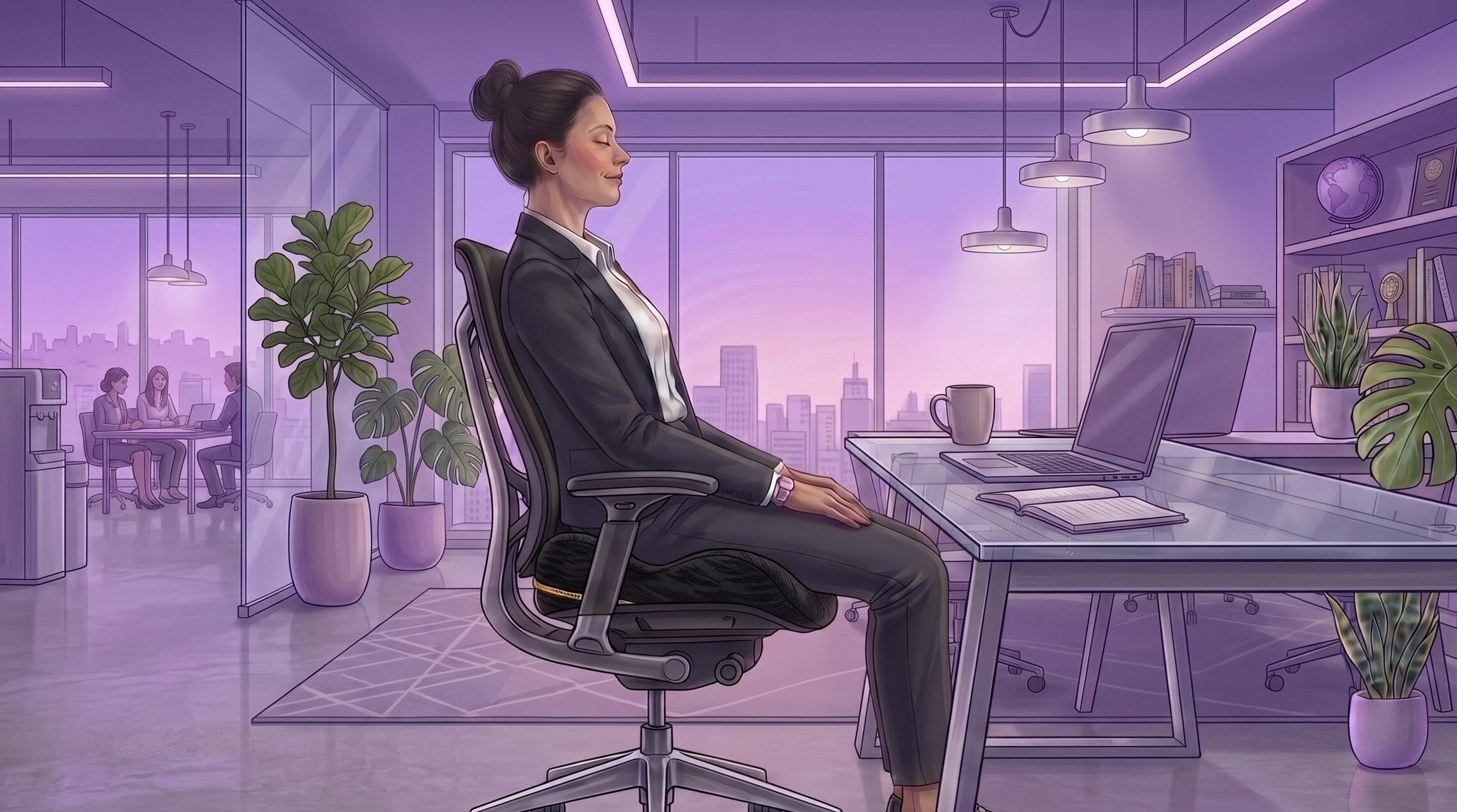
At Betterhood, we didn’t set out to build just another seat pad, we designed a solution to a daily struggle that standard flat cushions and flimsy foam continuously fail to solve.
Contoured Rear-Cutout Design
Instead of a flat pad that presses directly against your lower spine, our cushion features an anatomically sculpted U-shaped cutout. This completely suspends your tailbone in open air, eliminating direct contact with hard chair surfaces while redistributing your body weight evenly onto your thigh muscles and sit-bones.
Core Material: High-Density Structural Memory Foam
Formulated with high-resilience memory foam, the Betterhood cushion provides dynamic, weight-bearing support without bottoming out. It adapts to your body’s contours to absorb daily micro-shocks without losing its structural integrity under hours of continuous use.
Climate Control: Active Air-Flow Channels
Equipped with breathable internal channels and a mesh inner lining, our design prevents trapped heat and moisture accumulation. Whether working an eight-hour shift or driving across town, the surface stays cool, dry, and comfortable against your skin.
Ergonomics: Natural Pelvic Alignment
The gently sloping contour promotes an optimal forward pelvic tilt. This subtle shift aligns your lumbar spine, prevents slouching, and reduces stress on your lower back discs without forcing an unnatural posture.
Maintenance: Non-Slip Base & Washable Outer Cover
A durable, anti-slip bottom keeps the cushion firmly anchored to any office chair, car seat, or dining chair. Paired with a soft, zippered cover that easily zips off for machine washing, maintaining daily hygiene requires minimal effort.
Versatility: Portable Everyday Comfort
Lightweight and compact, the Betterhood support transfers seamlessly from your work desk to your driver’s seat or favorite armchair, ensuring continuous pressure offloading wherever life requires you to sit.
FAQ
How does a coccyx cushion help during pilonidal cyst recovery?
A cutout coccyx cushion suspends the gluteal cleft and sacrococcygeal area in air. By removing direct contact between the seating surface and the lower back, it eliminates pressure on active cysts, surgical wounds, or incision sites, reducing friction and localized pain while seated.[10]
Can using a cushion help prevent a pilonidal cyst from recurring?
Yes. Continuous, heavy pressure and friction on the tailbone, especially from prolonged sitting, can drive loose hairs deeper into skin pores, initiating hair follicle blockage and cyst formation. Using a supportive cutout cushion reduces mechanical pressure on the natal cleft, helping lower the risk of recurrence[9].
When can I start using a cushion after pilonidal cyst surgery?
A cushion can generally be used as soon as sitting is permitted by your surgeon. It prevents weight load on surgical sutures or open secondary-intention healing wounds, reducing tension across fragile skin folds.[8]
Can a cushion permanently fix a coccyx bone spur?
No. A coccyx cushion is a conservative management tool designed to relieve daily pressure and prevent persistent inflammation. If a bone spur continues to cause severe pain despite cushion use, medical interventions such as targeted steroid injections, physical therapy, or surgical excision (coccygectomy) may be evaluated by a specialist.[7]
References
- https://www.healthline.com/health/pilonidal-cyst-home-treatment#takeaway
- https://www.goodrx.com/conditions/wound-care/pilonidal-cyst#:~:text=Coccyx%20cushions%20are%20designed%20to%20take%20pressure,time%20are%20more%20likely%20to%20develop%20them.
- https://www.lenvitz.com/coccydynia-cushions-tailbone-pain-relief-guide/#:~:text=How%20Coccydynia%20Cushions%20Operate.%20Coccydynia%20cushions%20are,bones%2C%20significantly%20reducing%20stress%20on%20the%20coccyx.
- https://www.woundsource.com/blog/what-you-need-know-about-pilonidal-cysts#:~:text=however%2C%20often%20the%20embedded%20or%20stiff%20hair,What%20Causes%20a%20Pilonidal%20Cyst%20to%20Develop%3F
- https://betterhood.in/learn/what-is-a-coccyx-cushion/#:~:text=The%20main%20purpose%20of%20a%20coccyx%20cushion,pain%20in%20patients%20with%20chronic%20coccydynia%20%5B2%5D.
- https://1stop4living.com/blogs/latex/how-to-choose-the-best-seat-cushion-for-tailbone-hemorrhoid-and-sciatica-relief#:~:text=How%20it%20works%3A%20A%20U%2Dshaped%20cushion%20is,support%20under%20the%20thighs%20and%20sit%20bones.
- Mayo Clinic — Chronic Coccydynia Interventions
- Dr. Kamrava Medical Care Dos and Don’ts for Managing Pilonidal Sinus
- NCBI StatPearls Pilonidal Disease Pathophysiology & Management
- GoodRx Pilonidal Cyst Self-Care & Recovery Tips
Disclaimer: This content is for informational purposes only and does not substitute professional medical advice, diagnosis, or treatment. Always consult a physician or physical therapist for persistent joint pain.