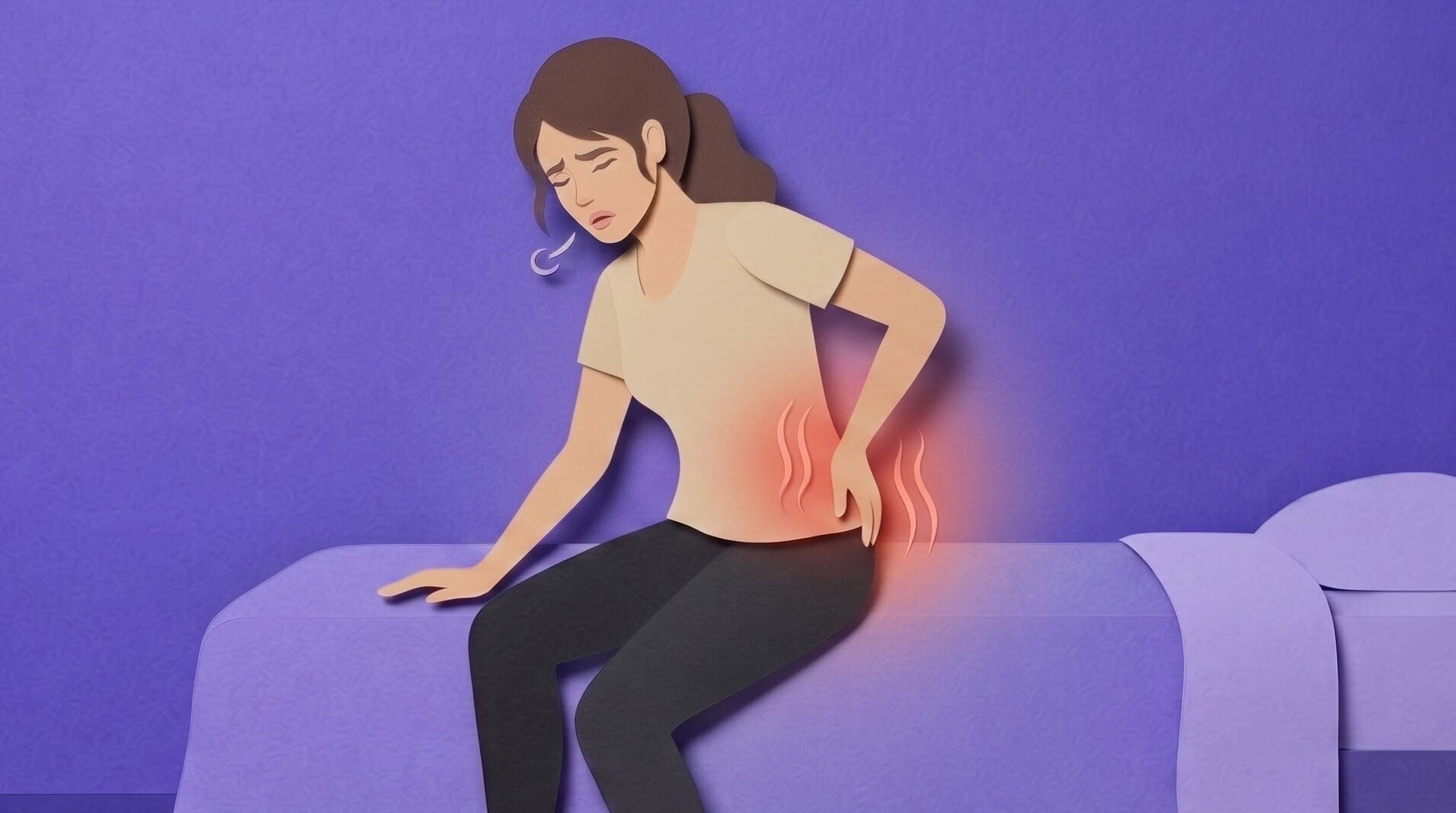




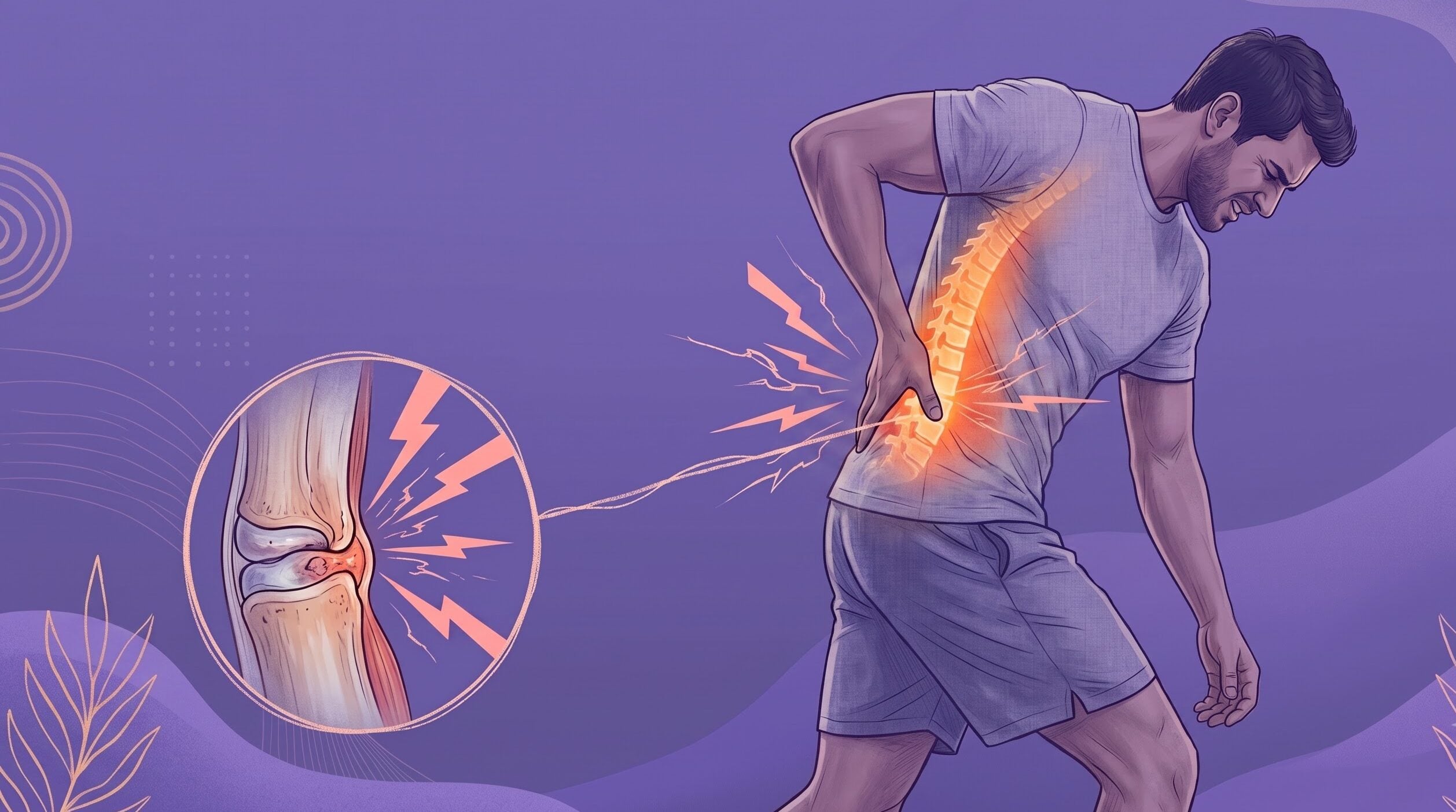
Why did your lower back freeze? That sudden lower back freeze after heavy lifting is a classic sign of mechanical strain. Research says that Lower back pain is the single leading cause of disability worldwide, affecting over 619 million people globally[1]
This frustrating lower back freeze isn’t an isolated fluke, nor is it strictly an “old age” problem. Lower back pain remains the leading single cause of physical disability worldwide. If you are a college student hauling a overloaded backpack. A desk worker sitting through back-to-back video calls. Or a parent lifting a wriggling toddler, mechanical lower back strain creeps up through years of quiet micro-wear. It isn’t just one single disease; it is an interplay between dehydrating spinal discs, overworked lumbar joints, and protective muscle guarding reacting to everyday physical stress.
While it can feel like a sudden structural emergency, acute lower back flare-ups are usually the straw that breaks the camel’s back, the culmination of subtle mechanical strain and progressive biological wear on your lumbar spine.
Why Does your Lower Back freeze After Lifting or Sitting?
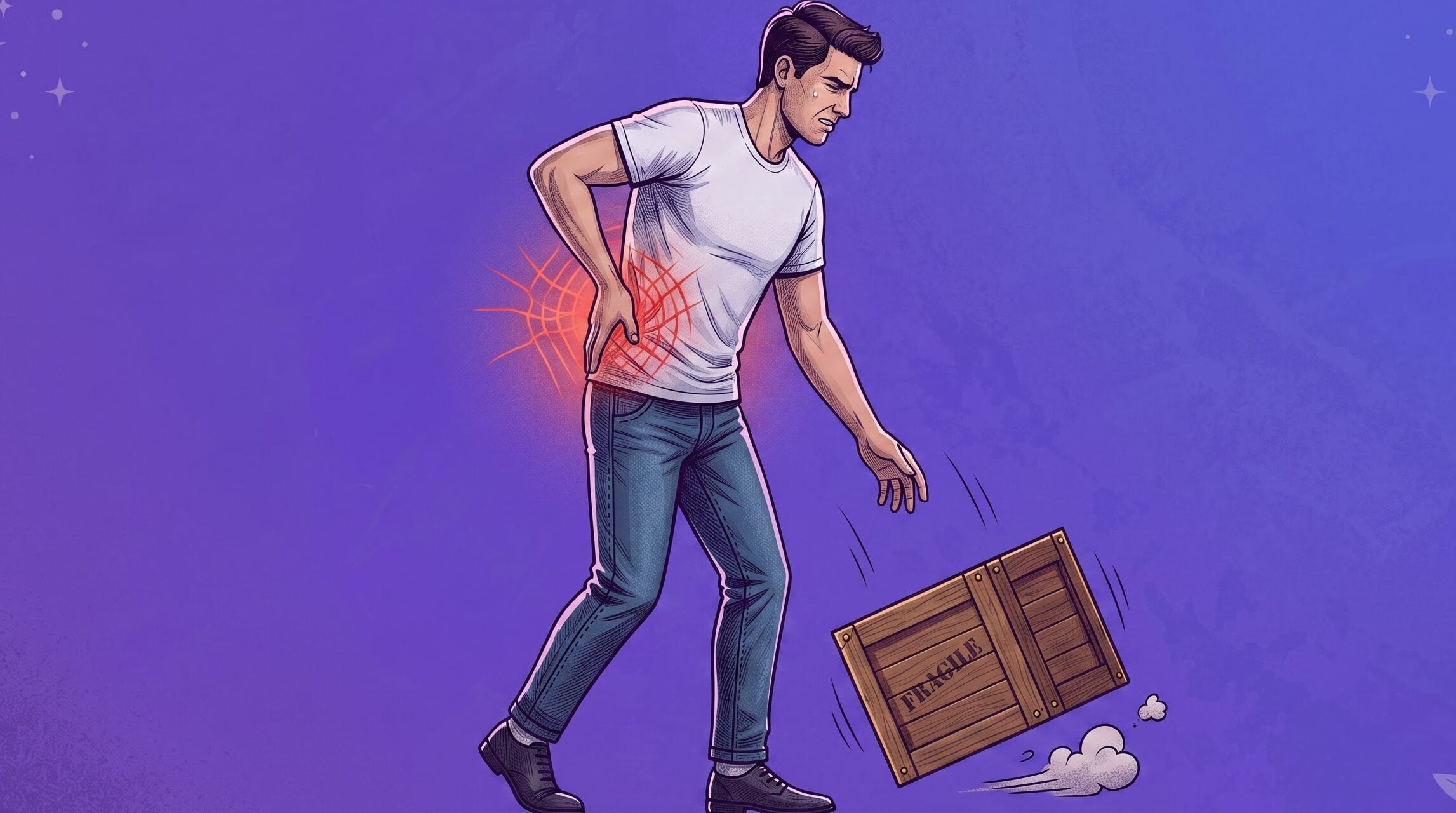
One common reason is a sudden lower back freeze triggered by poor lifting.
There are several factors that might be causing your lower back strain.
Lifestyle & Biomechanical Factors
Sedentary Lifestyle: Prolonged sitting causes tight hip flexors and weakens core and gluteal muscles, shifting extra strain onto the lumbar spine.
This imbalance makes a lower back freeze more likely when you finally lift.
Poor Posture & Ergonomics: Slouching or using unsupported seating puts sustained pressure on lower back structures.
Muscle Deficits Imbalances: Weak abdominal/core muscles fail to support the spine adequately during everyday movements[2]
Mechanical Load & Aging, Soft Tissue Injuries (Most Common)
Muscle Strains & Ligament Sprains: Often caused by lifting heavy objects, sudden twisting, poor lifting technique, or unaccustomed physical activity. Overstretching or tearing these tissues leads to localized pain, stiffness, and muscle spasms.[2]
Heavy Lifting & Mechanical Load: Exerting force, especially through poor posture or bending, increases intra-discal pressure. Over time, repeated compressive loads stress the spinal discs and surrounding ligaments.
Over time, repeated load is what causes a lower back freeze.
Aging & Disc Degeneration: As we age, intervertebral discs naturally lose water content, elasticity, and height. This loss of shock absorption transfers more stress directly onto the facet joints and supporting back muscles.[2]
Some of the medical conditions
Spinal Stenosis: The Traffic Jam
Your back isn’t just a pillar of bone, it’s a complex, dynamic framework designed to bend, absorb shock, and protect sensitive nerve pathways.
When things go wrong, the underlying cause usually comes down to one of three common structural shifts
Degenerative Disc Disease: The Slow Dehydration
A dehydrated disc has less cushion, so even a small twist can cause a lower back freeze.
Despite its intense name, Degenerative Disc Disease isn’t actually a disease, it’s your spine’s natural aging process.
In your youth, your spinal discs are plump and filled with water, acting as dynamic cushions every time you walk or jump. Over time, those discs gradually lose their fluid content, becoming thinner, drier, and less forgiving. Without that flexible buffer, bone shifts closer to bone, leaving you with that familiar deep, stubborn ache and morning stiffness.[2]
Think of your spinal canal as a clear highway designed for nerves to travel smoothly down to your legs. With age, thickened ligaments, bone spurs, or collapsing discs can cause that highway to narrow, a condition known as stenosis.
As the tunnel shrinks, it pinches the passing nerves
The Sensation: Tingling, numbness, or heavy legs.
The Trigger: Noticeable pain while standing or taking a stroll that strangely eases up when you lean forward over a shopping cart or sit back down.[2]
Herniated or Bulging Discs: The Pressure Spike
Imagine your spinal discs as resilient, jelly-filled shock absorbers between your vertebrae. Under continuous strain or sudden impact, the tough outer wall can weaken.
The Bulge: The wall bows outward under pressure, encroaching on neighboring space like an overinflated tire.
The Herniation: The wall tears, allowing the gel core to squirt out directly into the spinal canal.
When this misplaced gel touches sensitive nerve roots, your body alerts you instantly, sending sharp, electric jolts of pain down into your glutes or legs in the form of sciatica.[2]
Taking Control: Remedies, Exercises for lower back freeze
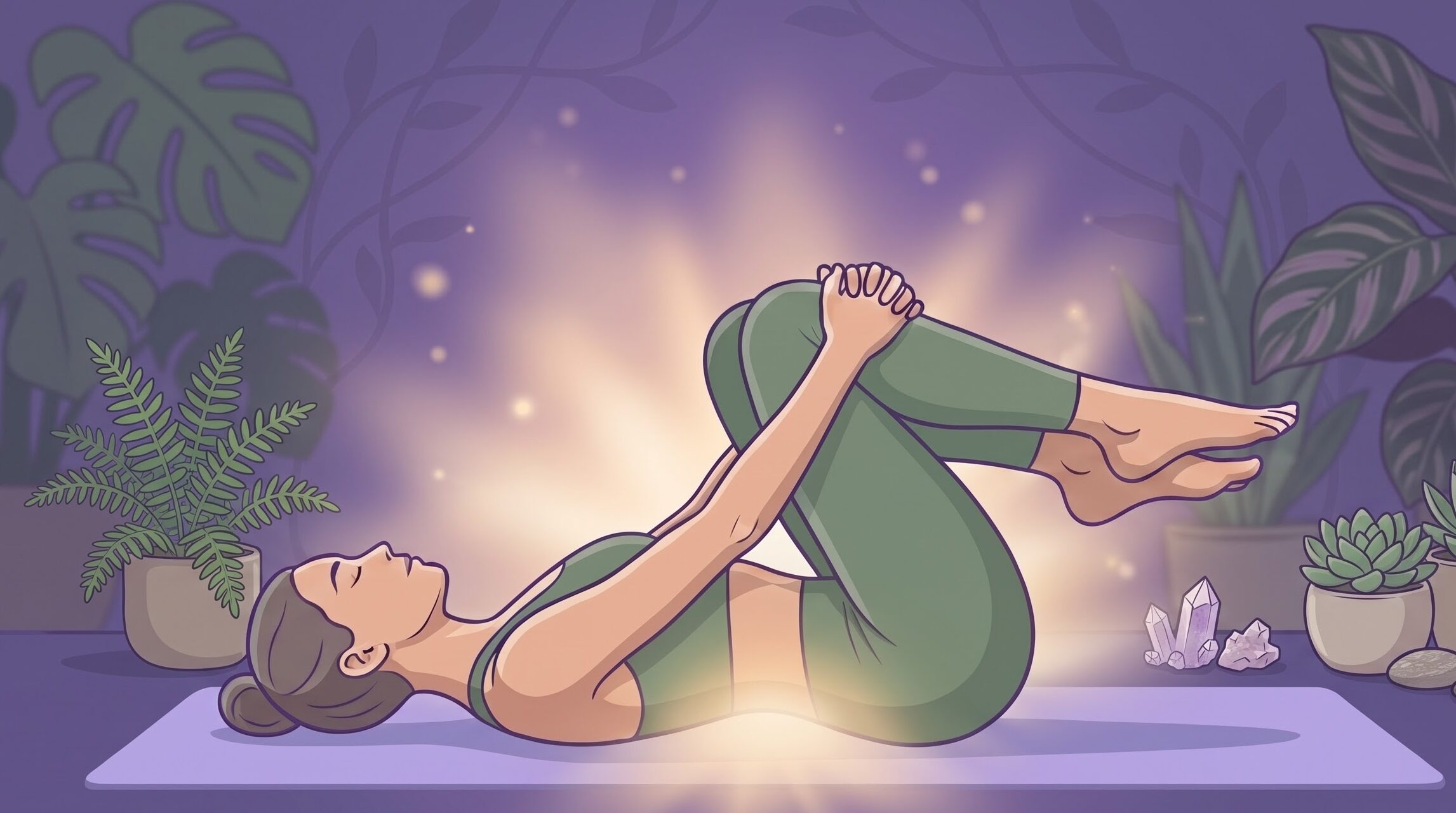
These remedies help calm the muscle guarding that keeps a lower back freeze locked.
When back pain strikes, the natural instinct is to lie flat in bed and wait for it to pass. Medical evidence consistently shows that active recovery, combining targeted home remedies, specific core exercises, and physical therapy,is the fastest route to long-term relief and preventing future flare-ups.[3]
First-Line At-Home Remedies
These first steps help calm the muscle spasm of a lower back freeze. Before jumping into heavy strengthening, you need to manage local pain signals and decrease tissue irritability.
The Dual-Thermal Protocol (Heat & Ice)
Cold Therapy (First 24–48 Hours): Apply ice packs wrapped in a towel for 15–20 minutes to numb sharp pain and restrict local swelling.[4]
Heat Therapy (After 48 Hours): Switch to warm compresses or heat packs for 20-minute sessions to dilate blood vessels, wash out metabolic waste, and relieve muscle spasms.[5]
Active Recovery Walking
Walking gently helps unlock a loer back freeze without strain. Instead of strict bed rest which weakens supportive muscles and worsens joint stiffness. Take short 5 to 10-minute low-impact walks throughout the day. Walking circulates spinal fluid and maintains hip extension.[6]
Decompression Sleep Positions
Side Sleepers: Place a firm pillow between your knees to keep your hips, pelvis, and spine neutrally aligned.[4
Back Sleepers: Place a pillow directly under your knees to flatten the lumbar arch slightly and relieve static pressure on the facet joints.[7]
Managing Lower Back freeze and pain: Home Exercises & Serious Condition Protocols
When managing lower back pain, exercise serves two distinct functions: general home rehab for minor strains and postural fatigue, and clinical physical therapy protocols tailored to severe spinal pathologies like disc herniations, spinal stenosis, or spondylolisthesis.
Understanding which movements to perform at home, and how complex conditions require direct supervision from a physical therapist, ensures safe, long-term recovery without risking re-injury.
Safe At-Home Exercises for General Lower Back Strain
For mild to moderate mechanical lower back freeze, the goal of at-home exercise is to promote dynamic joint mobility and activate core stabilizer muscles without over-compressing the lumbar spine.
Knee-to-Chest Stretch
Relieves compression and stretches the lower back muscles.
First lie on your back with your knees bent and your feet flat on the floor. Next, using both hands, pull up one knee and press it toward your chest. Tighten the muscles in your belly and press your spine to the floor. Hold for 5 seconds. Return to the starting position and repeat with the other leg. Repeat 2 to 3 times per leg.[10]
Cat Stretch
Dynamically mobilizes the spine through gentle flexion and extension.
Get on your knees and hands. Slowly arch your back, as if you’re pulling your belly up toward the ceiling as you bring your head down. Then slowly let your back and belly sag toward the floor as you bring your head up. Return to where you started and repeat 3 to 5 times twice a day.[10]
Bridge Exercise
Strengthens the glutes, core abdominals, and posterior chain supporting the lower back.
Lie on your back with your knees bent and your feet flat on the floor. Keep your shoulders and head relaxed on the floor and tighten the muscles in your belly and buttocks. Raise your hips to form a straight line from your knees to your shoulders. Stay in that position long enough to take 3 deep breaths, then slowly lower back down. Begin with 5 repetitions.[10]
Lower Back Rotational Stretch
Increases spinal flexibility and relieves tightness along the sides of the waist and hips.
Lie on your back with your knees bent and your feet flat on the floor. Keep your shoulders firmly on the floor, and slowly roll your bent knees to one side. Hold for 5 to 10 seconds. Slowly return to the starting position and repeat on the opposite side. Perform 2 to 3 times on each side.[10]
Physiotherapist Guidance
Warm-Up First: Perform 5 to 10 minutes of low-impact walking before stretching.
Listen to Pain Signals: The movements should produce a gentle, comfortable stretch, never sharp pain. If an exercise causes discomfort or pain that radiates down your leg, stop immediately and consult your physical therapist.[9]
Bridging the Gap: How Betterhood Support Complements Every Stage of Care
How Betterhood’s Ecosystem Supports Lower Back Pain Recovery
Whether you are managing a herniated disc, degenerative wear, or spinal stenosis, comprehensive back care requires three distinct pillars: Prevention, Home Remedies, and Physical Therapy Collaboration. Betterhood’s pain relief products, combining cryotherapy topical care, transdermal magnesium, and ergonomic support, play a functional role across all three stages.
Daily Prevention: Eliminating Mechanical Strain
Preventing back pain means stopping spinal overload before it triggers nerve irritation or muscle guarding.
- Active Posture Support: The Betterhood LS Back Support Belt utilizes an 8-stabilizer system that decompresses the L1–L5 vertebrae during heavy lifting, bending, or prolonged standing.
- Ergonomic Decompression: Placing Betterhood Lumbar Support Cushions on desk chairs or car seats preserves the natural inward curve (lordosis) of your spine, mitigating static pressure on aging or bulging discs throughout long workdays.
At-Home Remedies: Soothing Acute Spasms & Sciatica
When flare-ups strike at home, relief depends on interrupting local pain pathways and relaxing tense muscle fibers.
- Nerve Pain Management: The Betterhood Cryogel Relief & Recovery Patch delivers up to 8 hours of targeted cooling with Menthol, Boswellia, and plant-derived Magnesium. This numbs sharp sciatica signals and reduces micro-swelling around pinched spinal nerve roots.
- Targeted Spasm Relief: Betterhood Pain Relief & Recovery Spray or Roll-On provides immediate cryotherapy cooling to calm sudden lower back spasms without any greasy residue or burning sensations.
- Nighttime Muscle Recovery: Massaging Betterhood Magnesium Body Lotion into tight paraspinal and gluteal muscles promotes localized relaxation, easing morning stiffness.
Working Alongside Your Physical Therapist
Topical remedies and bracing should never replace rehabilitation; rather, they serve as a companion to active exercise.
- Post-Therapy Recovery: Applying Betterhood Cryogel Patches or Sprays immediately following physical therapy sessions or core exercises (such as Bird-Dogs or Planks) reduces exercise-induced inflammation and limits delayed-onset muscle soreness.
- Sensory Cueing During Rehab: Wearing the breathable LS Support Belt during home exercise routines provides sensory feedback (proprioception), encouraging safe hip-hinging mechanics while your core muscles rebuild strength under your physical therapist’s guidance.
FAQ
Do I need an X-ray or MRI immediately if my lower back starts hurting?
Most lower back freeze episodes do not need an immediate MRI.
- In the absence of “red flag” symptoms (like severe trauma, fever, or sudden loss of bowel/bladder control), major medical guidelines advise against early imaging during the first 6 weeks of back pain. Studies show that over 30% of adults with zero pain have bulging discs on MRIs, leading to unnecessary worry and overtreatment.[13]
Why does my lower back hurt more when I stand or walk compared to sitting?
- Standing and walking force your spine into extension (arching backward), which narrows the neural foramina (the small holes where nerves exit the spine) and increases pressure on the facet joints. This symptom pattern is classic for lumbar spinal stenosis or facet joint arthropathy.[13]
Can wearing the wrong shoes or flat feet cause lower back strain?
- Yes. The feet are the foundation of your kinetic chain. Poor arch support, overpronation (flat feet), or high heels alter your pelvic tilt. Flat feet cause the hips to roll inward, pulling the pelvis forward (anterior pelvic tilt) and placing excessive arching stress on the L1–L5 vertebrae.[12]
What is the difference between a core “suck-in” and a core “brace”?
- Pulling your belly button toward your spine (hollowing) activates the transverse abdominis, but it reduces overall spinal stability under heavy loads. Abdominal bracing, tightening your midsection as if expecting someone to tap your stomach, co-activates all core layers (rectus abdominis, obliques, and quadratus lumborum) to create a protective “cylinder” around the spine.[11]
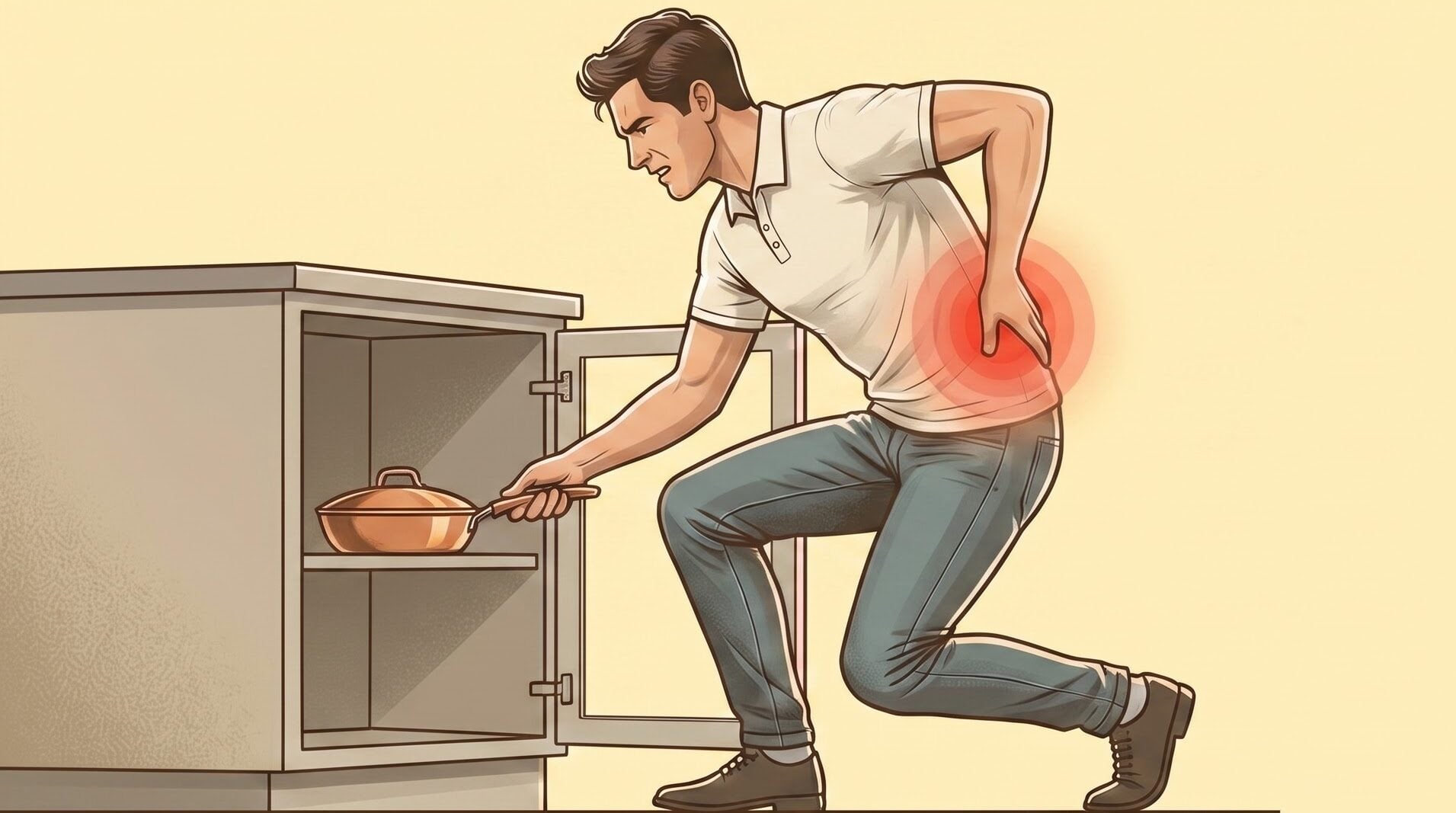
Why does my lower back lock up when I bend forward to brush my teeth or tie my shoes?
- In the early morning, your intervertebral discs are fully hydrated and hyper-pressurized from a night of lying horizontal. Bending at the waist early in the morning forces those pressurized discs into forward flexion, triggering a sudden, protective paraspinal muscle contraction (guarding)[5]
Reference
- https://www.who.int/news-room/fact-sheets/detail/low-back-pain
- https://ptsmc.com/back-pain-lifting/
- https://acibademinternational.com/health-library/lower-back-exercises-explained-by-medical-evidence-not-myths/#:~:text=Not%20every%20movement%20suits%20every%20person%3B%20pain,mobility%2C%20core%20strengthening%2C%20posture%20awareness%2C%20and%20walking.
- Medical News Today
- Harvard Health Publishing
- Acibadem International Guide
- Iodex Health Care
- https://ckphysio.co.uk/blog/lower-back-exercises-work-prevent-and-alleviate-lower-back-pain#:~:text=Flatten%20your%20lower%20back%20against%20the%20floor,sides.%20Tighten%20your%20abdominal%20muscles%20and%20glutes.
- https://cdn.prod.website-files.com/683f4918fbf3f95522757a37/684aef4051e257616deb6475_99564407698.pdf#:~:text=You%20should%20feel%20this%20stretch%20in%20your,of%20your%20thigh%20and%20behind%20your%20knee.
- https://www.mayoclinic.org/healthy-lifestyle/adult-health/in-depth/back-pain/art-20546859#:~:text=Tighten%20the%20muscles%20in%20your%20belly%20so,the%20muscles%20in%20your%20belly%20and%20buttocks.
- Mayo Clinic Patient Care
- Cleveland Clinic Health Library
- National Institute of Neurological Disorders and Stroke (NINDS)
Disclaimer: This content is for informational purposes only and does not substitute professional medical advice, diagnosis, or treatment. Always consult a physician or physical therapist for persistent pain.